AI investment may not automatically stoke inflation, but the Fed is now treating the buildout as a potential cost pressure that could complicate rate cuts and keep Treasury yields elevated.
AI Buildout May Keep Inflation Pressure Alive
That matters because the inflation debate has shifted from whether AI boosts productivity to whether the power, chips and data centers needed to run it raise consumer prices through higher electricity bills, hardware costs and service fees. With the 10-year Treasury yield at 4.62% on Monday before edging to 4.61% in the latest forecast, bond markets are already pricing in less room for easy policy.
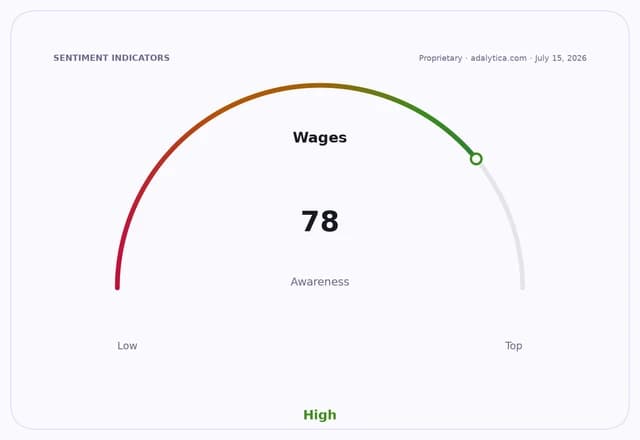
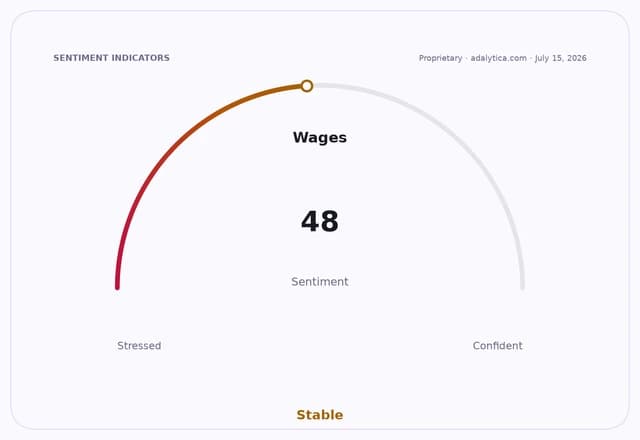
Sentiment IndicatorsⓘProprietary · adalytica.com · July 15, 2026
This is a snapshot — live sentiment, awareness and momentum for 130+ markets update continuously in the dashboard.Open AlphaPulse
The evidence is mixed. Headline CPI stood at 332.568 in June from 333.979 in May, while core CPI was essentially flat at 336.065 after 336.121. July forecasts point to a modest rebound, with headline CPI projected at 335.512 and core at 337.1758, suggesting inflation is cooling but not collapsing.
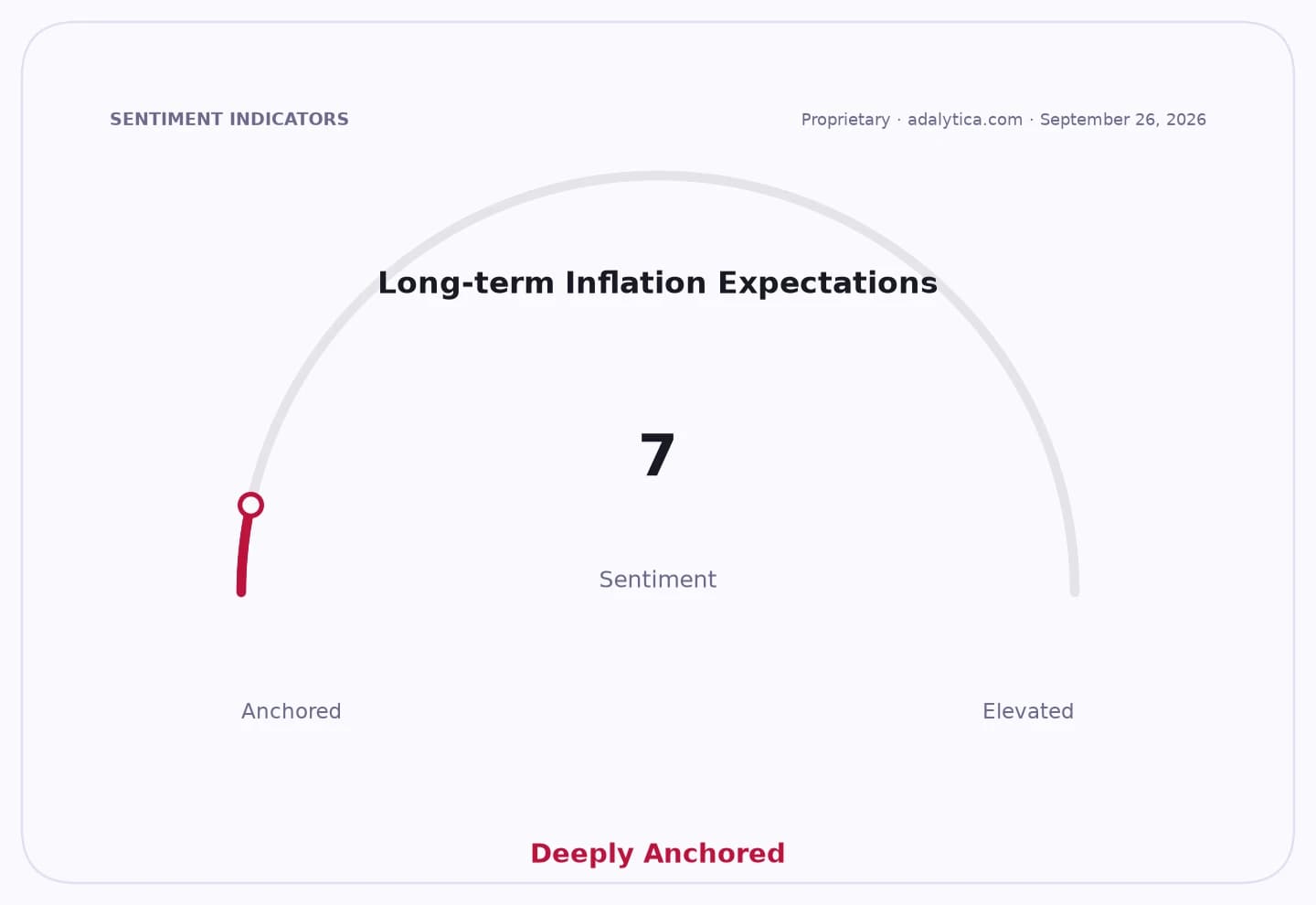
Adalytica’s confidence gauge on the Fed’s 2% inflation target shows fear at 22 and awareness at 89, while long-term inflation expectations and five-year breakevens both sit at neutral sentiment levels of 48 with extreme-greed awareness of 96. The pattern points to investors watching for sticky inflation risks even as near-term price pressure looks contained.
2% Target Confidence — 30-day sentimentadalytica.com
Explore this data interactively — full history, time series and cross-market comparisons.Open AlphaPulse
The stakes are especially high for megacap AI spenders. Microsoft said in its latest 10-Q that cost of revenue rose $680 million, or 12%, driven by AI infrastructure investments to support Microsoft 365 Copilot growth, underscoring how the AI race is already lifting expenses even before broader demand effects show up in consumer prices.
That is one reason chipmakers and cloud giants remain central to the trade. Nvidia, Microsoft and Alphabet all closed higher on Wednesday, with Nvidia at $210.95, Microsoft at $395.60 and Alphabet at $370.26, reflecting investors’ continued appetite for AI exposure despite the inflation overhang.
For markets, the message is that AI remains a growth catalyst, but it is no longer a clean disinflation story. If the buildout pushes electricity, equipment and capital spending higher, it could slow the pace of Fed easing and keep pressure on rate-sensitive assets, especially if the next inflation prints confirm that price gains are stabilizing rather than fading.
The next test is whether the upcoming CPI release and Treasury moves validate the Fed’s caution or give doves more room to argue that AI can boost productivity without reigniting inflation.
| Entity | Gains | Losses |
|---|---|---|
| Nvidia, Microsoft, Alphabet | ▲AI demand, revenue growth | ▼Higher capex scrutiny |
| Bond investors | ▲Inflation hedges if yields stay high | ▼Duration losses if yields rise |
| Fed doves | ▲Productivity case for AI | ▼Confidence on faster cuts |
| Consumers | ▲Potential efficiency gains | ▼Higher electricity and electronics costs |