AI chip demand raises consumer device prices
AI demand is pushing up semiconductor prices and that is starting to hit consumers through more expensive smartphones, notebooks and gaming consoles, with manufacturers trimming model ranges and prioritizing higher-margin configurations as chip capacity shifts toward data centers.
The new pressure is economic rather than theoretical: as chipmakers divert production toward high-performance processors and memory for AI servers, the consumer electronics supply chain is losing access to components that had been relatively abundant. That is lifting costs across devices that rely on more memory and more advanced processors, especially phones, PCs, gaming hardware and consoles.
At the consumer level, the effect is likely to show up first in fewer low-end options and higher prices for higher-spec versions. German market research firm NIQ, cited ahead of the IFA trade fair in Berlin, said buyers should expect more expensive devices and less choice this year, though not the kind of full-blown shortages seen in 2020. The more likely outcome is a narrower assortment centered on popular 256-gigabyte and 512-gigabyte configurations, while entry-level models become harder to justify for manufacturers under the current cost structure.
That dynamic matters for inflation as well as company margins. Consumer electronics are not the biggest driver of headline price indices, but they are a visible channel through which AI investment is being transmitted into the broader economy. The U.S. producer price index for all commodities has risen to 284.057 in July from 256.978 in April 2024, underscoring how input-cost pressure has returned in parts of the hardware chain even as consumer inflation has moderated. If chip scarcity persists, retailers may have less room to discount devices into the holiday season.

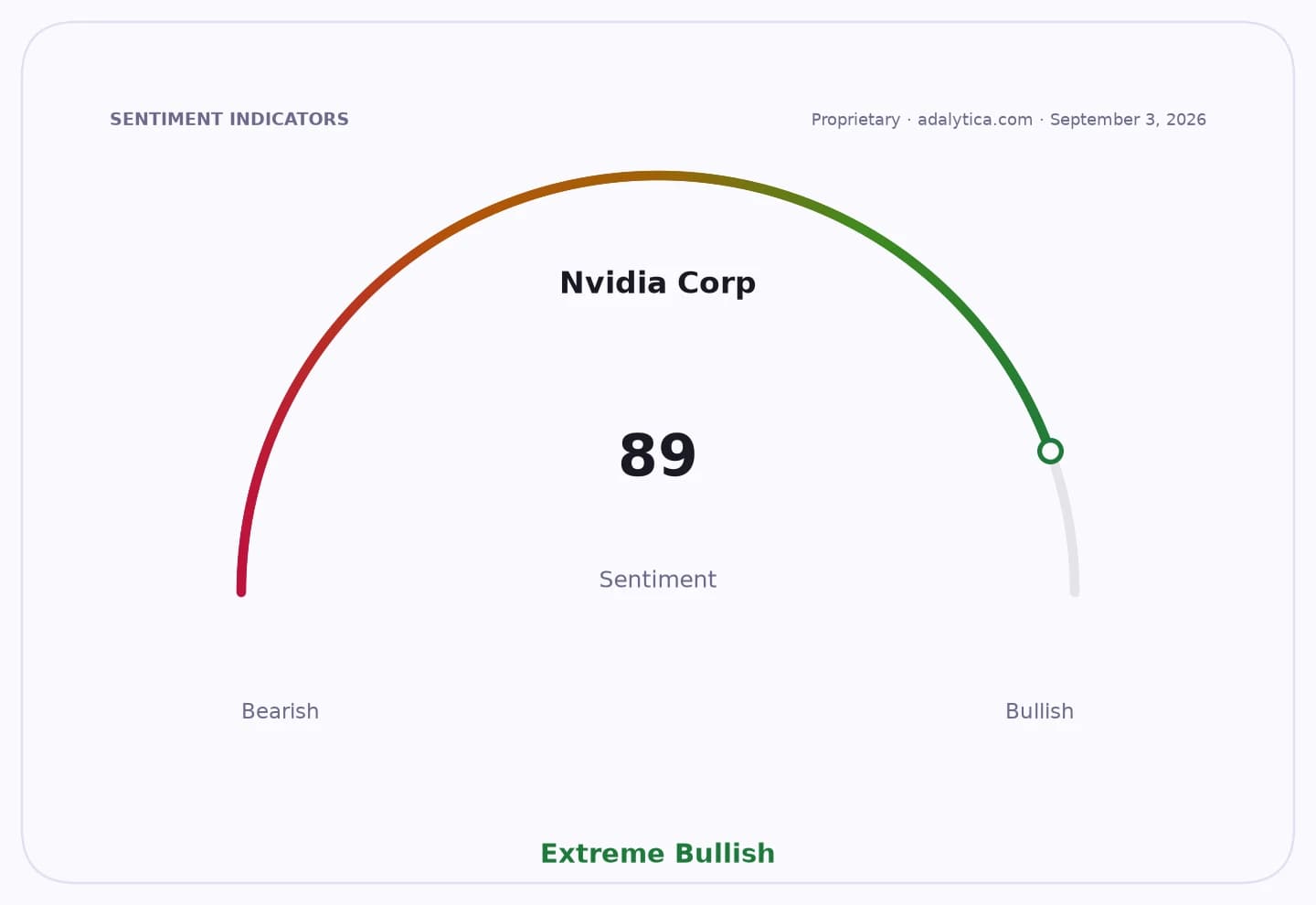
For investors, the implications cut both ways. AI infrastructure leaders remain the clearest beneficiaries. Nvidia shares have rebounded sharply and, with its 50-day moving average and 200-day moving average both trending higher in recent readings, the stock is still being treated by the market as the core trade in the AI buildout. Adalytica’s AI earnings sentiment gauge is at 89, or “Extreme Greed,” reflecting continued enthusiasm for the AI hardware theme.
But the same supply shift creates a margin squeeze for consumer hardware makers. Apple has already warned in recent filings that limited-source components and industry-wide shortages can weigh on revenue and gross margin, while Qualcomm and AMD have flagged inventory and supply-chain risks tied to customer demand and long-term commitments. If advanced memory and processors stay tight, the pressure will likely fall on brands that sell phones, PCs and consoles into price-sensitive markets, where higher component costs are harder to pass through.
Apple’s latest chip push illustrates the split in the market. The company is rolling out more advanced M6 and M5 Ultra processors built on 2-nanometer technology, designed to handle AI workloads and reinforce its premium product line. That helps Apple defend the high end, but it also reinforces the broader industry trend: the most capable silicon is being pulled toward AI-heavy computing, while the consumer device segment absorbs the cost of scarcity.
The near-term outlook depends on whether chip supply expands fast enough to meet both AI infrastructure demand and the needs of consumer electronics makers. If it does not, the winners will be AI chip suppliers and premium device vendors with pricing power, while buyers, lower-end handset makers and console manufacturers face thinner margins and fewer options.
| Entity | Gains | Losses |
|---|---|---|
| Nvidia and AI chip suppliers | ▲Higher demand, stronger pricing | ▼Limited consumer chip supply |
| Apple and premium OEMs | ▲Better support for high-end devices | ▼Higher component costs |
| Consumers | ▲Access to faster AI-enabled devices | ▼Higher prices, fewer entry models |
| Console and PC makers | ▲Premium configurations sell better | ▼Margin pressure, tighter supply |