AI, data centers and wars reshape midterm politics
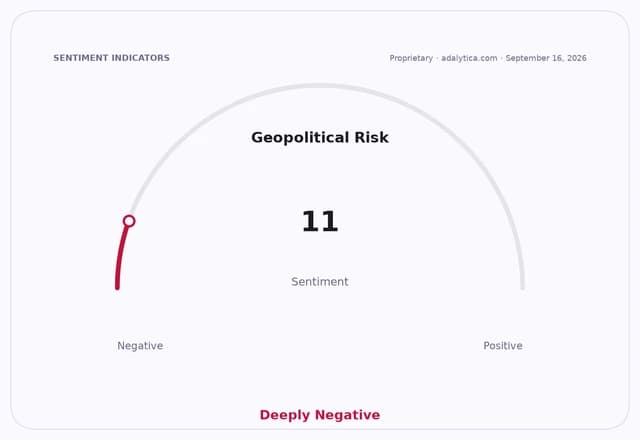
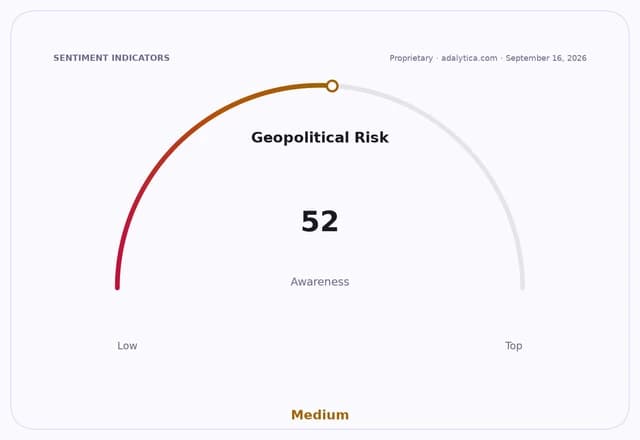
Voters are heading into the midterms with an unusual political alignment taking shape around the economy’s most divisive pressures: artificial intelligence, rising living costs and foreign wars.
That convergence matters because it is cutting across party lines on issues with real economic consequences, from whether AI accelerates job losses and data-center spending to how much Washington should spend on military commitments abroad. For investors, it raises the odds that both parties will keep leaning into tougher antitrust, industrial and national-security rhetoric while local opposition to AI infrastructure and higher public spending becomes more politically expensive to ignore.
The clearest example came in Washington this week, where Bernie Sanders and Steve Bannon shared a stage at an event calling for limits on advanced AI. Sanders said he will introduce legislation next week with Texas Democrat Greg Casar to permanently ban development of artificial superintelligence, while Bannon warned the technology’s biggest companies were using safety concerns to build “a moat, a cartel.” The policy prescriptions were far apart, but the overlap was unmistakable: both framed AI as a threat concentrated in the hands of large corporations and distant from ordinary workers.
That message is resonating. An NBC News Decision Desk poll found 70% of respondents are more worried than excited about AI, with discomfort steady across party, education and geography. Seventy percent said AI is costing jobs, including 78% of Democrats and 62% of Republicans. Another survey found 61% oppose new data facilities in their own communities, a warning sign for the power and infrastructure buildout underpinning the AI trade.
The politics are already showing up in campaign spending. More than $45 million has been spent since January on ads mentioning data centers in governor, House and Senate races, according to an NPR analysis of AdImpact data, and more than 99% of that spending attacked the projects. By July, data center- and AI-related ads made up more than 8% of all broadcast campaign spending, up from under 1% a year earlier. That is a material risk for utilities, chipmakers, cloud providers and the broad capex cycle tied to AI adoption.
Foreign policy has produced a different but equally important overlap. On the right, Tucker Carlson, Candace Owens and Marjorie Taylor Greene have attacked U.S. support for Israel and the war with Iran in language that now sounds closer to the progressive left than to traditional Republican hawks. On the left, Sanders has repeatedly linked war spending to the squeeze on housing and health care, and Democratic senators have been willing to break with their party leadership on military sales and war powers resolutions.
The economic link is not subtle. After years of inflation and higher rates, voters are more receptive to arguments that government is spending too much abroad, corporations are taking too much at home and AI is disrupting jobs faster than it is creating them. That combination helps explain why populists on both flanks are finding common ground around “corporate power” and “oligarchs,” even if they disagree sharply on solutions.
For investors, the near-term implication is less about policy consensus than about political pressure. A tougher regulatory backdrop for AI, greater scrutiny of data centers and more skepticism toward overseas intervention could all slow capital deployment in sectors that have benefited from a pro-growth, pro-tech Washington mood. The risk is especially acute for companies that need local permits, federal support or cross-border supply chains to expand.
Trump has tried to push back, calling AI backlash a “hoax” and defending data-center investment as a national race with China. But public polling suggests voters are not buying the argument, and even some Republicans are uneasy. That leaves midterm candidates of both parties incentives to sound more protectionist, more anti-corporate and more selective about foreign entanglements.
The broader narrative is that the old culture-war map is being overlaid by a cost-of-living-and-power map. If that continues into November, the winners are likely to be candidates who can channel economic grievance without sounding ideologically extreme. The losers may be the technology, defense and infrastructure interests that have grown used to bipartisan tolerance.
| Entity | Gains | Losses |
|---|---|---|
| Populist candidates | ▲Broader cross-party appeal | ▼Ideological purity |
| AI firms | ▲Long-term demand case | ▼Faster regulation |
| Data center builders | ▲Capital spending cycle | ▼Local permitting resistance |
| Defense hawks | ▲None | ▼Budget scrutiny |