AI infrastructure financing tests credit markets

A wave of Wall Street-backed financing for AI infrastructure is about to test whether lenders can turn a booming technology race into a stable credit market.
The immediate significance is not the chips themselves, but the scale of leverage being built around them. Heavyweight banks and Nvidia are trying to assemble more than $700 billion of funding for AI hardware, a sum large enough to reshape capital markets for years if the model works — and to expose investors if demand for AI services slows before the debt is repaid.

That matters economically because AI data centers are becoming one of the most capital-intensive buildouts in corporate history. Nvidia, Microsoft and Taiwan Semiconductor Manufacturing are all trading near elevated levels after a sharp rebound in recent weeks, but the financing structure underneath the rally is more fragile than the equity story suggests. Companies can fund expansion from cash flow or equity when markets are friendly; debt changes the equation by forcing future cash generation to meet fixed obligations, often over several years. If the returns on AI spending come in slower than expected, the burden falls quickly on margins, refinancing needs and credit spreads.
The backdrop is already mixed. The 10-year US Treasury yield is around 4.7%, while high-yield spreads sit near 2.7 percentage points, both manageable by historical standards but far above the ultra-low financing era that powered the first phase of the AI trade. The Fed funds rate is holding at 3.63%, keeping borrowing costs restrictive enough that long-duration infrastructure bets must clear a higher hurdle. For credit markets, that makes the proposed AI debt pool less like routine project finance and more like a large, highly correlated wager on one theme.
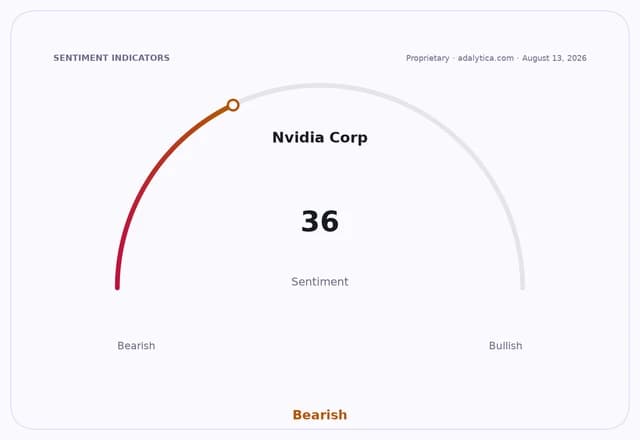
Investors should care because the deal structure could pull more of the AI trade into credit rather than equity, broadening the range of winners and losers. Nvidia has been the clearest market winner, with its shares near record territory and technical indicators pointing to strong momentum, while Microsoft and TSMC remain well above their long-term moving averages despite recent volatility. But bondholders do not get the upside from AI adoption; they get paid only if the cash flow arrives on schedule. That creates a classic mismatch: optimistic revenue assumptions on one side, fixed coupons on the other.
There is also a market-structure risk. If Wall Street succeeds in standardising AI financing, more capital will follow into the sector, supporting chip demand and data-center orders. That would help Nvidia and the supply chain, including TSMC, by extending the investment cycle. But if the market begins to question whether AI spending is running ahead of monetisation, the same financing channels could become a transmission mechanism for a broader re-pricing in technology credit and equity.
The bull case is that AI infrastructure is still in the early stages of adoption, with hyperscale demand, enterprise software integration and sovereign data-center spending creating a long runway. The bear case is that Wall Street is packaging a still-uncertain productivity revolution into securities that require predictable cash generation long before the business model is proven at scale.
For now, the trade is clear: the market likes AI growth, but it has not yet answered whether it likes AI leverage.
| Entity | Gains | Losses |
|---|---|---|
| Nvidia and chip suppliers | ▲Faster demand growth | ▼Higher scrutiny if spending disappoints |
| Wall Street lenders | ▲Fee income and new assets | ▼Credit risk if AI returns lag |
| AI borrowers | ▲Access to large-scale funding | ▼Balance-sheet pressure from debt service |
| Bond investors | ▲Yield from AI exposure | ▼Default and spread risk |