AI safety debate boosts Nvidia, Microsoft, Alphabet
Jacob Coxon is back in the AI fight at exactly the moment the market is underpricing how much the safety debate could reshape spending, regulation and the winners of the next capex cycle.
Coxon’s return matters because the industry is no longer arguing in the abstract. It is pouring tens of billions of dollars into data centers, chips, power and cloud capacity while lawmakers and researchers push harder on model safety, liability and oversight. That creates a new investment backdrop: the AI buildout is still real, but the path to monetization is getting more politically and operationally complicated.
The timing is striking. Big Tech is not slowing its AI commitments. Microsoft said research and development spending rose 9% to $35.6 billion in its latest year, while Alphabet, Amazon and Meta have all disclosed heavier infrastructure investment tied to AI. Nvidia, meanwhile, has told investors its supply commitments totaled $36 billion as of late July, underscoring how much capital is already locked into the ecosystem. This is not a software-only story anymore; it is a full-stack industrial expansion.
At the same time, the conversation around AI safety is turning from academic caution to commercial risk management. Anthropic chief Dario Amodei has warned that human-like models can be dangerous without any intent to do harm, and regulators in Washington are pressing for tighter rules. That is where Coxon’s return becomes more than a personnel story. It highlights how frontier AI firms now need not just model builders, but credibility with governments, enterprise buyers and the public.
For investors, the implication is straightforward: the market should keep paying attention to the picks-and-shovels. If AI safety scrutiny rises, it is unlikely to kill the spending cycle. More likely, it raises the cost of doing business, lengthens deployment timelines and shifts more value to firms that provide chips, servers, network gear, power, cooling and cloud infrastructure. Nvidia remains central to that trade, but Microsoft and Alphabet also stand to benefit as scale players with the capital, compliance teams and distribution to absorb tougher oversight.
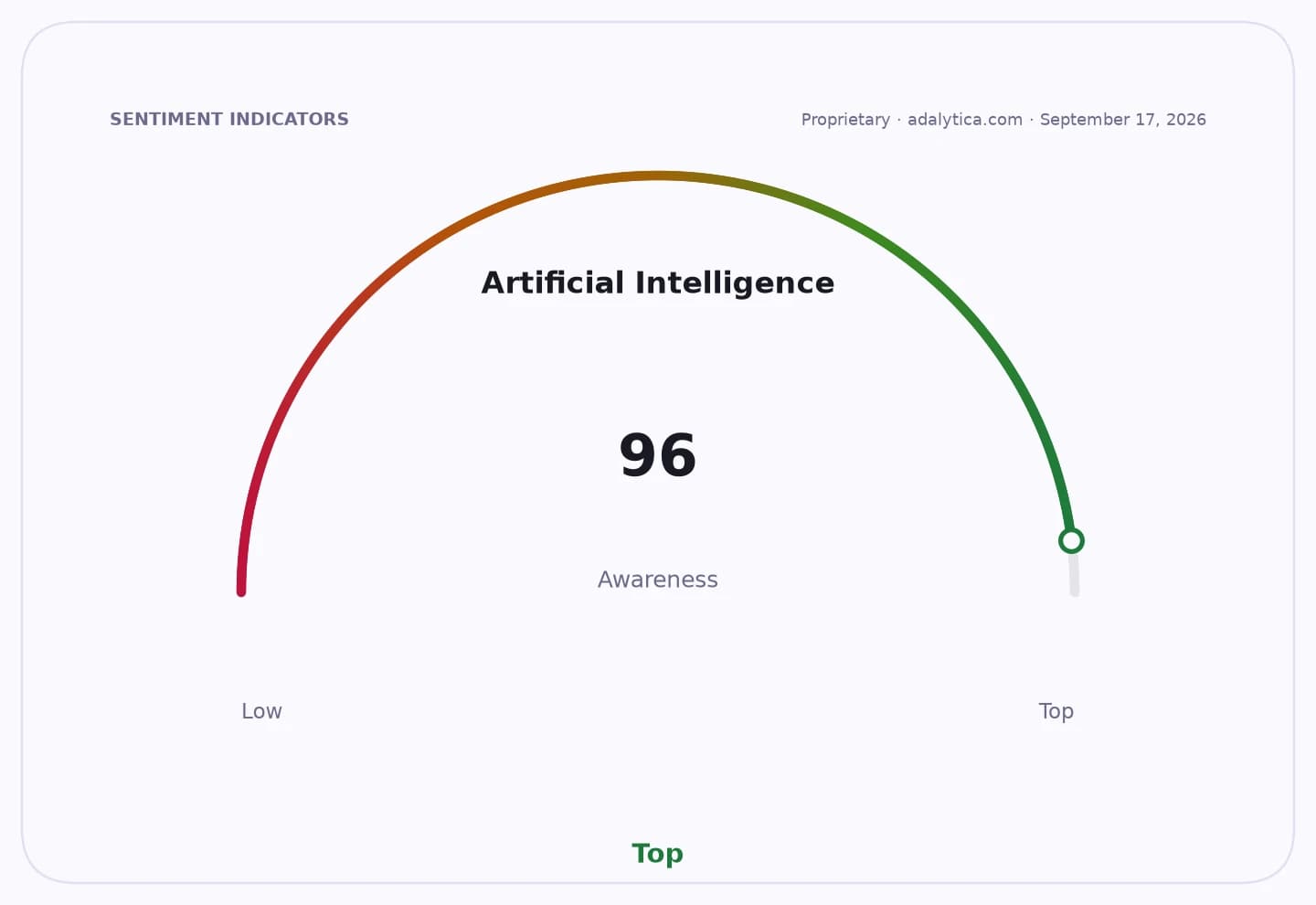
The recent price action suggests the market is still sorting that out. Nvidia has rebounded sharply from an oversold patch and now trades near its 50-day moving average, while Microsoft has pulled back from recent highs but remains far above its 200-day average. Alphabet has been steadier, with the stock holding above its longer-term trend. Adalytica’s AI sentiment gauge shows extreme fear even as awareness remains elevated, a classic setup where the narrative looks shakier than the underlying capital cycle.
That disconnect is the opportunity. The next leg of the AI trade may not be driven by the biggest language model breakthrough, but by the companies that can make frontier AI safer, more governable and more scalable. Coxon’s return is a reminder that the winners of this cycle will not just build faster models — they will build trust, infrastructure and regulatory resilience.
Investors should stay long the AI infrastructure stack, not the hype layer. In this phase of the cycle, the asymmetry still favors the toll roads.
| Entity | Gains | Losses |
|---|---|---|
| Nvidia | ▲Chip demand | ▼Margin pressure from scrutiny |
| Microsoft | ▲Cloud AI scale | ▼Higher compliance costs |
| Alphabet | ▲Infrastructure leverage | ▼Slower rollout cycles |
| Frontier AI startups | ▲Safety credibility | ▼Funding and regulatory pressure |