AI Salary Tools Pressure Pay Talks, Help ADP and Paychex
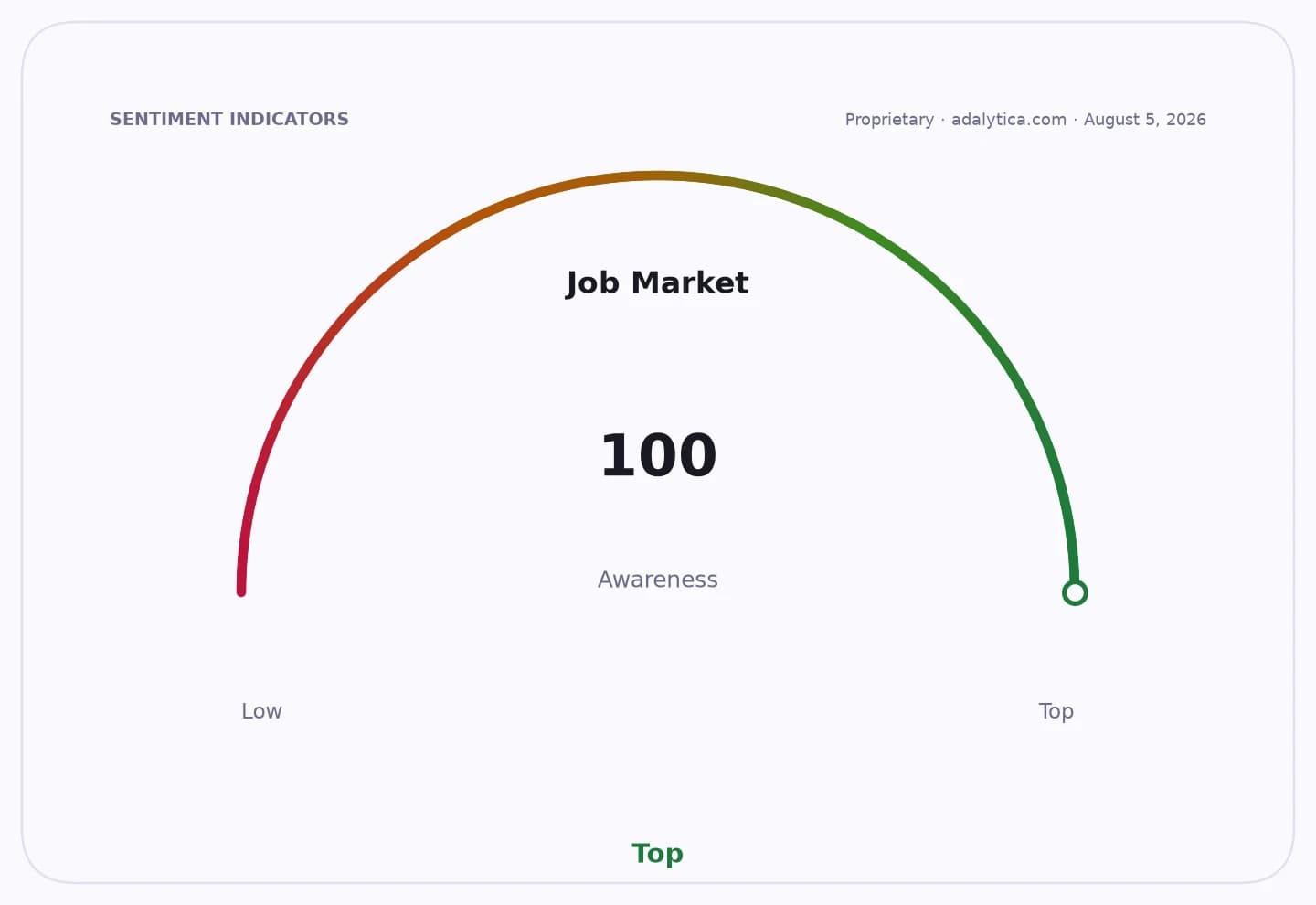
AI-generated salary ranges are giving workers a sharper bargaining tool just as the labor market cools only gradually, forcing employers to defend pay decisions with harder data and raising the stakes for compensation strategy across the economy.
That matters because pay talks do not happen in a vacuum. When employees arrive with a spreadsheet of market rates they generated in seconds, wage-setting becomes more transparent, more competitive and harder to manage with old benchmarks. In a labor market where the unemployment rate is still projected around 4.18% and payroll growth is expected to remain positive, workers retain enough leverage to push for better offers even as hiring cools from pandemic-era extremes.
The broader backdrop is a jobs market that is no longer white-hot, but not weak enough to remove wage pressure. Job openings stood at 7.359 million in June, down from 7.585 million in April and well below the 12.301 million peak seen in 2022, yet still high enough to suggest persistent churn and turnover. That mix — fewer openings than the boom years, but not a collapse in demand — is exactly where salary transparency tools can have the most impact. Workers know companies still need talent, and AI makes it easier to test whether an offer is below market.
For employers, the immediate risk is not just higher pay. It is compressed negotiating advantage, more frequent compensation disputes and greater pressure to standardize ranges across teams and geographies. Companies that once relied on opaque pay bands or ad hoc offers are now more exposed to employees comparing notes in real time. That can tighten retention in roles where replacement costs are high, but it can also add to margin pressure if wage growth stays sticky while revenue growth slows.
Investors should pay close attention to the second-order winners and losers. Payroll processors, HR software providers and staffing firms are all sitting on a shift that makes compensation data more valuable, not less. ADP and Paychex can benefit if employers lean harder on outsourced payroll and HR systems to manage pay bands, compliance and employee communications. Staffing firms like ManpowerGroup may see more demand for market intelligence and faster hiring support, even if overall volumes remain uneven. At the same time, businesses with thin margins and heavy labor costs face a tougher environment if employees can challenge pay offers with more credible benchmarks.
The market is already signaling that labor remains a live issue. ADP has rebounded sharply from spring lows, with its shares climbing back above both the 50-day and 200-day moving averages, while Paychex has staged a strong recovery after falling to February lows. ManpowerGroup has also bounced from deeply oversold levels. That tells you investors are beginning to price in a labor market that is neither collapsing nor loosening enough to eliminate compensation friction. In other words, the AI salary-range trend is not a sideshow — it is a new layer of wage discipline and bargaining power that will shape margins, retention and pricing power over the next few quarters.
My thesis is simple: the companies that help employers manage pay transparency will capture the upside, while firms that treat AI salary data as noise risk getting squeezed by a more informed workforce. If you want exposure to that shift, the best positioning is in the tools that sit between employees and payroll decisions, not in businesses that assume compensation opacity will return. The next phase of the labor market belongs to the companies that can turn transparency into a service, not a threat.
| Entity | Gains | Losses |
|---|---|---|
| ADP | ▲Higher HR software demand | ▼More pay-comparison pressure |
| Paychex | ▲Payroll and compliance use cases | ▼Wage-band scrutiny |
| ManpowerGroup | ▲Recruiting intelligence demand | ▼Margin pressure from wage bids |
| Employers | ▲Better pay benchmarking | ▼Weaker negotiating leverage |