Airbnb, AIV, XHB Mixed as Housing Sentiment Hits 100
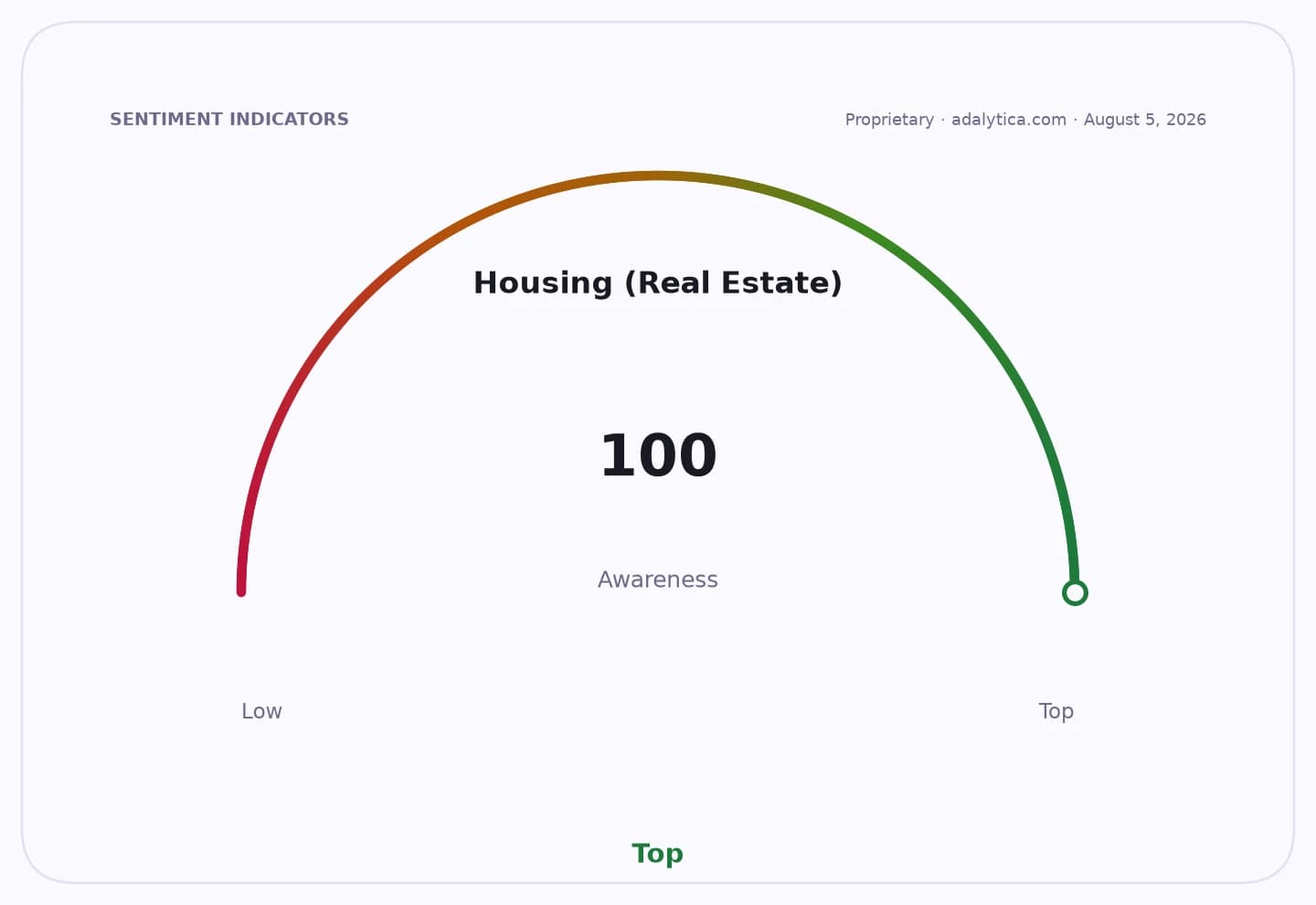
Housing-linked assets are drawing investor attention as rental-market stress builds in Ghana and U.S. housing sentiment turns sharply risk-on, with Adalytica’s Housing Fear & Greed Index at 100 and housing-and-rent inflation sentiment at 82, both signaling extreme demand optimism.
The backdrop matters because tighter supply and higher deposit burdens typically support landlords’ pricing power, while any rent-control push can slow new inventory and worsen shortages. For investors, that means residential real estate exposure — from landlord-heavy names to homebuilders and rental platforms — can swing quickly on policy headlines, affordability trends and cap-rate expectations.
In U.S. markets, the homebuilder ETF XHB has continued to gain traction, while apartment owner Apartment Investment and Management Co. has tracked a choppy recovery in recent months. AIV closed at $2.64 on Aug. 5, down from $3.06 on June 4, with its 50-day moving average at $2.84 and 200-day average at $2.93, a technical setup that still points to pressure even after a brief summer bounce.
Airbnb has also remained in focus as investors weigh whether platform-based short-term rentals can absorb excess demand in tight urban markets. ABNB ended at $152.24 on Aug. 5, above both its 50-day moving average of $142.21 and 200-day average of $132.96, with RSI at 57.1 and MACD above its signal line, suggesting momentum has improved alongside the broader housing trade.
In Ghana, the rental story is more immediate: rising deposit demands are feeding expectations for higher monthly rents in East Legon and other prime Accra neighborhoods. That makes affordability a bigger issue for tenants and a cash-flow question for landlords, while policymakers face pressure to balance tenant protections against the risk that tougher caps reduce supply further.
For investors, the key risk is that housing affordability stays tight while regulatory responses remain uncertain, creating winners in landlords and rental platforms but leaving developers and price-sensitive tenants exposed. The next catalyst is likely to come from housing-policy updates, rent-setting rules and fresh signs on whether higher deposits are translating into actual rent increases.
| Entity | Gains | Losses |
|---|---|---|
| Landlords | ▲stronger pricing power | ▼tenant pushback |
| Rental platforms | ▲more demand for flexible housing | ▼tighter regulation risk |
| Homebuilders | ▲support from housing optimism | ▼higher policy uncertainty |
| Tenants | ▲little near-term relief | ▼higher deposits and rents |