Alibaba Qwen Smaller Model Lowers AI Costs

Alibaba is pushing the AI race in a direction investors should care about most: lower cost, easier adoption and a better chance of real commercial scale. By releasing a smaller Qwen model, the Chinese e-commerce and cloud giant is signaling that the next phase of artificial intelligence may be won not just by the biggest model, but by the model companies can afford to deploy widely.
That matters because AI is quickly becoming an efficiency game. Enterprises do not just want smarter systems; they want systems that can be used repeatedly, at manageable cost, without crushing margins. If Alibaba can deliver strong performance in a lighter model, it could make Qwen more attractive to developers, cloud customers and businesses looking for practical AI tools rather than headline-grabbing breakthroughs.

The market backdrop makes that especially important. The latest trading data shows Alibaba’s stock has been volatile, with the shares falling to $118.47 on Aug. 24 before edging back to $119.83 on Aug. 26. That remains well below the 200-day moving average near $136, even after a sharp earlier rally this year, and technical readings have cooled from overbought levels. In plain English, investors are still debating how much of Alibaba’s AI story is already priced in.
The bigger point is that AI competition is shifting from prestige to distribution. Alibaba is not just trying to build a better model; it is trying to build a cheaper one that can become a default option inside China’s cloud and software ecosystem. That is the kind of move that can create long-term value because the winners in AI may be the companies that make their tools indispensable across a wide range of everyday business uses.
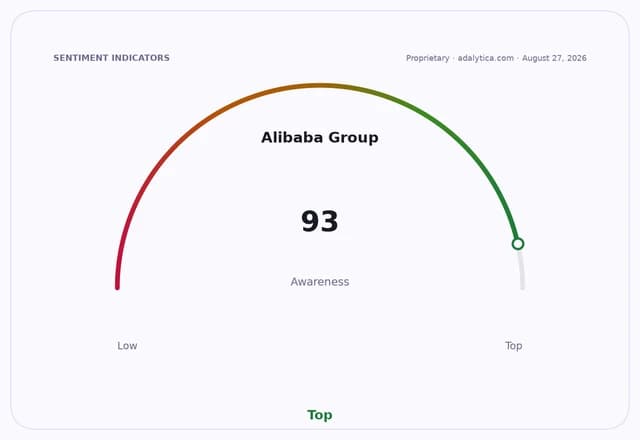
It also underscores why investors should watch the economics, not just the model specs. Smaller AI models can mean lower inference costs, faster deployment and potentially better returns on capital if they drive cloud usage without requiring massive spending for every request. For Alibaba, that could help offset pressure in its core businesses and strengthen the case for its cloud division as an AI beneficiary rather than just another cost center.
There are risks, of course. AI remains fiercely competitive, and cheaper does not automatically mean better. Alibaba still has to prove that Qwen can win developers, keep pace with U.S. and Chinese rivals and turn technical progress into recurring revenue. Reuters has also reported that the broader AI market is increasingly defined by access and price, which means rivals will not stand still.
Still, for long-term investors, this looks like the right strategic direction. In a market obsessed with the biggest and flashiest models, the more durable advantage may belong to the company that can deliver AI at scale, with discipline, and at a price customers actually want to pay. That is why Alibaba’s smaller Qwen model is worth watching closely, especially for investors with a multi-year horizon.
| Entity | Gains | Losses |
|---|---|---|
| Alibaba | ▲More developer adoption | ▼Margin pressure if scale lags |
| Cloud customers | ▲Lower AI costs | ▼Premium-model lock-in |
| Rival AI platforms | ▲Innovation pressure | ▼Pricing power |
| Long-term investors | ▲Cheaper AI monetization angle | ▼Overhyped near-term expectations |