Alphabet Stock, AI Growth, and Wolfe Research

Alphabet’s path to 2027 is being underestimated, and that is exactly why Wolfe Research’s call on the stock matters: the market is still pricing it like a mature ad business when it is increasingly acting like a dominant AI, cloud and infrastructure platform with multiple levers for earnings growth.
That disconnect is the opportunity. Alphabet has spent aggressively to defend and expand its moat, with sales and marketing expense rising to $8.4 billion in the latest quarter from $7.1 billion a year earlier, while also returning to the capital markets with a $25 billion senior notes deal in August. Those are the kinds of moves investors usually see when a company is leaning into a long investment cycle, not coasting through one. For long-term holders, that matters because it suggests Alphabet is still funding the next phase of growth in search, advertising, cloud and AI rather than protecting near-term margins at the expense of scale.
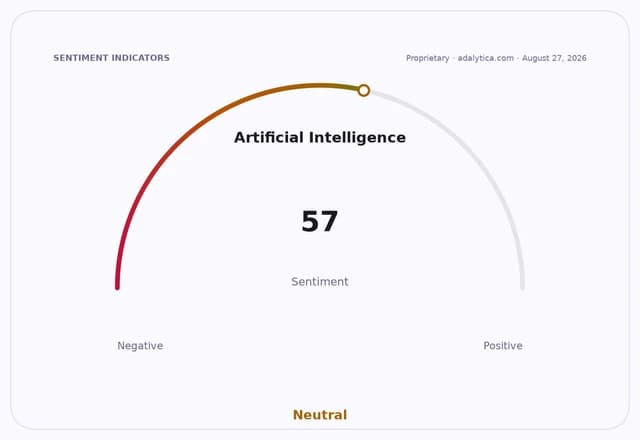
The stock action says the market is still sorting out that story. Alphabet shares have been volatile, with GOOG closing at $339.10 on Aug. 26, below its 50-day moving average of $349.06 but above the 200-day average of $332.71. GOOGL ended at $342.00, also holding above the 200-day line. RSI readings in the high 20s to low 30s on both classes point to a stock that has been sold hard enough to create a more interesting entry point than the fundamentals alone would imply. In other words, the setup looks more like a reset in sentiment than a deterioration in the business.
What gives the bullish case staying power is that Alphabet is not being asked to win one market; it is positioned across several. Search remains the cash engine, cloud is still scaling, and AI is now becoming the layer that can deepen user engagement, improve ad targeting and expand compute demand. That combination is why strategic buyers of high-quality compounders keep showing up on dips. Berkshire Hathaway’s increased stake in Alphabet reinforces that view: when a long-duration investor adds to a mega-cap platform business during market turbulence, it tends to validate the idea that the upside is not fully reflected in the tape.
The macro backdrop also helps. The 10-year Treasury yield is still around 4.68%, a level that keeps pressure on valuations but also rewards companies that can self-fund growth with real cash generation. At the same time, U.S. unemployment at 4.1% suggests the economy is not flashing recession, supporting ad demand and enterprise spending. That combination is ideal for Alphabet: strong enough growth to sustain digital advertising, but still selective enough capital markets to keep investors focused on durable free-cash-flow leaders.
The market underestimates how powerful that mix can be into 2027. If AI infrastructure spending keeps rising, Alphabet benefits not just through its own models and products, but also through higher cloud demand, greater search usage and broader monetization of compute. Wolfe’s bullish stance makes sense in that framework: the company is one of the few names that can turn AI capex into both strategic moat expansion and earnings leverage.
For investors, the takeaway is straightforward. If you want exposure to the AI buildout without paying the most stretched valuations in the group, Alphabet remains one of the cleanest large-cap ways to play the next phase of the cycle. The short-term noise around margins and volatility is less important than the long-term compounding machine underneath it.
| Entity | Gains | Losses |
|---|---|---|
| Alphabet bulls | ▲Long-term compounding | ▼Near-term volatility |
| Berkshire Hathaway | ▲Quality mega-cap exposure | ▼Cash idle risk |
| AI infrastructure suppliers | ▲Rising compute demand | ▼Margin pressure from competition |
| Short-term traders | ▲Volatility opportunities | ▼Missing the 2027 rerating |