Alphabet GOOG Pulls Back as AI Monetization Builds
Alphabet is back at the center of the AI trade, and the market is still underestimating how much cash flow and optionality the company can unlock as AI spending shifts from hype to monetization. A top investor calling GOOG a “no-brainer” captures the core thesis: Alphabet is no longer just a search franchise defending share, but a scaled AI, cloud and infrastructure platform with room to compound earnings even after a huge run.
That matters because the market is increasingly rewarding the companies that control the compute stack, distribution and monetization channels needed to turn AI demand into durable profit pools. Alphabet sits in a rare position. It owns Search, YouTube and Android at consumer scale, while also benefiting from the enterprise buildout through Google Cloud and its internal AI research engine. Alphabet’s filings show that it has centralized certain AI-related research and development at the company level, underscoring how deeply the technology is now tied to the core business rather than treated as a side bet.
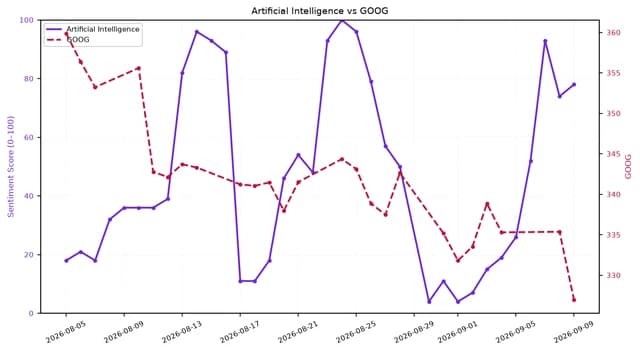
The stock has already moved sharply, but the technical backdrop still argues for a powerful trend rather than exhaustion. GOOG closed at $326.95 on Sept. 9 after trading as high as $367.22 in June and $361.87 the day before that. The 50-day moving average stands near $345.85 and the 200-day average is about $334.77, which means the shares are still trading below both key long-term markers even after a strong multi-month advance. RSI at 36.0 suggests the recent pullback has cooled momentum rather than broken the bigger trend, while the MACD remains negative, showing the market is digesting gains rather than abandoning the name.
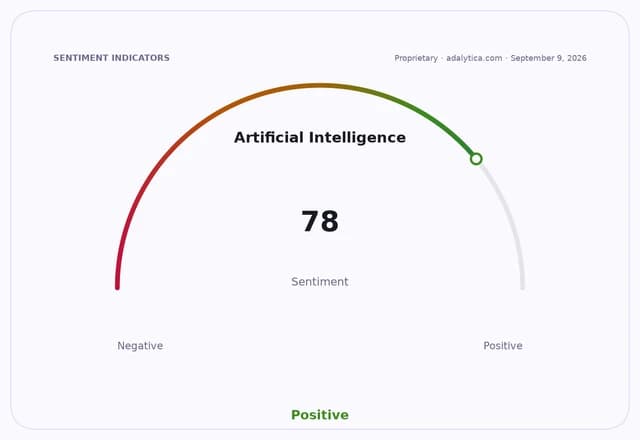
Investors should focus on what this setup says about capital flows. Alphabet is one of the few mega-cap technology names with the balance sheet, distribution and engineering depth to keep spending heavily on AI while still converting that spend into operating leverage. That is the kind of profile institutions want when the broader market is flashing extreme fear, as reflected in the SPY trade-signal snapshot from Adalytica.com, even as AI sentiment remains in greed territory. In other words, the crowd is nervous on the index level, but still willing to pay for the companies most exposed to the next leg of AI capex.
The comparison with Microsoft and Amazon is also telling. Microsoft remains a major AI beneficiary, with shares near $492 after a powerful run, but Alphabet offers a different mix: more consumer traffic leverage, more search monetization upside, and a valuation case that can re-rate if AI products deepen user engagement instead of cannibalizing it. Amazon, meanwhile, remains a key cloud and infrastructure play, but GOOG’s direct control over search intent gives it a more immediate path to monetizing AI-driven usage. That is why the stock can be both a defensive compounder and an AI upside call.
The next catalyst is not simply another product launch. It is evidence that AI features are increasing search engagement, protecting ad pricing, and expanding cloud margins while the market remains fixated on the cost of the buildout. If Alphabet keeps proving it can spend aggressively without sacrificing earnings quality, the current pullback will look like an entry point, not a warning. For investors hunting the best asymmetric AI exposure, Alphabet remains one of the clearest “buy the dip” names in mega-cap tech.
| Entity | Gains | Losses |
|---|---|---|
| Alphabet / GOOG | ▲AI monetization upside | ▼Skeptics of capex payback |
| Long-term investors | ▲Lower entry on pullback | ▼Momentum chasers |
| Microsoft | ▲Broad AI spend leverage | ▼Relative valuation advantage vs. GOOG |
| Amazon | ▲Cloud demand tailwind | ▼Search-led monetization edge |