Amazon Ads Grow as AI Targeting Improves
Amazon is leaning harder on advertising as AI-powered targeting becomes central to digital marketing, even as Google’s latest regulatory win keeps competition in the sector intense.
The shift matters because ads remain one of Amazon’s highest-margin businesses and a key buffer against heavier spending in retail, logistics and AI infrastructure. For investors, that makes Amazon’s ability to find, attract and engage customers through its ad stack a direct lever on profitability and valuation.
The broader backdrop is getting more crowded, not less. SOOP Play D has rolled out its AI ad product, Ad Insight, to Naver, underscoring how quickly AI tools are reshaping targeting and campaign optimization across digital media. At the same time, Google has fended off pressure to break up its ad exchange business, preserving a vertically integrated model that continues to anchor its dominance in online advertising.
Amazon has been one of the main beneficiaries of that industry shift, using its retail data to sell ads closer to the point of purchase than traditional platforms. That gives it an edge with brands looking for measurable conversion, particularly when consumer budgets are tight and advertisers want more accountability for every dollar spent.
Technical indicators also point to a stock trying to stabilize after a volatile stretch. Amazon shares closed at $256.78 on Friday, above the 50-day moving average of $255.25 and the 200-day average of $239.80, with RSI at 48.0, suggesting momentum has cooled from earlier spikes but not yet broken down. The stock has swung sharply over the past year, reflecting how closely investors are watching ad growth, cloud demand and AI spending.
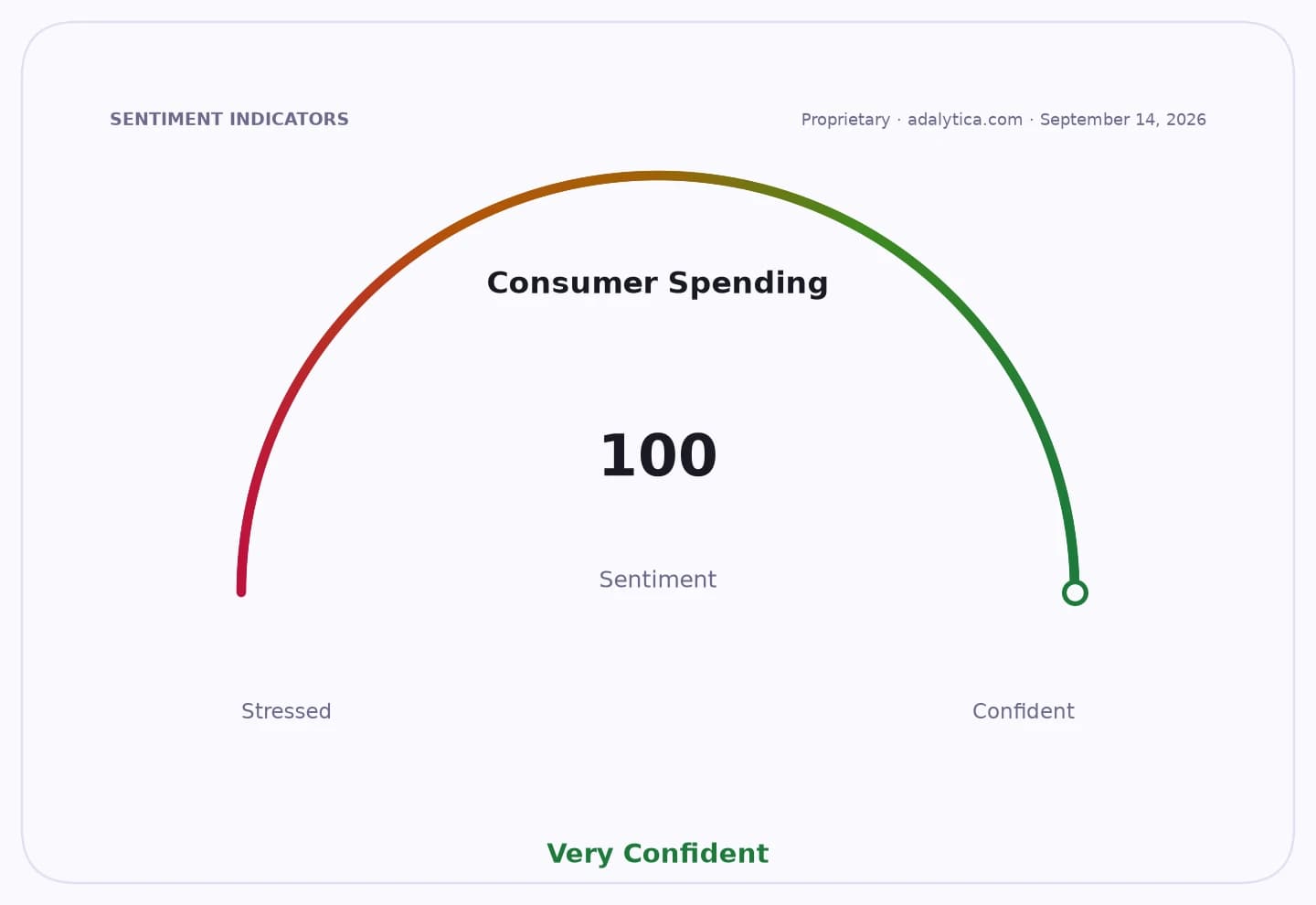
Consumer spending sentiment remains elevated in Adalytica’s data, while retail-goods spending sentiment is in extreme fear, a split that highlights the uneven demand environment facing advertisers and merchants. That makes efficient ad targeting more valuable for Amazon and more important for investors looking for margin support.
The next catalyst is likely to come from advertising and broader retail spending trends, along with any fresh evidence that AI tools are lifting ad returns enough to justify higher budgets.
| Entity | Gains | Losses |
|---|---|---|
| Amazon | ▲Higher-margin ad revenue | ▼Less dependence on retail margins |
| Advertisers | ▲Better targeting and conversion | ▼Higher competition for ad inventory |
| ▲Preserved ad-exchange structure | ▼Less pressure to unwind ad dominance | |
| Smaller ad-tech rivals | ▲AI adoption tailwind | ▼Share loss to scale players |