Amazon Labor Day Deals and Consumer Spending
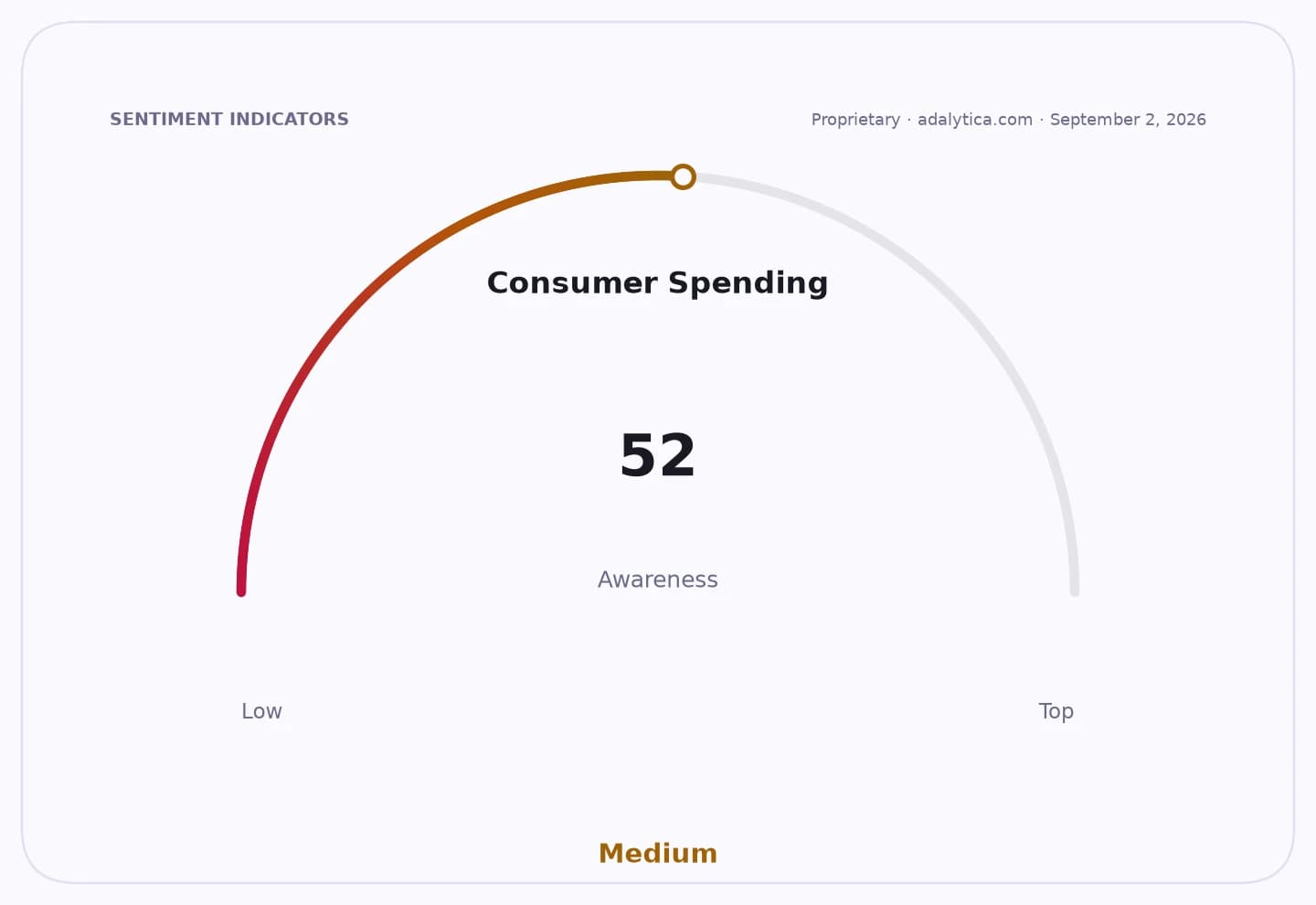
Amazon’s Labor Day deal push is arriving just as consumer spending sentiment cools and shoppers grow far more selective, a setup that favors value-heavy online merchants and disciplined deal hunters while pressuring weaker retailers to compete harder on price.
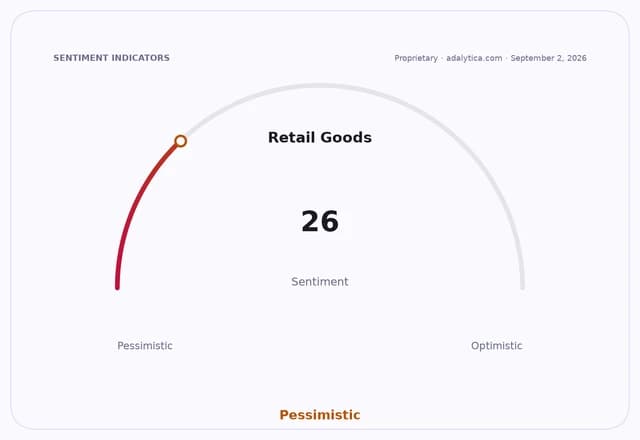
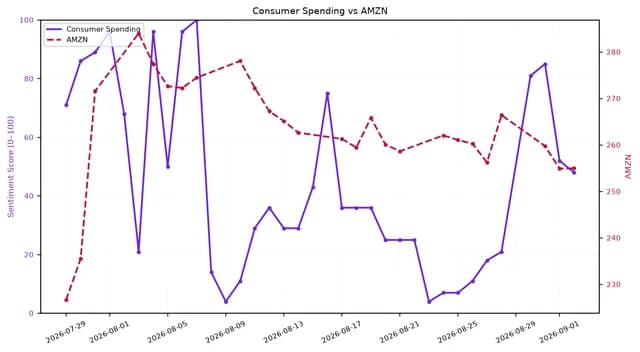
For investors, that matters because the battle for the bargain shopper is not just a holiday promotion story — it is a read on who is winning the next phase of e-commerce. Adalytica’s Consumer Spending Sentiment is still neutral at 48, but it slipped 4 points in a day and is down 13 points over the past month, while Retail Goods Spending Sentiment sits in fear territory at 26 even as awareness spikes to 100. That mix says shoppers are paying attention, but they are not spending freely.
Amazon is the clearest beneficiary of that environment. A retailer with scale, logistics leverage and a vast third-party marketplace can lean into short-duration promotions without sacrificing the long-term economics that smaller chains often give up to clear inventory. That is why the seed headline matters: “only” the best deals cut through the noise. In a market where deal fatigue is rising, curation itself becomes a competitive edge.
The stock is also telling a story of resilience, even if it is not a straight line higher. Amazon shares closed at $254.98 on Sept. 2, above the 50-day moving average of $252.83 and well above the 200-day moving average of $238.87, suggesting the longer-term trend remains constructive. RSI readings near 40 and a still-positive MACD point to a stock that has cooled from earlier strength but has not broken down. For investors, that leaves room for another move if holiday traffic and conversion rates come in better than feared.
The bigger thesis is that Labor Day, like Prime Day and Black Friday, has become less about a single shopping weekend and more about a stress test for retail pricing power. If shoppers keep concentrating around Amazon’s best discounts, the company deepens its role as the internet’s default demand sink, pulling share from incumbent retailers and reinforcing the flywheel between traffic, seller participation and ad dollars. That is the kind of second-order effect the market underestimates.
I believe the opportunity remains in the picks-and-shovels around that behavior as much as in the retailer itself: Amazon for the core trade, and the broader e-commerce infrastructure stack for investors looking for durable exposure to discount-driven demand. The consumer may be cautious, but caution still spends — and when it does, the platform with the best logistics, selection and deal discovery usually takes the lion’s share.
The key catalyst now is whether Labor Day traffic confirms that selective spending is concentrating further online. If it does, Amazon’s deal ecosystem should keep outperforming, and weaker retailers will have to absorb the margin pain.
| Entity | Gains | Losses |
|---|---|---|
| Amazon | ▲Holiday traffic and share gains | ▼Less efficient retailers |
| Shoppers | ▲Lower prices on essentials | ▼Full-price buyers |
| Small retailers | ▲Inventory clearance only | ▼Margin pressure |
| E-commerce infrastructure firms | ▲Higher transaction volume | ▼Brick-and-mortar laggards |