Amazon Labor Day Discounts Meet Weak Consumer Sentiment

Amazon’s Labor Day discounts are landing into a weaker consumer backdrop, making the holiday sales period a test of whether bargain hunting can still move discretionary spending when households are under pressure.
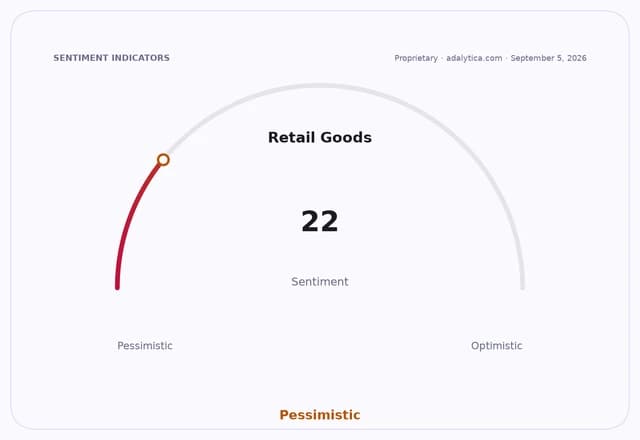
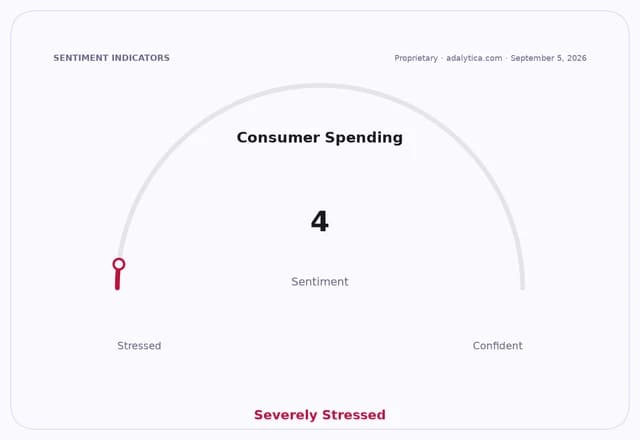
That matters because Labor Day has become one of retail’s most important demand windows, with major chains using early promotions to pull forward spending on electronics, appliances and home goods before the holiday weekend. This year, the backdrop is notably fragile: Adalytica’s consumer spending sentiment gauge is in “Extreme Fear” at 4, while its retail-goods sentiment sits at 22, or “Fear,” suggesting shoppers are more price-sensitive than usual even as they keep looking for deals.
The Amazon promotions fit that pattern. Deal trackers highlight markdowns that meet a minimum 4-star rating and at least 15% off, with standout offers including a record-low price on a 43-inch Mini LED 4K Samsung TV. Broader Labor Day promotions are also showing up at Apple, Costco and Home Depot, underscoring how competitive the holiday has become and how quickly retailers are moving to capture early demand.
For Amazon, the timing matters on both sides of the ledger. The company has been leaning on its retail machine even as higher-rate conditions, tariff uncertainty and broader consumer caution remain in the background. Its shares closed at $258.51 on Sept. 4, above both the 50-day moving average of $253.95 and the 200-day average of $239.12, while RSI readings around 47 point to a stock that has cooled from earlier overbought levels. That leaves room for the market to reward a strong holiday traffic readthrough, but also leaves Amazon exposed if promotion intensity eats into margins without generating enough volume.
The bull case is straightforward: if Amazon can convert bargain traffic into basket growth, the holiday weekend could reinforce the view that its scale and logistics network still give it an edge in a price-conscious market. The bear case is that aggressive discounting simply shifts demand forward and pressures profitability at a time when investors are already watching retail margins closely.
The same dynamic is visible across the sector. Walmart and Target are also trading with technicals that reflect recent volatility, and both are competing for the same consumer who is hunting value rather than brand loyalty. In that sense, Labor Day is less a one-off shopping event than an early read on how durable U.S. spending will be heading into the fourth quarter.
If the deals drive traffic, Amazon and other big-box retailers gain share of wallet. If shoppers remain selective, the winners will be the deepest discounters and the losers will be retailers that rely on full-price demand.
| Entity | Gains | Losses |
|---|---|---|
| Amazon | ▲Higher traffic and basket volume | ▼Margin pressure from discounts |
| Walmart | ▲Value-seeking shoppers | ▼Lost share to sharper promos |
| Target | ▲Holiday sales lift | ▼Slower full-price sell-through |
| Consumers | ▲Lower prices on big-ticket goods | ▼Limited inventory and time-sensitive deals |