Amazon, Walmart, Target Gain on Practical Spending
Global consumers are still spending, but the real story is that they are doing it more selectively, channeling money toward convenience, value and big-ticket platforms rather than sentimental holiday splurges.
That matters because the popular complaint that Valentine’s Day has become too commercialized is really a demand-story about where consumer dollars go when households are stretched and increasingly skeptical of traditional retail rituals. The winners are the merchants that own frequency, necessity and logistics; the losers are the sellers that depend on discretionary gifting and emotion-driven impulse buys.
Amazon is the clearest proof point. The stock has surged to $262.65 from $210.11 in February, and its 50-day moving average at $248.17 remains above the 200-day average at $237.70, a sign the longer-term trend is still constructive even after a pullback from August highs. WMT has also pushed to $115.27, while TGT has ripped to $154.48. That kind of strength says investors are rewarding retailers that can capture spending regardless of whether the occasion is Valentine’s Day, back-to-school or everyday replenishment.
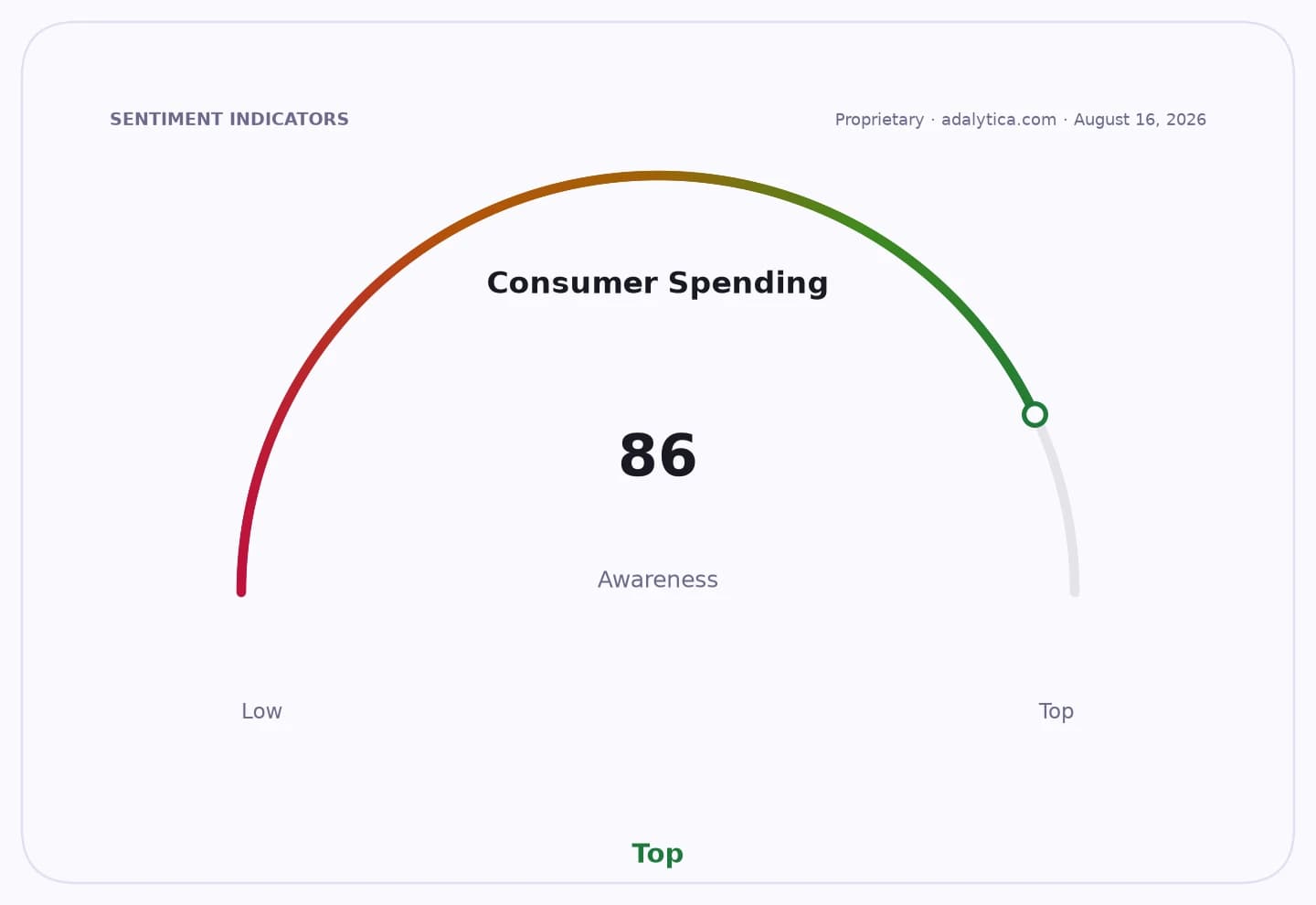
The more important economic signal is not romance spending itself, but the resilience of broad consumer demand in an environment where shoppers are treating discretionary occasions with more discipline. Adalytica’s Consumer Spending Sentiment sits at 75, labeled Greed, while Retail Sales Sentiment is only 25, in Fear. That gap fits the current market: consumers remain willing to spend, but they are far more cautious about how that spend is framed, which pushes traffic toward retailers with low prices, fast fulfillment and obvious utility.
For investors, that is exactly why the retail trade has become a story about market share, not just sales. Walmart’s latest move above its 50-day and 200-day averages reflects a business model built for trade-down behavior, while Target’s powerful rebound shows investors are still willing to pay for turnaround optionality when traffic improves. Amazon remains the secular winner because it captures both convenience and impulse, and its 10-Q language makes clear how much advertising, shipping and inventory management still matter to profitability as demand shifts.
The deeper thesis is that a “commercialized” holiday does not eliminate spending — it redirects it. Consumers who distrust markups or marketing gimmicks still buy, but they buy from the platforms that offer the best combination of price, speed and trust. That is a structural tailwind for Amazon and Walmart, and a more difficult setup for retailers and brands that rely on one-time gifting spikes.
If the next consumer cycle continues to favor practical spending over emotional splurging, the market should keep bidding up the companies that control distribution and value perception. In this environment, I believe the best way to play the Valentine’s Day skepticism trade is not to short sentiment — it is to own the infrastructure of modern consumer spending.
| Entity | Gains | Losses |
|---|---|---|
| Amazon | ▲More impulse and convenience sales | ▼Gift-focused niche retailers |
| Walmart | ▲Trade-down traffic and value demand | ▼Premium discretionary sellers |
| Target | ▲Turnaround upside from traffic recovery | ▼Merchants dependent on holiday emotion |
| Consumers | ▲Lower-pressure, utility-led spending | ▼Traditional Valentine’s Day markups |