AMH, EQR End July With Mixed Technicals, Policy Pressure
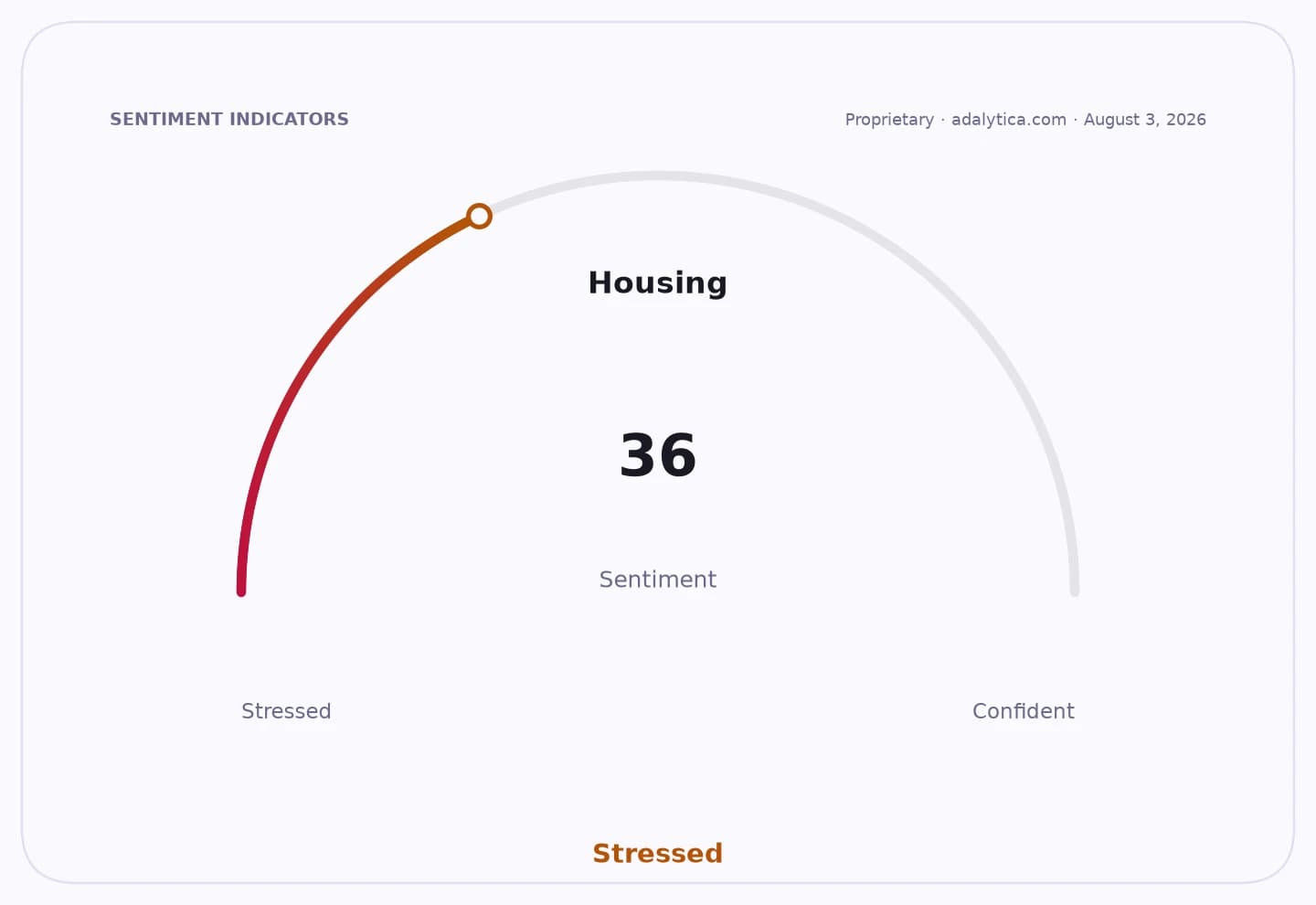
Private-home landlords are getting pulled into the political fight over housing affordability just as their stocks diverge on the back of different operating trends and sharply different technical setups.
The issue is not only reputational. If tenant protections strengthen, institutional owners of single-family rentals and apartments could face slower rent growth, more legal friction and higher compliance costs at a time when housing remains one of the economy’s biggest inflation channels. That would matter for REIT cash flows, cap rates and the valuation premium investors are willing to pay for recurring rental income.
The seed controversy around a “national home sale” tied to a tenant a buyer cannot evict speaks directly to that risk: single-family rental platforms have built a business on predictable lease turnover, but the optics of being unable to remove occupants underscores how housing can turn from a yield trade into a policy trade. AMH, one of the biggest single-family rental owners, has already told investors it faces challenges from laws that could restrict institutional ownership of homes, including acquisition limits, ownership bans or tax penalties. The company also pointed to the federal ROAD Act, enacted in July, which signals that Washington is willing to intervene more directly in the housing market.
That policy pressure arrives against a mixed market backdrop. AMH closed at $33.42 on July 31, above its 50-day moving average of $32.94 and well above its 200-day average of about $31.00, suggesting the stock is still in an uptrend despite a softer finish to the week. But its RSI was 45.2 and the MACD was below its signal line, hinting that momentum has cooled. Equity Residential, by contrast, ended July at $66.45, just below its 50-day average of $67.09 and far above its 200-day average of $62.08, but its RSI of 33.6 and a fading MACD point to a stock that has lost traction after a strong run earlier in the year.
For investors, the more important question is whether the tenant-rights debate becomes a margin issue or an outright growth constraint. Bulls will argue that demand for rentals remains supported by unaffordable homeownership, giving landlords pricing power even in a slower economy. Bears will counter that any new restrictions on evictions, occupancy rules or corporate ownership could compress returns in exactly the markets where institutional landlords have been most aggressive.
That tension is likely to keep AMH, EQR and other REITs sensitive not just to rates and occupancy, but to housing policy headlines. The sector’s next catalyst is less about demand and more about whether lawmakers decide that rental housing should be treated as a financial asset class or as a consumer-protection problem.
| Entity | Gains | Losses |
|---|---|---|
| Renters / tenants | ▲More protections | ▼Less eviction risk |
| AMH and home landlords | ▲Stable occupancy | ▼Higher compliance costs |
| EQR and apartment REITs | ▲Relative scale advantage | ▼Policy uncertainty |
| Policymakers / regulators | ▲Housing-policy traction | ▼Pushback from investors |