Apple Gains China AI Clearance

Apple’s approval to launch Apple Intelligence in China removes one of the biggest regulatory hurdles to bringing generative AI features to the world’s largest smartphone market, a step that could help revive iPhone demand in a market where competition from local rivals has been intense.
The clearance matters because China remains central to Apple’s growth, but the company has been unable to offer its full AI suite there while rivals have pushed ahead with domestic AI tools and faster product refresh cycles. Bringing Apple Intelligence to Chinese users could make the iPhone more competitive on a key feature that is increasingly shaping premium-phone upgrades.
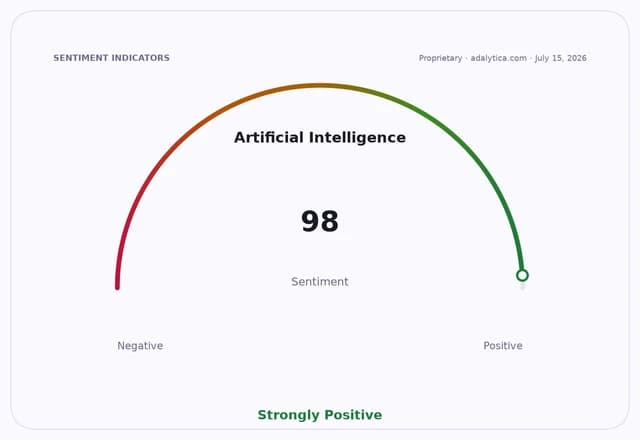
The rollout is also likely to lean on Alibaba’s AI models, underscoring how Apple is adapting to China’s regulatory and technology environment by partnering with a local heavyweight rather than trying to replicate its U.S. stack unchanged. That approach may help Apple move faster, but it also leaves the company more dependent on Chinese policy and local platform dynamics.
Shares of Apple were already trading near record territory, closing at $326.97 on July 15, after a sharp rally that has left the stock well above its 50-day moving average of $300.49 and 200-day moving average of $273.09. The latest move in Apple’s shares came with RSI at 70, a conventional technical indicator that points to stretched momentum even as investors continue to price in the AI launch as a potential catalyst.
For Alibaba, the approval could be a meaningful validation of its cloud and AI ambitions, giving it a larger role in one of the world’s most valuable consumer-device ecosystems. The broader China AI stack may also get a lift if Apple’s ecosystem draws more users and developer attention toward AI-enabled iPhone services.
The timing matters because the China approval comes as Apple is trying to prove that Apple Intelligence can be more than a U.S. feature add-on and instead become a driver of hardware replacement demand. The next focus for investors will be how quickly Apple can expand the rollout in China, whether the feature meaningfully boosts upgrade cycles, and how much revenue and margin leverage it can generate without adding new regulatory friction.
| Entity | Gains | Losses |
|---|---|---|
| Apple | ▲China AI access | ▼Regulatory delay risk |
| Alibaba | ▲Bigger AI role | ▼Dependence on Apple rollout |
| iPhone buyers in China | ▲New AI features | ▼Fewer feature gaps vs rivals |
| Local Android rivals | ▲Faster competitive pressure | ▼Premium upgrade advantage |