Apple, Microsoft, Amazon Face Slower Revenue Growth
Apple, Microsoft and Amazon are still generating powerful earnings momentum, but the latest market and filing data show the more important question for investors is whether that can last when revenue growth remains modest and the cost of capital stays elevated.
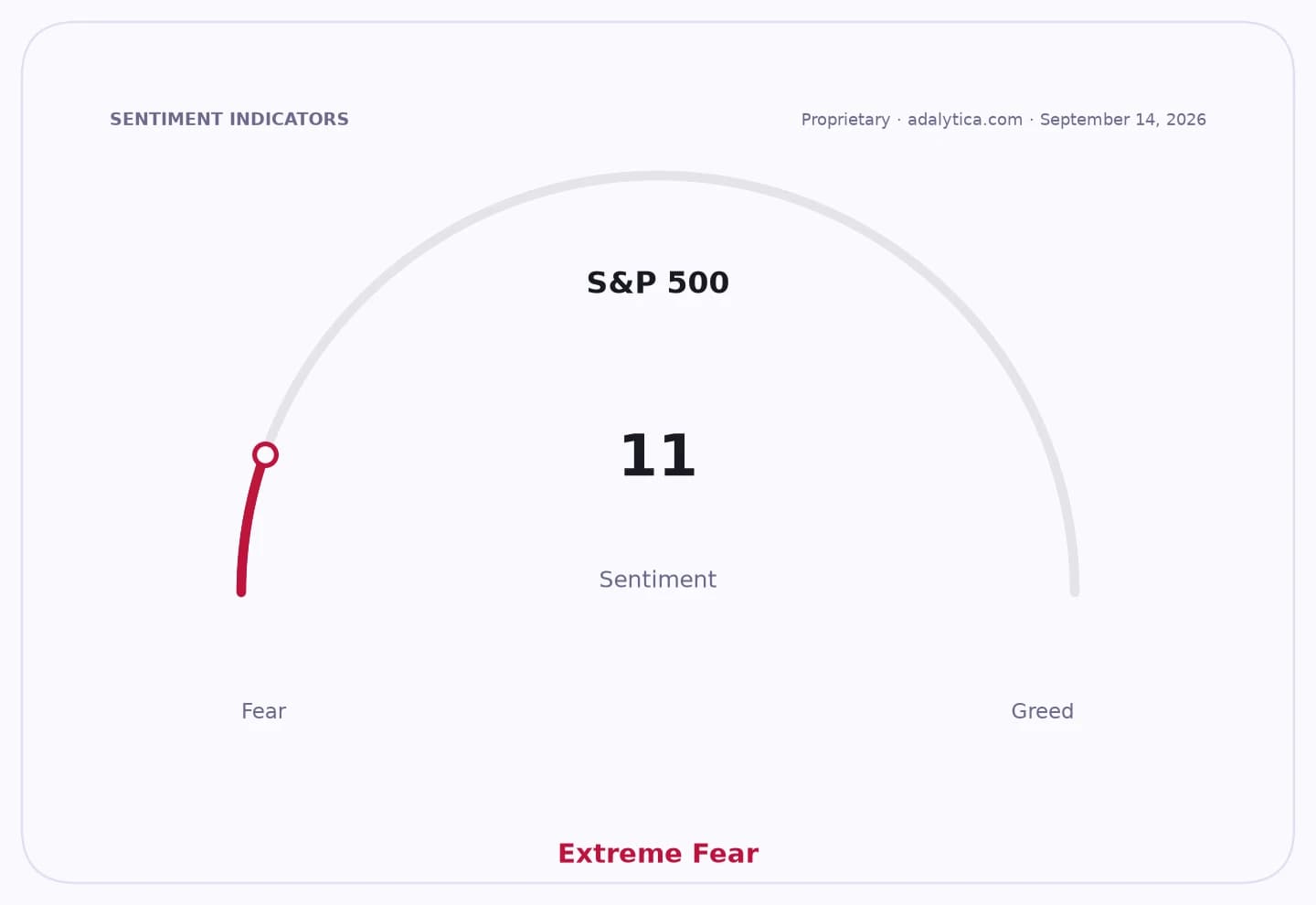
That tension matters because the market has been rewarding these megacap names for durability, scale and cash generation, even as the broader backdrop has turned less forgiving. The 10-year Treasury yield is near 4.95%, keeping pressure on valuations and making every extra point of sales growth harder to dismiss. At the same time, SPY trade signals from Adalytica point to “Extreme Fear,” a reminder that investors are demanding stronger fundamentals to support prices.
The core issue is not that the businesses are weak. It is that top-line expansion is no longer doing much of the work. The RSXFS series, a proxy for sales growth, rose to 665,054 in June from 663,604 in May and is forecast at 665,993.6 in August, implying only a 0.9% monthly increase. Industrial production, tracked by INDPRO, is advancing more steadily, but even there the latest reading at 102.99 suggests a sluggish pace rather than a breakout. In other words, the economy is still expanding, but not in a way that is translating into broad-based revenue acceleration.
That creates a familiar bull-bear split for investors. The bull case is that large-cap platforms can keep widening margins even with middling sales growth, thanks to pricing power, scale efficiencies, adjacencies and aggressive capital returns. Apple’s shares have climbed to $332.27, above both its 50-day and 200-day moving averages, while the relative strength index at 70.6 shows the stock has regained strong momentum. Microsoft is still near $495.63, also well above its 50-day and 200-day averages, even after a sharp midyear reset. Amazon has recovered to $256.78 from a summer low, but remains more vulnerable to any disappointment because its revenue base is tied more directly to consumer and cloud demand.
The bear case is that margin expansion can only offset slow sales for so long. Apple’s revenue growth has been uneven, and while it continues to buy back stock aggressively — part of the reason per-share results can outpace underlying sales — that is not the same as a durable reacceleration in demand. Microsoft’s 2026 filing showed $16.7 billion in share repurchases, underscoring how much shareholder returns are helping support equity performance. Amazon, meanwhile, has had sharper swings in its stock, with the technical picture still showing a market that is trading off conviction rather than clean trend strength.
For the economy, the implication is straightforward: corporate America is still profitable, but the balance of growth is shifting away from volume and toward efficiency. That is supportive for margins in the near term, yet it also suggests the cycle is maturing. Strong consumer spending sentiment in Adalytica’s data contrasts with extreme fear in the broader equity tape, a combination that often leaves investors preferring companies that can convert sales into cash rather than those relying on revenue acceleration alone.
That means upcoming earnings will be judged less on headline growth and more on whether management can prove that profit gains are being built on something sturdier than cost control and buybacks. If top-line momentum stays this muted while rates remain high, the market is likely to keep rewarding only the cleanest margin stories and punishing any sign that earnings quality is slipping.
| Entity | Gains | Losses |
|---|---|---|
| Apple shareholders | ▲Buybacks and margin support | ▼Slow revenue growth |
| Microsoft shareholders | ▲Cash returns and earnings resilience | ▼Higher bar for AI spending payback |
| Amazon bulls | ▲Efficiency gains and rebound potential | ▼Consumer or cloud demand softness |
| Rate-sensitive valuations | ▲Profitability matters more | ▼Multiple expansion is constrained |