Argentina assets fall as credit risk stays high
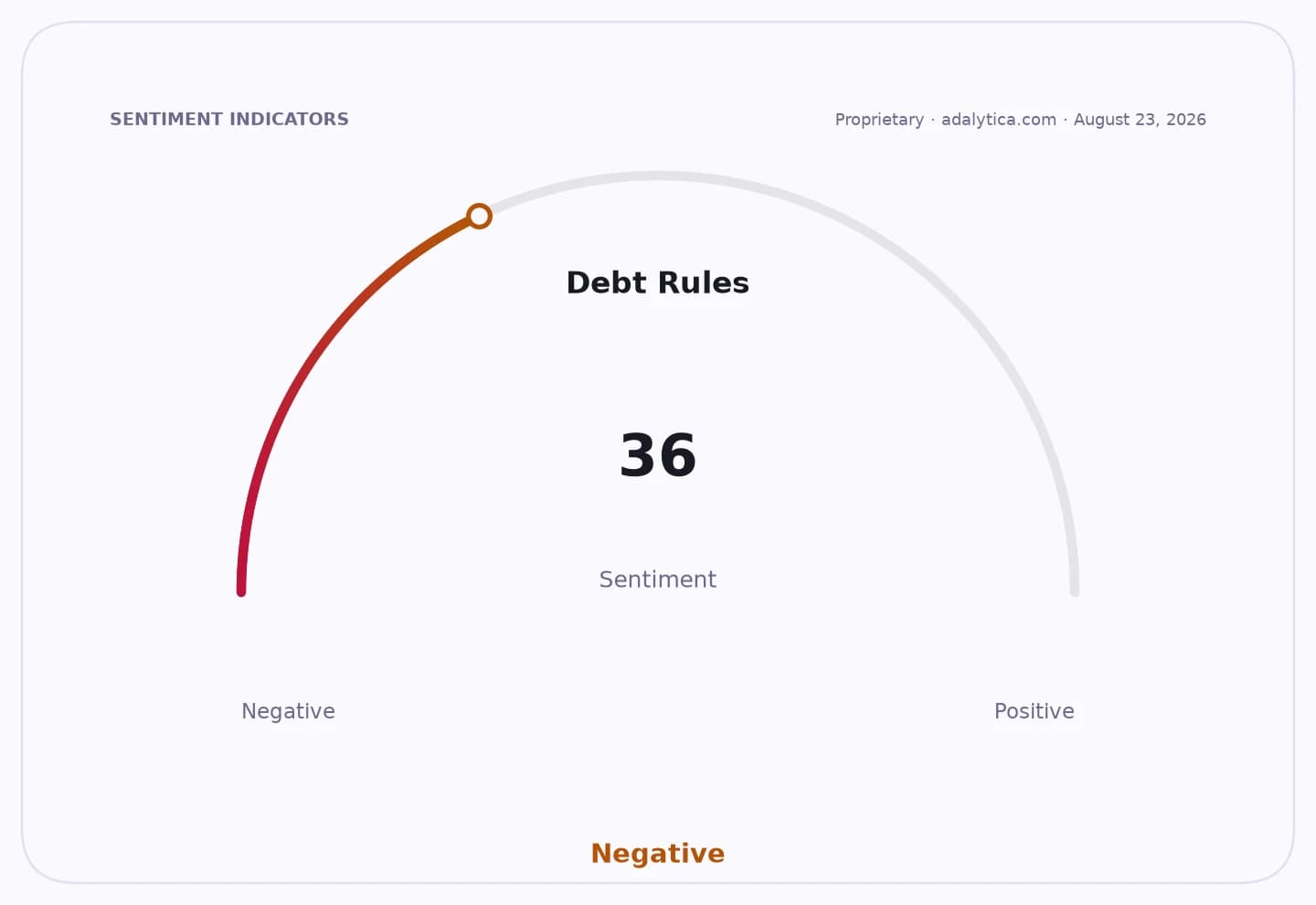
Argentina is running into the same paradox that has defined its markets for years: it needs financing, but it still struggles to earn lasting credit, and investors are again being forced to price that gap.
That matters because Argentina’s recovery story has always depended on one scarce asset — trust. When that trust slips, the cost shows up fast in sovereign risk, bank balance sheets, corporate funding and the valuation of local assets. The latest market action suggests investors are once more separating the country’s long-term potential from the immediate danger of holding its debt and equities through another volatile policy cycle.
The message is visible in Argentina-linked assets. The Global X MSCI Argentina ETF, ARGT, has recovered from an August low near $89.11 to $92.81, but it remains only modestly above its 200-day moving average and still below its 50-day average, a sign the rebound is fragile rather than decisive. More striking is Banco Galicia, GGAL, which has been hammered to $41.45 from $53.19 in late July. Its relative strength index has plunged to 12.5, an extreme oversold reading, while the stock sits well below both its 50-day and 200-day moving averages. That is not the profile of a market buying a clean macro turnaround. It is the profile of a market punishing exposure to a country that still trades as a high-beta credit event.
The core economic issue is debt service, not just debt size. Argentina’s paradox is that it can attract capital only when investors believe the currency, fiscal path and policy mix are stable enough to protect returns — yet the country’s history keeps demanding a far higher risk premium than its reform narrative can comfortably support. In practice, that means every financing window is short, expensive and conditional. For banks, companies and sovereign borrowers, that is a recipe for cautious lending, tight liquidity and constant refinancing risk.
That is why the contrast with developed-market debt matters. U.S. Treasuries, with the 10-year yield around 4.675% and the 2-year near 4.198%, remain the global benchmark for risk-free pricing. Argentina has to borrow against that backdrop, but without the institutional credibility that lets the U.S. absorb massive debt loads at scale. In other words, the problem is not simply how much debt exists; it is how much confidence must be paid to roll it over.
For investors, that creates a classic two-sided trade. The bullish case is that Argentina remains one of the clearest latent re-rating stories in emerging markets if policy discipline holds and access to capital improves. The bear case is that the market is still treating the country as a recurring liquidity stress, not a normalized credit. That tension is exactly why Argentina-linked names can swing violently on the slightest shift in fiscal confidence, reserve accumulation or external financing.
The tradeable implication is not to chase the headline bounce. It is to focus on the infrastructure around the country’s financing cycle: banks with hard-currency exposure, exporters that can earn dollars, energy names with external cash flow, and broad emerging-market vehicles that can benefit if Argentina’s risk premium narrows. If reform credibility improves, the upside is asymmetric because valuations are still discounted for a crisis that is no longer fully priced into the broader EM complex. If credibility breaks, the downside hits quickly through funding costs, deposit behavior and equity multiples.
For now, the market is sending a simple verdict: Argentina still has access to capital, but not yet enough credit to make that access cheap. Until that changes, the best opportunity may be in owning the beneficiaries of a future normalization — not the most exposed instruments today.
| Entity | Gains | Losses |
|---|---|---|
| Dollar earners in Argentina | ▲Hard-currency revenue | ▼Peso-funded borrowers |
| Argentine reform supporters | ▲Re-rating potential | ▼Short-term volatility |
| Banks such as GGAL | ▲If credit confidence returns | ▼If funding stress deepens |
| Broad EM vehicles like EEM | ▲Better sentiment spillover | ▼Contagion from Argentina risk |