Argentina business groups split over Milei reforms
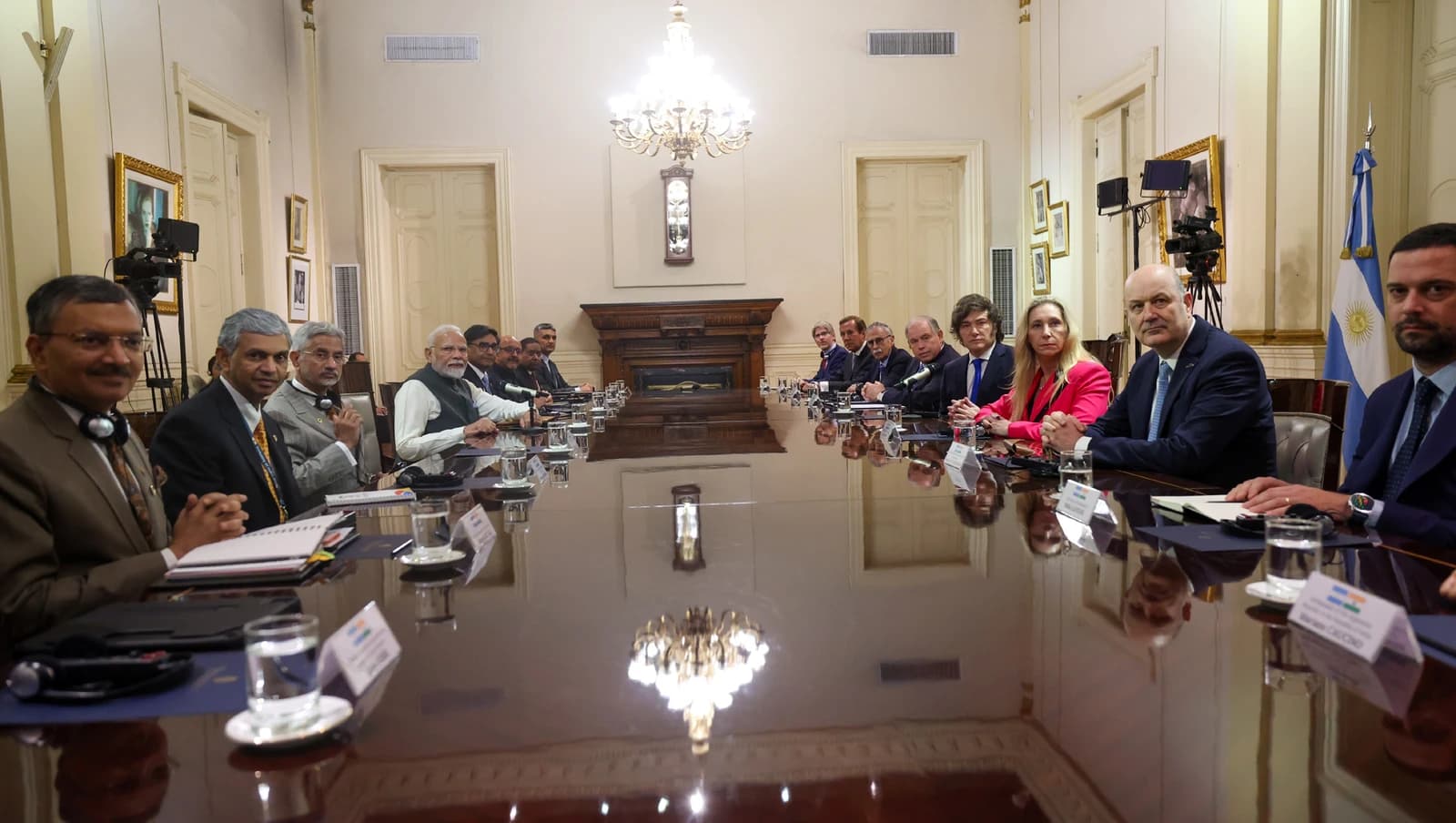
Javier Milei’s confrontational economic program is fracturing Argentina’s business establishment, as industrial groups, builders and long-entrenched lobby circles split over how far — and how fast — to back his austerity drive.
The break matters because the so-called “círculo rojo” has long been one of the main transmission belts between policy and investment in Argentina. If the country’s top corporate groups no longer speak with one voice, Milei may find it easier to push through market-friendly reforms, but harder to build a stable consensus for industrial policy, public works and a slower exit from recession.

Perfil, citing an analysis by journalist Carlos Burgueño, said the absence of industrial policy, the freeze in public works and the hit from recession have pushed some lobbying groups in the Argentine Industrial Union to the edge of disbanding. Construction has emerged as one of the clearest losers, along with companies tied to state infrastructure spending, while protected domestic industry is taking the pressure from weaker consumption and the slump in activity.
The split is also cultural, not just economic. According to Perfil, Milei has rejected the old model in which business leaders manage power through constant dialogue, choosing instead to confront what he calls “the caste” and to speak directly to voters. That has left the Asociación de Empresarios Argentinos, a key venue for the country’s corporate elite, meeting less often and becoming harder to organize.

Some in the business class are already aligning with the government’s agenda, including IRSA’s Eduardo Elsztain, Mercado Libre founder Marcos Galperin, and much of the energy and banking sectors. Others — among them Techint, Clarín, Arcor, La Anónima, Ledesma, Coto, Galicia, Bagó and Vaca Muerta figures — are either under attack from the presidential podium or uneasy about the economic cost of adjustment.
For investors, the immediate implication is that Argentina’s reform story is no longer just about fiscal math. It is becoming a test of whether a pro-market presidency can maintain enough elite support to keep reforms moving while the economy absorbs recession, weak domestic demand and a deep cutback in state-led investment.
That split will remain a key watchpoint into 2026, as markets gauge whether Milei’s coalition stays intact long enough to sustain disinflation, revive growth and reprice Argentine assets more permanently.
| Entity | Gains | Losses |
|---|---|---|
| Milei government | ▲Reform flexibility | ▼Business consensus |
| Energy and banks | ▲Policy alignment | ▼Less broad support |
| Construction and public works firms | ▲— | ▼Infrastructure spending |
| Argentine industrial lobby | ▲New political relevance | ▼Unified influence |