Argentina Milei Loses Buenos Aires Province Vote
Javier Milei’s crushing loss in Buenos Aires province has become the biggest political risk to Argentina’s market-oriented overhaul, raising doubts about how far the president can push reforms before October’s national midterms.
The result, in which Milei’s La Libertad Avanza won about 34% of the vote versus roughly 47% for the Peronist Fuerza Patria alliance led by Governor Axel Kicillof, is more than a provincial setback. Buenos Aires accounts for close to 40% of Argentina’s electorate, making it the country’s most important political battleground and a key barometer for investor confidence in Milei’s ability to govern.
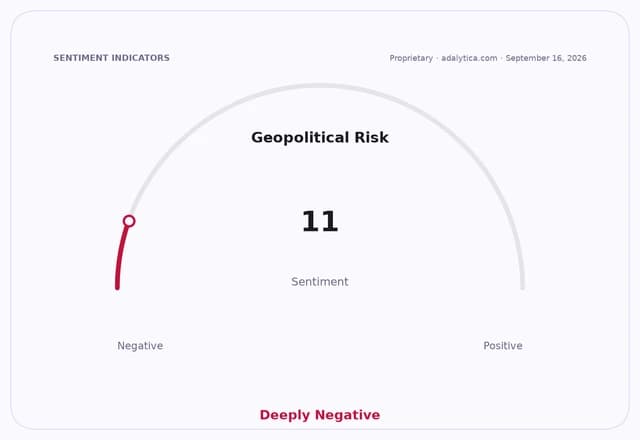
For markets, the vote matters because it raises the odds that the administration will struggle to convert its libertarian mandate into durable legislation. Milei has made fiscal retrenchment, deregulation and labor and tax reform central to his program, but a weakened showing in the province that anchors the Peronist machine suggests a thinner path through Congress and a louder opposition in the months ahead. That comes at a time when Argentina remains in recession, inflation is still elevated and the peso has been under sustained pressure.
Milei conceded the defeat but said he would not alter the direction of economic policy. That stance may reassure supporters of the reform agenda, but it also underlines the political rigidity that can unsettle investors if it leaves the government with little room to broaden its coalition. A corruption scandal involving his sister and approval ratings below 40% have already eroded his standing, making the October legislative vote a crucial test of whether he can still translate discontent over the old Peronist model into support for his own program.

The market reaction will likely be centered on Argentine sovereign debt, local equities and the country risk premium. Investors have treated Milei’s presidency as a rare pro-market break from Argentina’s long record of policy reversals, so any sign that his political capital is slipping tends to hit assets tied to reform success. The broader macro implication is that weaker political backing could slow disinflation, delay normalization in the currency regime and keep borrowing costs high for longer.
Axel Kicillof’s stronger-than-expected showing also matters because it gives the Peronists fresh momentum and a possible standard-bearer for a national alternative. If Buenos Aires proves a preview of October, Milei may face a Congress less willing to pass austerity measures and a markets less willing to price in a clean reform path.
For investors, the immediate question is not whether Milei will keep talking reform, but whether he can keep building the political base needed to make it stick. The answer will shape Argentina’s bonds, the peso and the valuation of any asset exposed to a slower, noisier adjustment process.
| Entity | Gains | Losses |
|---|---|---|
| Peronist Fuerza Patria | ▲Momentum for October | ▼ |
| Axel Kicillof | ▲National profile rises | ▼ |
| Milei / La Libertad Avanza | ▲ | ▼Political capital and legislative leverage |
| Argentina bonds and equities | ▲ | ▼Reform premium fades |