Argentina mortgage market gets funding boost

Argentina’s mortgage market is getting a fresh push from government-backed funding, but borrowers are still overpaying by hundreds of thousands of pesos because rate resets, short loan terms and upfront costs keep monthly relief from turning into real savings.
The risk for households is simple: even when banks advertise lower rates and longer tenors, a mortgage can still become much more expensive if borrowers fixate on the monthly payment and miss the total cost over the life of the loan. That matters in a country where housing finance remains scarce, inflation expectations are unstable and small changes in rates can reshape affordability.

The problem is becoming more visible as mortgage lending picks up. Banking mortgage credit rose 11% over the past year to 118 billion pesos in July, while mortgage credit overall increased 7.6% year-on-year, according to the data context. At the same time, benchmark borrowing costs are still elevated, with the 10-year US Treasury yield at 4.75% and the 2-year at 4.34%, levels that keep global funding conditions tight and limit how far local lenders can cut rates.
That tension sits behind Luis Caputo’s $2 billion plan unveiled on Aug. 26 to expand mortgage credit using Anses funds. The move is aimed at reviving housing demand and was welcomed by banks and builders, including Banco Macro, which responded by lowering mortgage rates and extending loan terms to 20 years. But the offer of cheaper financing can still disappoint borrowers if they ignore hidden costs such as fees, insurance, inflation-linked adjustments and the penalty of borrowing too much relative to income.
Technical indicators on the TLT Treasury bond ETF also point to a market that is not yet pricing a dramatic easing in long-term rates. The fund is trading at 81.99, below both its 50-day and 200-day moving averages, while the RSI sits around 51, suggesting no clear momentum in bond prices that would translate into sharply cheaper mortgage funding.
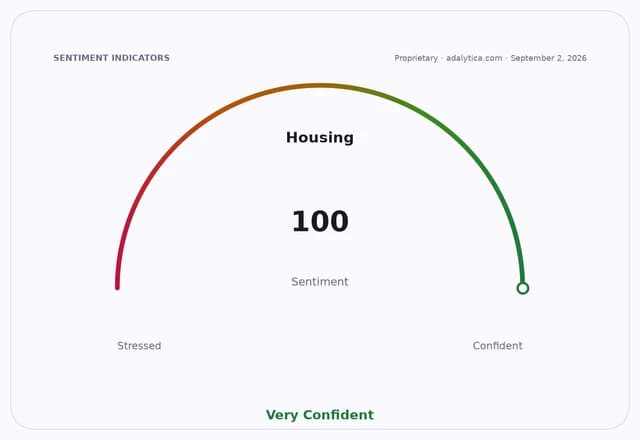
Adalytica’s Housing and Rent Inflation sentiment gauge shows “Extreme Greed,” with sentiment at 100 and up 11 points in a day, underscoring how heated housing affordability has become for consumers. For investors, that points to continued demand for mortgage lenders and homebuilders if credit expands, but also to margin pressure if banks compete harder on rates or if funding costs stay sticky.
The next test is whether the government’s support plan translates into more approvals without worsening credit risk. If mortgage rates stay near 6.7% and borrowers keep focusing on the headline installment rather than the full amortized cost, the savings gap that consumers think they are capturing may remain largely theoretical.
| Entity | Gains | Losses |
|---|---|---|
| Borrowers who compare full loan costs | ▲Lower monthly strain | ▼Fewer hidden overpayments |
| Banks and builders | ▲More mortgage demand | ▼Margin pressure from competition |
| Borrowers who chase the lowest installment | ▲Easier approval upfront | ▼Higher lifetime interest costs |
| Government housing policy | ▲Better credit transmission | ▼Risk of weak affordability gains |