Argentina REM sees inflation below 2% and peso weakness
Argentina’s central bank survey points to inflation staying below 2% a month while the peso is still expected to weaken only gradually, a combination that supports the government’s disinflation narrative but also underscores how fragile the path to price stability remains.
The Banco Central’s monthly Relevamiento de Expectativas del Mercado, or REM, showed analysts estimating August consumer prices rose 1.7%, down 0.1 percentage point from the previous survey, and projecting 1.8% for September before inflation eases again to 1.7% in October and 1.6% in November. For December, expectations tick back up to 1.8%.
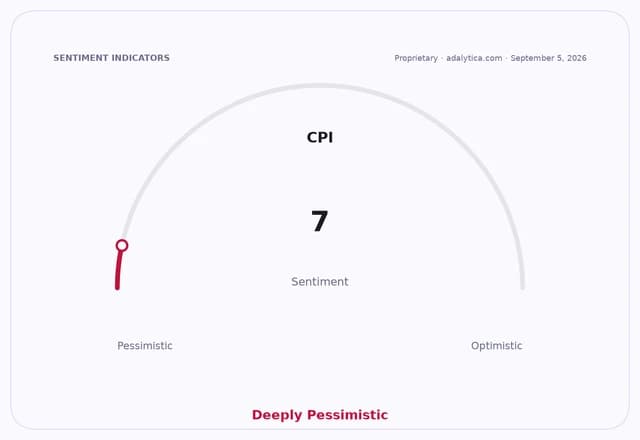
That matters because the survey suggests inflation is continuing to decelerate without yet breaking into a decisively lower regime. A sequence of monthly readings below 2% would be a political and economic win for President Javier Milei’s administration, which has made disinflation the centerpiece of its program. But the pattern also shows analysts still see price growth anchored at levels that remain high by global standards and vulnerable to exchange-rate moves, regulated tariff adjustments and shifts in demand.
The REM also put the wholesale dollar at an average of 1,530 pesos in September and 1,630 pesos by December, slightly below the previous survey’s year-end estimate. That implies a controlled depreciation path rather than a sharp devaluation, reinforcing the view that policymakers are trying to preserve the recent anti-inflation gains by limiting pass-through from the currency to prices.
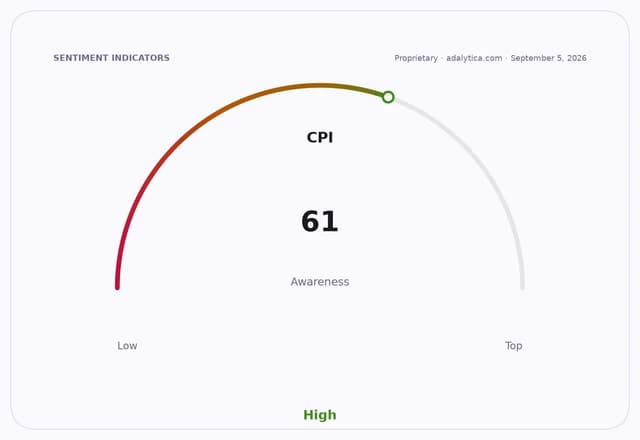
For investors, the message is mixed but broadly supportive in the near term. Slower inflation and a relatively contained peso slide are constructive for local-currency assets, especially if they keep real rates positive and help extend the recovery in Argentine sovereign and corporate risk appetite. The iShares MSCI Argentina ETF, ARGT, has recently traded near its highs for the period, while bank shares such as Banco Macro and Grupo Financiero Galicia remain highly sensitive to the outlook for rates, credit growth and currency stability.
Still, the main risk is that the market’s confidence gets ahead of the macro data. The survey’s 21% forecast for inflation over the next 12 months and 30% year-on-year inflation by December 2026 are improvements for Argentina, but they are not yet signs of a clean exit from chronic inflation. Growth is also expected to be uneven, with the REM now pointing to 2.1% expansion in 2026 after a 0.6 percentage-point downgrade from the prior survey, while unemployment is seen around 7.5%-7.7%.
The broader story is that Argentina is attempting to consolidate a stabilization program built on fiscal tightening, monetary restraint and a managed exchange rate. If the inflation prints due from INDEC on Thursday confirm the REM’s view, it would strengthen the case that the government can keep the peso’s adjustment orderly through year-end. If not, the market will quickly refocus on how much room authorities have to defend disinflation without choking growth.
| Entity | Gains | Losses |
|---|---|---|
| Argentine government | ▲Disinflation credibility | ▼Policy room if inflation reaccelerates |
| Local bond and equity investors | ▲Lower inflation outlook | ▼Upside if data disappoints |
| Consumers | ▲Slower price increases | ▼Wage gains still lag prices |
| Peso shorts | ▲Orderly depreciation path | ▼Faster-than-expected peso weakness |