Arista, Nvidia, Microsoft Ride AI Network Buildout
The next leg of the AI trade may belong less to chipmakers than to the companies wiring the infrastructure together, as an intensifying backlash against data centers raises the political and operational stakes for the sector’s buildout.
That is the core bet behind a new call to buy connectivity stocks to capture the next AI wave: if hyperscalers keep spending on artificial intelligence, they will need far more networking gear, switching equipment and optical components to move data between chips, servers and facilities. But unlike the earlier phase of the rally, which centered on Nvidia’s processors, the infrastructure trade is spreading into the plumbing that makes AI clusters work — and into firms such as Arista Networks and Microsoft, which now sit closer to the center of that investment cycle.
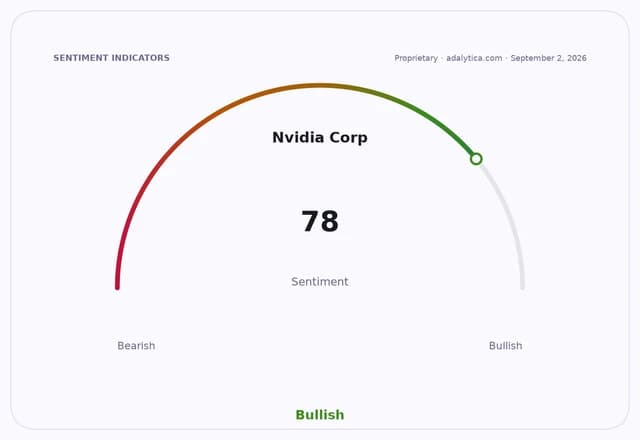
The timing matters. Shares of Nvidia, Microsoft and Arista have all recovered sharply from earlier swings, with Nvidia trading at $217.44, above its 50-day moving average of $208.80, and Microsoft at $501.02, also above its 50-day average of $435.23. Arista, meanwhile, has pulled back to $189.26 from an August high above $210, but remains well above its 200-day average of $150.73. Conventional momentum gauges point to a market that is still digesting the AI capex boom rather than abandoning it: Nvidia’s RSI was 44.6 on the latest reading, Microsoft’s 56.6 and Arista’s 44.5.
The investment case rests on the scale of the buildout. AI spending is no longer just about training models in isolated clusters; it is increasingly about connecting vast numbers of accelerators across data halls, campuses and regions. That makes networking a structural beneficiary if the spending cycle persists. Connectivity vendors also tend to capture more recurring demand than the headline chip names, because upgrades, refreshes and expansion in bandwidth can continue even when AI hardware orders become lumpier.
But the story is not purely bullish. The political fight over data centers is becoming a real constraint on how quickly capacity can be added. A broad backlash has spread across the US, with local bans and moratoria multiplying and elected officials from both parties under pressure to distance themselves from hyperscale projects. The complaint is not only aesthetic or local. It is about power use, water demand, land use, noise, subsidies and opaque permitting — all of which can slow construction and raise the cost of capital for infrastructure tied to AI.
For investors, that creates a two-sided market. On one side are the winners from continued AI investment: networking suppliers, optical component makers and cloud platforms that can monetize the demand. On the other are communities, utilities and some local politicians who are increasingly resisting the physical footprint of the AI economy. If permitting slows, the near-term effect could be delays in revenue recognition for the infrastructure chain even if long-term demand stays intact.
There is also a valuation question. Microsoft and Nvidia have already been repriced as AI leaders, so incremental upside increasingly depends on execution and on the breadth of the capex cycle. Arista may offer a more direct way to play the networking theme, but it is not immune to a broader re-rating if AI spending cools or if data-center opposition starts to bite into build plans. By contrast, Microsoft’s scale and balance sheet give it more flexibility to keep funding AI infrastructure even if returns take longer to show up.
The bullish case is that AI remains in the early stages of a multi-year infrastructure cycle, and connectivity is where that cycle becomes visible after the chips are ordered. The bearish case is that the next bottleneck is not technology but politics, with public resistance and permitting friction slowing the rollout just as investors have begun to broaden their exposure beyond semiconductors. For now, the market is still treating AI as an investment supercycle — but the battleground is shifting from processors to the network and from Wall Street to local zoning boards.
| Entity | Gains | Losses |
|---|---|---|
| Arista Networks | ▲AI networking demand | ▼If data-center builds slow |
| Nvidia | ▲Core AI chip spending | ▼Broader capex delays |
| Microsoft | ▲Azure AI infrastructure | ▼Higher regulatory friction |
| Local communities | ▲More leverage over projects | ▼Fewer near-term developments |