Armenia’s apricot trade is becoming a small but telling casualty of its widening break with Russia, and that matters because the squeeze on a seemingly niche export is another sign that the Kremlin’s economic grip on the South Caucasus is loosening faster than Moscow can replace it.
Armenia-Russia Trade Split Signals Regional Rerouting
The economic significance goes beyond fruit. Armenia’s reported 21.5% drop in trade turnover with Russia points to a broader rerouting of commerce, capital and political dependence toward Europe and away from a neighbor that has long served as Yerevan’s dominant market and security patron. For a small, landlocked economy, even modest disruptions in cross-border trade can ripple through farm incomes, transport demand, currency stability and consumer prices. Apricots are the symbol; the real story is the erosion of the old trade architecture.
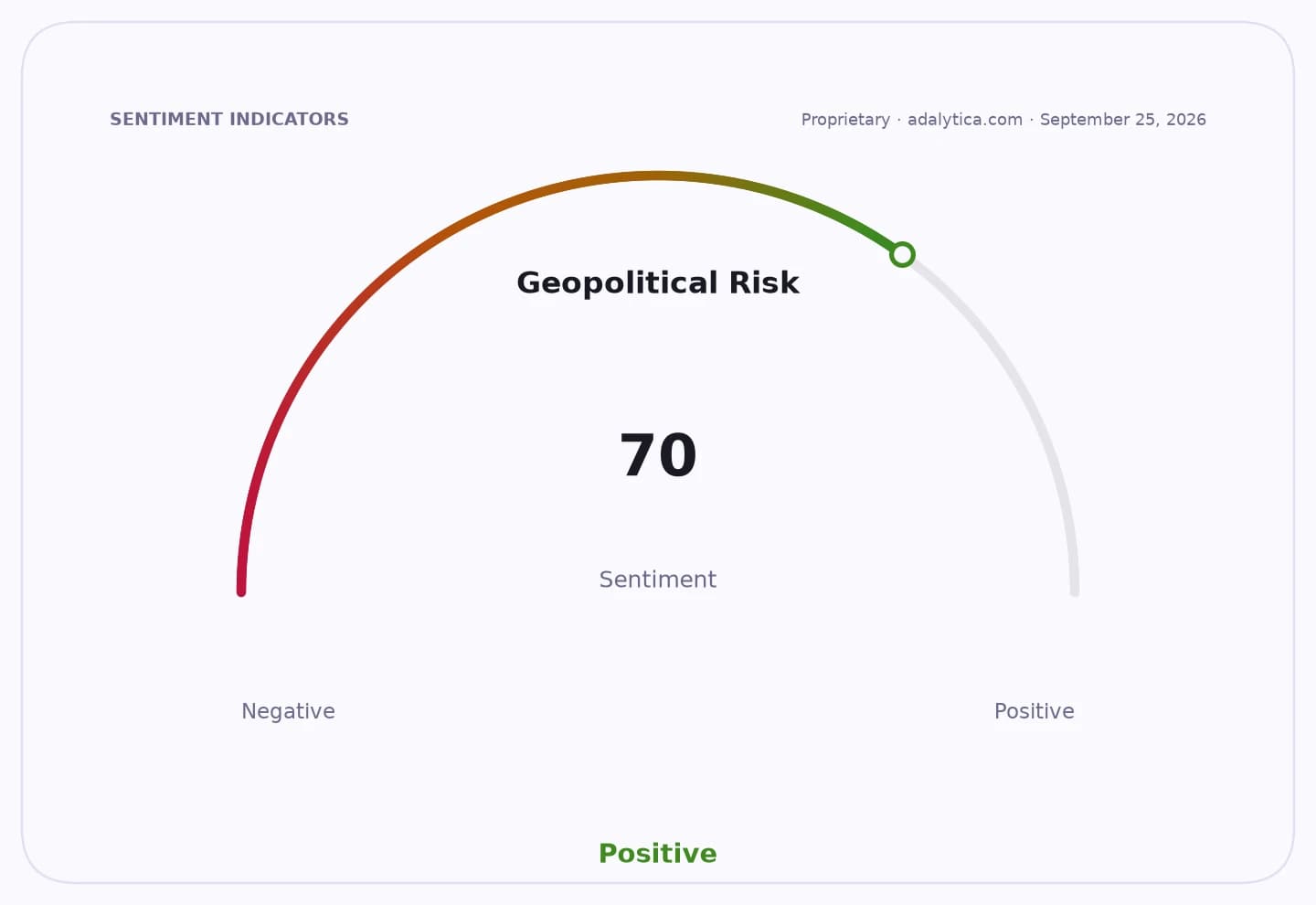
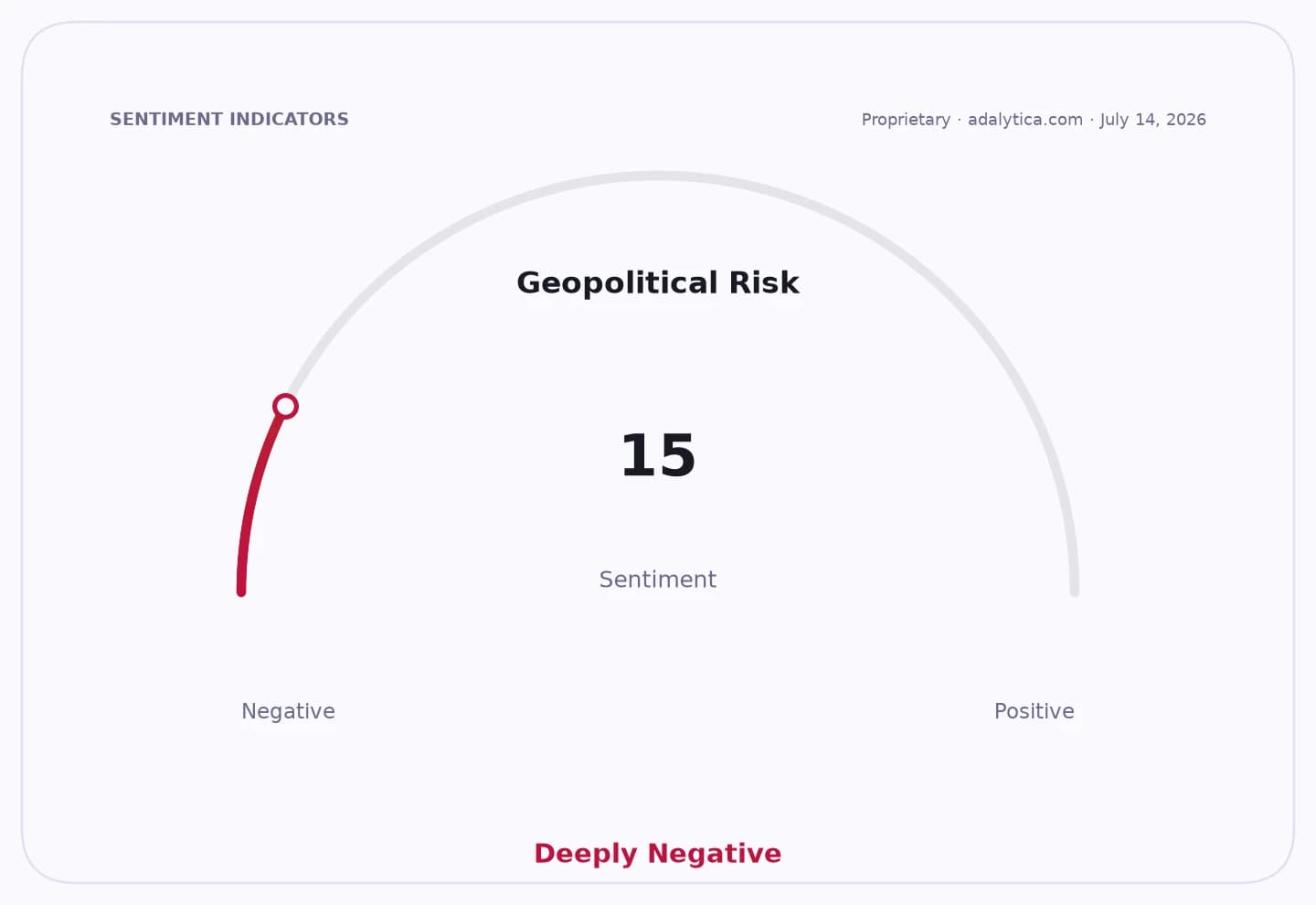
Sentiment IndicatorsⓘProprietary · adalytica.com · July 14, 2026
This is a snapshot — live sentiment, awareness and momentum for 130+ markets update continuously in the dashboard.Open AlphaPulse
That shift is being reinforced by the European Union, which has expanded its presence in Armenia with a mission aimed at countering Russian “hybrid threats,” a role reminiscent of its footprint in Ukraine. At the same time, more than 60,000 Russians who fled political persecution after 2022 have turned Armenia into an unexpected refuge, adding a contradictory layer to the relationship: deep social spillover from Russia even as official ties deteriorate.
Investors should care because geopolitics is increasingly a trade-flow story. The market underestimates how quickly regional alignments can alter who wins in agriculture, logistics, currencies and consumer goods. A weaker Russia-Armenia trade link can pressure exporters tied to Russian demand, but it may also create openings for European suppliers, freight operators and companies positioned for supply-chain diversification across the Caucasus and nearby routes. In a world where capital is chasing resilience, countries that can reposition as alternative nodes in trade corridors tend to attract disproportionate attention.
That’s why the apricot dispute matters as more than headline color. It is a micro example of de-risking in action: Armenia is testing the cost of moving out from Russia’s orbit, and Russia is discovering that influence built on trade can erode quickly when sanctions, war and diplomatic isolation change the calculus. The European Union’s Ukraine-style trade relief for Armenia only intensifies that pressure, likely sharpening the Kremlin’s response and keeping bilateral friction elevated.
For investors, the takeaway is to watch the second-order winners: firms exposed to Eurasian logistics rerouting, EU-facing trade channels, and regional infrastructure that benefits from a search for non-Russian commercial paths. The market may still see Armenia as too small to matter. I believe that’s exactly why it can be an early signal. When apricots become geopolitical battlegrounds, bigger shifts are usually close behind.
| Entity | Gains | Losses |
|---|---|---|
| Armenia | ▲EU access, trade diversification | ▼Russian market dependence |
| Russia | ▲Refugee inflows, residual influence | ▼Trade turnover, leverage |
| EU | ▲Strategic foothold, influence | ▼Higher regional exposure |
| Armenian exporters | ▲New market options | ▼Short-term disruption |