ARMOUR Residential REIT Falls on Mortgage Rate Pressure
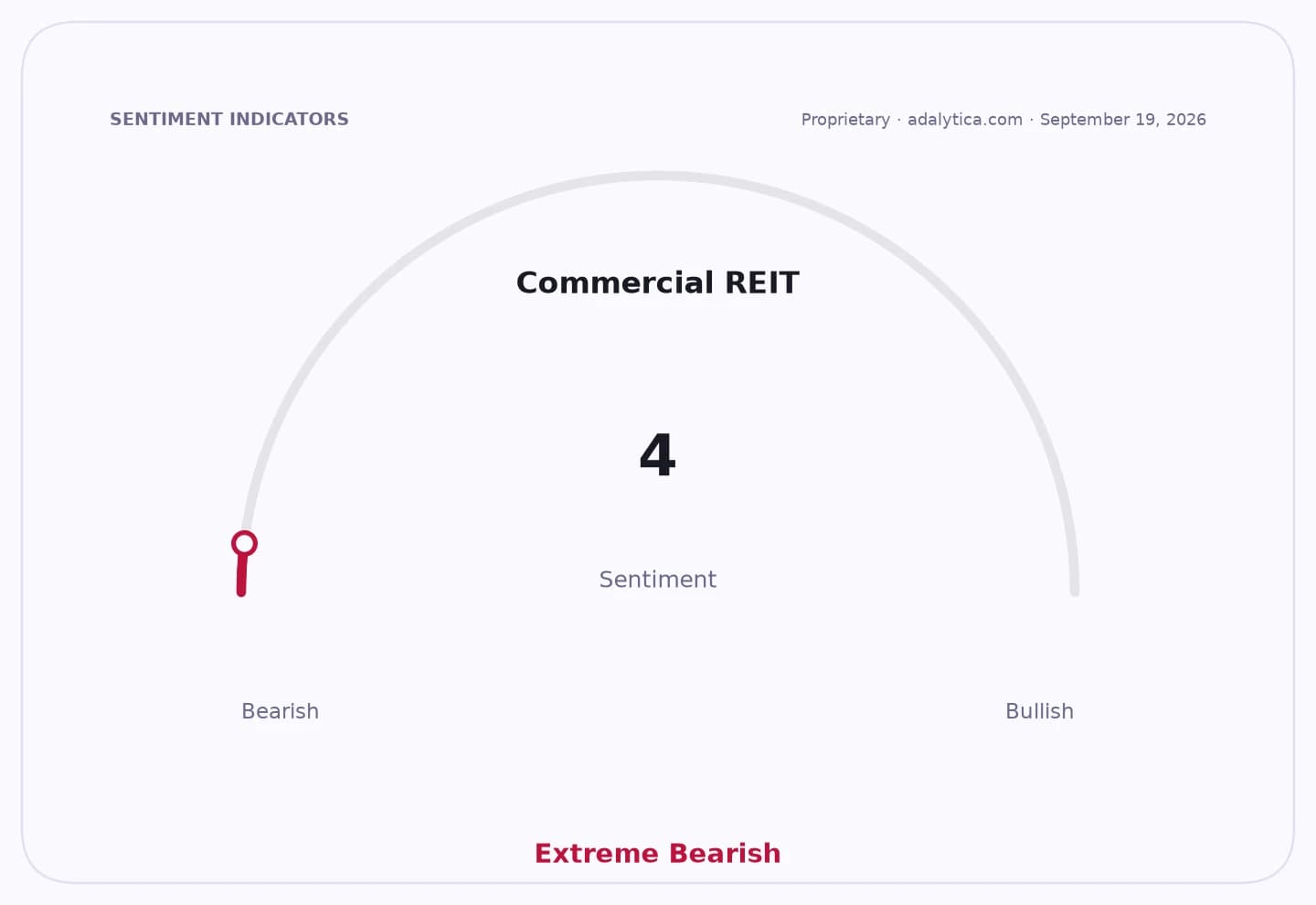
ARMOUR Residential REIT is sliding back into the danger zone for income investors as U.S. mortgage rates hover near 7%, a level that can squeeze the economics of mortgage real estate investment trusts even when dividend yields look tempting on paper.
For a company like ARMOUR, the key issue is not just the size of the payout. It is whether the spread between what it earns on mortgage-backed securities and what it pays to finance them can stay wide enough to support that dividend over time. Rising borrowing costs, a steeper drag from hedging and a more volatile housing market all make that harder. That is why the stock’s recent weakness matters even after a strong run earlier in the year.
The latest numbers show both the appeal and the risk. ARMOUR reported fourth-quarter distributable earnings of $79.8 million, or 71 cents a share, and said book value rose to $18.63 a share from $17.49 at the end of September, helped by a better backdrop for agency mortgage-backed securities. Total economic return for the quarter was 10.63%, and 2025 was a solid year overall, with a 12.79% total economic return. The trust also kept paying 24 cents a month in common dividends, underscoring why the stock remains a magnet for yield-focused buyers.
But mortgage REITs live and die by financing conditions, and those conditions have turned less forgiving. ARMOUR ended the period with $20 billion in assets, mostly agency MBS, and leverage around 8 times equity. That structure can amplify returns when spreads tighten and rates cooperate, but it can also magnify losses when funding costs move against the portfolio or when volatility spikes. The company’s own comments pointed to lower MBS volatility and a lower-rate environment as tailwinds in 2025 — exactly the kind of support investors cannot count on indefinitely.
The stock’s recent technical profile also shows how quickly sentiment can change. ARR has fallen to about $14.68, below its 50-day and 200-day moving averages, while RSI readings have dropped deep into oversold territory. That does not make the shares cheap by itself, but it does suggest the market is questioning how durable the current income setup really is.
For long-term investors, ARMOUR remains a high-income vehicle tied to a very specific bet: that agency mortgage spreads, funding costs and Federal Reserve policy will stay favorable enough to keep cash distributions flowing. If rates ease and mortgage spreads behave, the shares could recover. If not, the dividend may remain attractive but increasingly vulnerable to the same forces that have hurt much of the mortgage REIT complex.
In other words, ARMOUR is still an income story — but it is one that investors should approach with patience, diversification and a clear understanding that yield is only as good as the spread supporting it.
| Entity | Gains | Losses |
|---|---|---|
| ARMOUR Residential REIT | ▲Higher book value, strong economic return | ▼Pressure from higher funding costs |
| Income investors | ▲Large monthly dividend | ▼Greater payout risk if spreads narrow |
| Homebuyers | ▲Possible relief if rates eventually ease | ▼Still-stretched affordability now |
| Mortgage REIT competitors | ▲Sector-wide focus on income | ▼Scrutiny over leverage and funding costs |