Asia stocks steady before US payrolls report
Asian equities and bonds steadied on Thursday as investors positioned for the US labor report that may determine whether the Federal Reserve lifts rates later this month, a shift that has become the main driver of risk appetite across global markets.
The recovery in Japan and South Korea reflects how tightly Asia’s rally is now linked to US monetary policy. The Nikkei, Kospi and Topix were on course to rebuild some of the ground lost in recent sessions as traders pared back defensive hedges ahead of Friday’s payrolls data and a speech by Fed Governor Christopher Waller. The immediate question is whether cooling labor-market momentum is enough to keep the Fed on hold, or whether persistent inflation pressure will force another 25-basis-point increase.
Markets have already moved toward the more hawkish outcome. CME FedWatch pricing now implies about a two-thirds probability of a quarter-point hike at the next meeting, up from 37% a week earlier. That re-pricing matters for Asia because higher US yields tend to lift the dollar, tighten global financial conditions and pressure equities, particularly in rate-sensitive sectors and export markets. The US 10-year Treasury yield was trading near 4.8%, reinforcing the view that global bond markets are still not comfortable with the idea of a prolonged tightening cycle.
The labor data will be read against mixed signals from the US economy. Private-sector employment numbers for August disappointed, but the broader unemployment rate has held near 4.1% in recent months, with a forecast of 4.09% for August in the latest data set. That combination leaves room for both interpretations: a resilient labor market that can absorb another hike, or a slowing one that argues for caution. Williams’ comments have already tempered some expectations for an imminent move, but traders appear increasingly convinced the Fed is still biased toward tightening.
For Asian markets, the stakes are bigger than one US payrolls release. Japan’s market, tracked by the EWJ ETF, has kept trading above its 50-day moving average and well above its 200-day average, showing the broader trend remains constructive even after recent volatility. South Korea’s EWY has also recovered sharply from its summer lows, but the moves have been unstable, with a heavy-volume selloff in late July followed by a rebound in August. That pattern suggests investors are still quick to reduce exposure when global growth or liquidity fears rise.
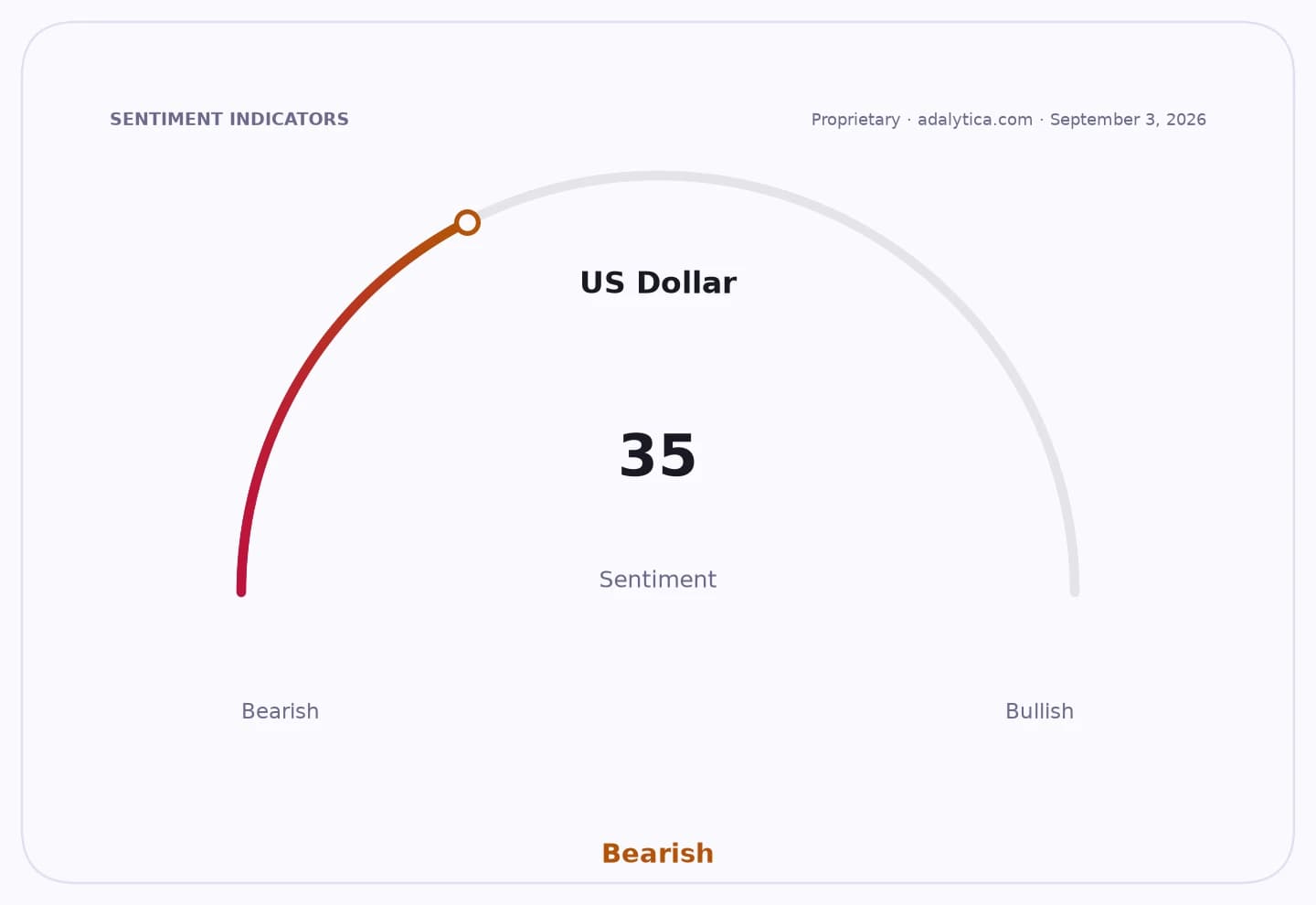
The dollar backdrop is equally important. Adalytica’s US Dollar Trade Signals show neutral sentiment, but the recent swings underscore how sensitive currency markets are to each change in Fed expectations. A firmer dollar would typically weigh on Asian exporters’ earnings translation and increase pressure on emerging-market financial conditions. By contrast, any sign that the Fed is nearing the end of its hiking cycle would likely support regional equities, ease bond-market stress and improve demand for cyclical names.
The next catalyst is straightforward: Friday’s payrolls report, followed by Waller’s remarks and then policy meetings at the ECB and Bank of Japan. If US hiring slows further, it could unwind some of the recent tightening in rates expectations and extend Asia’s recovery. If not, markets may conclude that global central banks are still not done fighting inflation, leaving equities vulnerable to another round of yield-driven selling.
| Entity | Gains | Losses |
|---|---|---|
| Asia stocks | ▲Recovery bid | ▼Higher US yields |
| US dollar | ▲Safe-haven demand | ▼Softer Fed expectations |
| Bond markets | ▲If jobs weaken | ▼If Fed hikes again |
| Exporters | ▲Softer dollar | ▼Stronger dollar |