Asian-American voters turn against Trump in 2026 poll
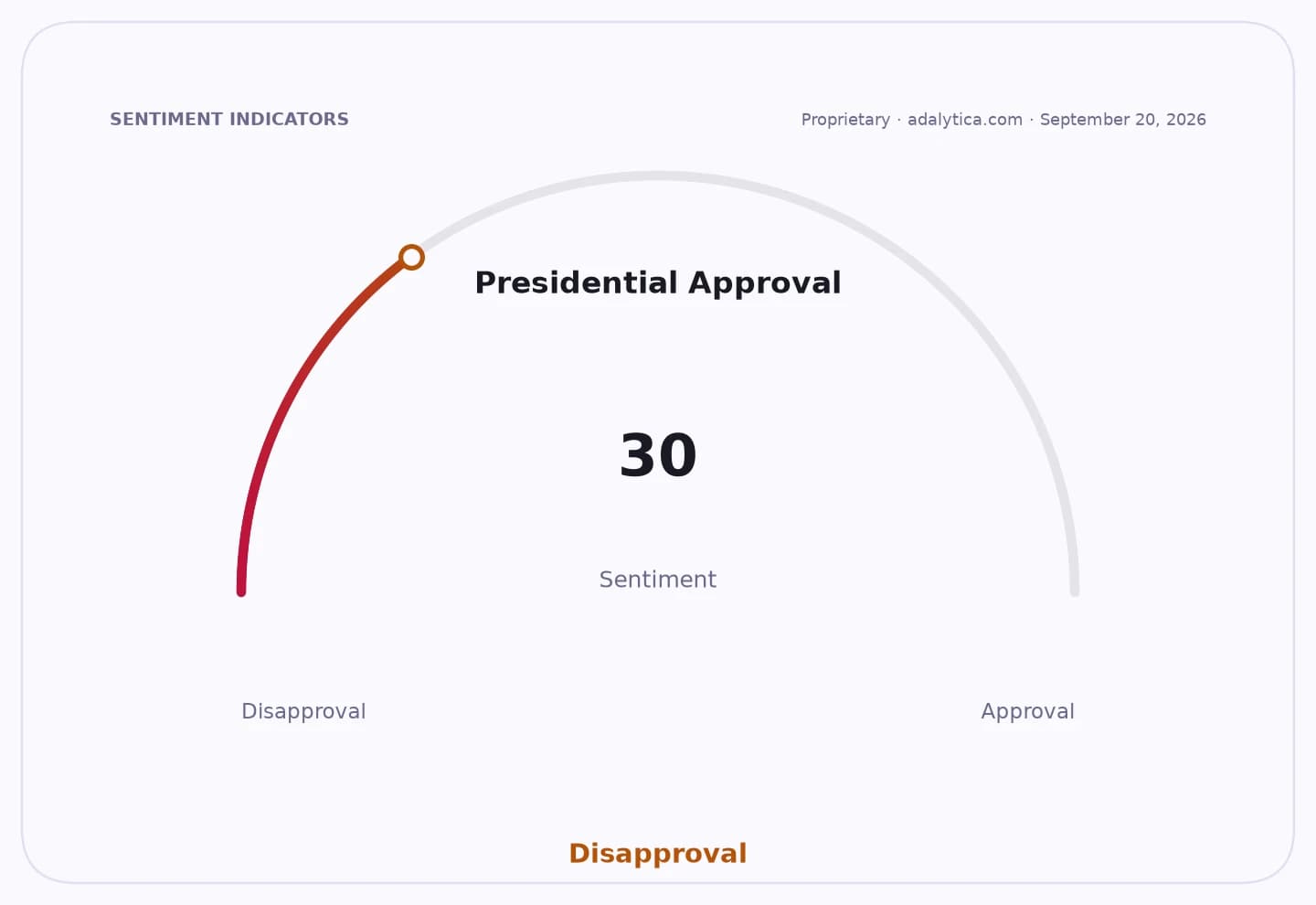
Asian-American, Native Hawaiian and Pacific Islander voters who helped lift Donald Trump in 2024 are now turning sharply against his presidency, with 68% disapproving of the job he is doing as Democrats and Republicans prepare for a narrowly divided midterm electorate.
That reversal matters because this bloc is large, politically mobile and increasingly consequential in close races. About 16 million adults in the group can vote this year, and 9 in 10 registered voters say they intend to cast a ballot, according to AAPI Data’s 2026 survey with AP-NORC. With control of Congress on the line, even modest swings in turnout or candidate preference could shape outcomes in competitive districts and Senate contests.
The poll shows Trump’s appeal to Asian-American voters remains real but fragile. AAPI Data said the president has a 30% approval rating among the group, while 52% disapprove strongly. That is a striking deterioration in sentiment for a constituency that gave Trump a bigger share of its vote in 2024 than in 2020, according to the group’s data and Pew Research Center’s turnout-matched estimates.
The economic undercurrent is as important as the politics. Cost of living is the dominant concern, with 90% of respondents calling it very or extremely important, and eight in 10 saying grocery prices are a source of stress. Sixty-two percent said Trump has hurt job creation. Those views suggest household economics, not ideology, are driving much of the backlash — a warning sign for an administration that has leaned heavily on immigration enforcement and economic nationalism.
Immigration, one of Trump’s signature issues, is also becoming a liability with these voters. Approval of his handling of immigration fell to 33% in January from 42% in March 2025, while 73% view Immigration and Customs Enforcement unfavorably and two-thirds say he has gone too far in deporting people living in the country illegally. The data points to a bloc that may have been reachable on border security but is recoiling from the scale and tone of enforcement.
The political risk for both parties is that the group is not uniformly aligned and is still under-targeted. Forty-two percent said Democrats had not approached them in the past year, and 58% said the same of Republicans. That leaves room for persuasion, especially because the bloc’s subgroups diverge sharply: Filipino voters leaned Republican in the survey, while Asian Indian voters backed the Democratic candidate by a wide margin.
Democrats may see opportunity in the president’s falling approval, but the numbers do not guarantee an automatic swing back. Pew’s 2024 findings suggested part of Trump’s stronger showing came from turnout patterns rather than wholesale party conversion, which means both enthusiasm and mobilization will matter in November. AAPI Data founder Karthick Ramakrishnan said there is “tremendous electoral potential waiting to be activated,” underscoring how contested the constituency remains.
For investors, the broader implication is that Trump’s political coalition is less stable than the 2024 result suggested, especially among voters sensitive to inflation, labor market conditions and immigration enforcement. The polling does not move markets directly, but it reinforces the view that policy momentum heading into the midterms may be constrained by voter fatigue with high prices and aggressive governance.
The key question now is whether disapproval translates into lower turnout for Trump-aligned candidates or simply a return to the pattern of divided voting that has long characterized Asian-American electorates. If engagement rises and opposition consolidates, the bloc could become a meaningful swing factor in the congressional map; if not, its electoral power will remain high but unevenly converted into seats.
| Entity | Gains | Losses |
|---|---|---|
| Democrats | ▲Anti-Trump backlash | ▼Low outreach rates |
| Republicans | ▲2024 turnout gains | ▼Immigration backlash |
| Asian-American voters | ▲Higher electoral leverage | ▼Frustration with cost of living |
| Trump-aligned candidates | ▲Narrow base loyalty | ▼Falling approval among key bloc |