AstraZeneca shares slide after Wainua fails to deliver a statistically significant benefit in a late-stage study, renewing investor doubts about whether the drugmaker can keep its pipeline strong enough to support growth.
AstraZeneca Slides After Wainua Trial Miss
The stock closed at 169.47 on July 13, down from 193.12 on July 7 and below its 50-day moving average of 183.31 and 200-day average of 183.4, a clear sign the market is reassessing the near-term outlook. Volume rose to 4.67 million shares, underscoring the intensity of the selloff after the readout.
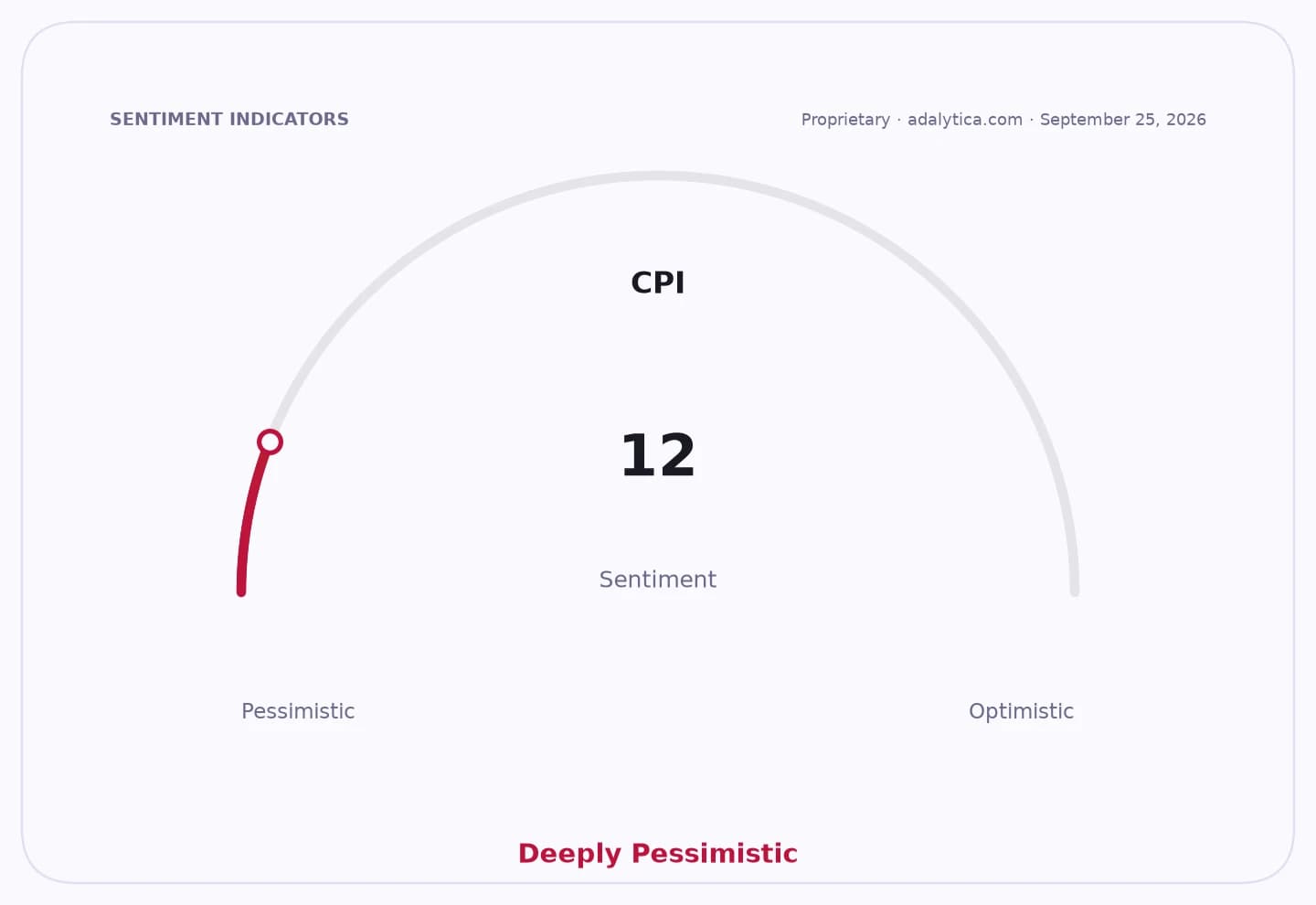
Sentiment IndicatorsⓘProprietary · adalytica.com · July 14, 2026
This is a snapshot — live sentiment, awareness and momentum for 130+ markets update continuously in the dashboard.Open AlphaPulse
The main economic issue is not just one trial failure, but what it says about AstraZeneca’s ability to convert its broad research portfolio into commercially meaningful new medicines. When a late-stage program misses, investors tend to immediately question the durability of projected revenue growth, especially for a company valued in part on its pipeline rather than only on current sales.
Wainua, an RNA-targeted silencer used in transthyretin-related disease, was generally well tolerated, according to the filing, but it did not show a statistically significant benefit on the composite outcome in a contemporary patient population already treated with standard of care. That matters because it weakens confidence that AstraZeneca can keep adding high-value launches in a competitive rare-disease market.
Technically, AstraZeneca’s recent break below short- and long-term moving averages suggests momentum has turned negative, while the drop in the RSI to 44.6 from the mid-60s earlier this month points to fading buying pressure rather than a temporary wobble. For investors, that raises the risk that the shares need a new catalyst before they can recover the post-runup valuation.
The readout also lands at a sensitive time for healthcare investors, with broader spending sentiment showing extreme greed in Adalytica’s healthcare gauge, meaning expectations for drugmakers remain elevated and any pipeline stumble can trigger an outsized reaction. In that environment, AstraZeneca must prove that other late-stage assets can offset Wainua’s miss and preserve the company’s growth narrative.
The next focus will be whether management can reassure investors on the rest of the pipeline and whether analysts trim peak-sales assumptions for Wainua’s franchise. Until then, the market is likely to treat the study failure as a warning that AstraZeneca’s drug-development machine may not be as resilient as it needs to be.
| Entity | Gains | Losses |
|---|---|---|
| AstraZeneca management | ▲chance to redirect focus to other assets | ▼credibility on pipeline execution |
| Short sellers | ▲downside momentum | ▼none if shares stabilize |
| Long-only shareholders | ▲potential rebound on oversold levels | ▼near-term valuation support |
| Competing biotech drugmakers | ▲comparative pipeline appeal | ▼none from AZN miss |