Australia AI Adoption and Productivity Gains

Australia is pressing to convert rapid artificial-intelligence adoption into productivity gains before the opportunity is lost to higher costs, policy delays and a widening global technology divide.
That urgency matters because AI is no longer a distant strategic bet for Australia’s economy; it is becoming a test of whether businesses can lift output without adding labor, a particularly important question in an economy that has struggled to regain momentum after a period of weak growth and elevated cost pressure. The economic prize is straightforward: if AI helps firms automate routine work, improve service delivery and lift decision-making, it can raise margins, cap wage inflation and support investment. If adoption stalls, Australia risks importing the technology while exporting much of the value creation to overseas vendors and hyperscalers.
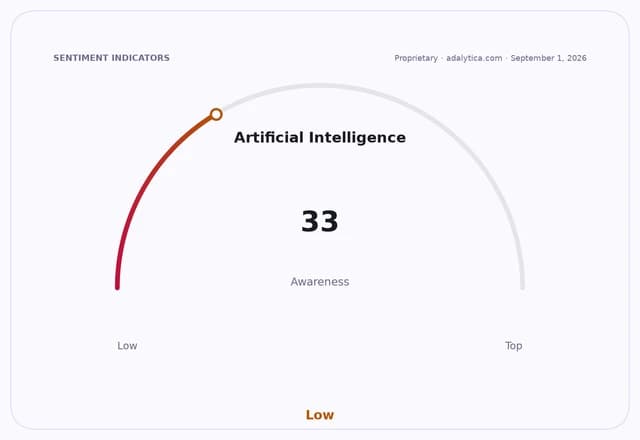
The broader market backdrop shows investors remain highly sensitive to the scale and timing of AI monetization. Microsoft, Nvidia and Alphabet have all seen sharp swings as traders reassess how quickly massive AI spending will translate into durable earnings. Microsoft shares rose to $507.29 on Aug. 31 after touching $505.06 a few sessions earlier, while Nvidia closed at $220.78 and Alphabet at $339.35, levels that reflect continued enthusiasm but also more selective buying. Technical readings on all three names suggest the market has been alternating between momentum and consolidation rather than pricing in an uninterrupted AI straight line.
For Australia, that means the narrative is shifting from whether companies should adopt AI to whether the economy can capture the payoff locally. The most immediate gains are likely to come in finance, government services, health care, logistics and resource operations, where AI can compress back-office processing times, improve forecasting and reduce downtime. That matters for investors because productivity gains ultimately flow through to earnings, and in Australia’s case could reshape relative winners across software, cloud, consulting, mining services and industrial automation.
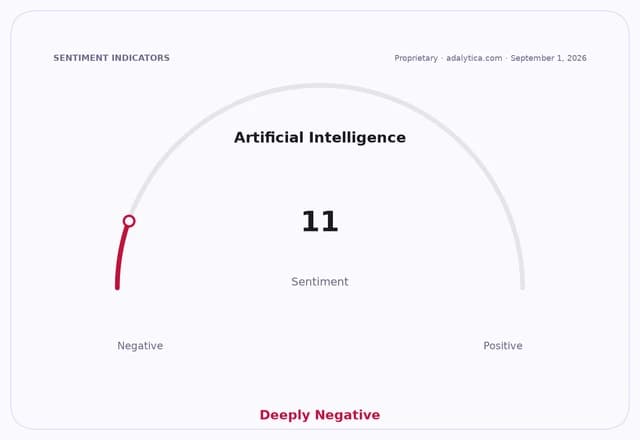
There is also a valuation dimension. AI enthusiasm has already rewarded firms tied to compute, data and model deployment, but the latest price action in major U.S. names shows how quickly the market punishes any sign that spending is outrunning returns. Microsoft’s recent pullback from earlier highs came even as its longer-term trend remained constructive, while Nvidia’s August trading showed heavy volumes and a narrowing trading range. The message for Australian investors is that adoption alone is not enough; the market will reward those that show measurable efficiency gains, recurring revenue or defensible use cases.
The risk for Australia is that a rush to “do AI” can become a procurement story rather than a growth story. If enterprises buy tools without redesigning workflows, the economics improve little. The bull case is that Australia’s services-heavy economy, deep exposure to regulation and reliance on labor-intensive processes make it a strong candidate for AI-led efficiency gains. The bear case is that high implementation costs, skills shortages and governance concerns slow deployment, leaving the country as a fast adopter but a slow beneficiary.
What investors should watch next is whether AI spending in Australia starts to show up in earnings, capital expenditure and hiring patterns, rather than in pilot programs and policy speeches. The countries and companies that move first on deployment stand to capture the productivity uplift; those that wait may end up paying for someone else’s breakthrough.
| Entity | Gains | Losses |
|---|---|---|
| Australian firms adopting AI | ▲Higher productivity, better margins | ▼Legacy processes, manual labor |
| Cloud and AI vendors | ▲More enterprise demand | ▼Buyers delaying rollout |
| Workers in repetitive roles | ▲More augmented work tools | ▼Routine tasks, some jobs |
| Australian economy | ▲Potential growth uplift | ▼Low-productivity status quo |