Australia business conditions hit six-year low
Australia’s business conditions have dropped to their weakest level in six years, a sign the economy is losing momentum just as firms become more cautious about hiring and capital spending.
The NAB survey points to a broadening slowdown in private-sector activity, with businesses facing softer demand and tighter margins after a long stretch of resilience. For policymakers, the reading matters because business conditions are a timely gauge of whether higher rates and weaker consumer confidence are finally spilling into investment and employment.

That comes as underlying macro indicators already suggest a cooling economy. Australia’s jobless rate has edged down to 4.1%, but industrial production growth remains modest and business sentiment is now slipping further from earlier-year levels, raising the risk that domestic demand stalls before inflation is fully contained.
The downturn also adds pressure on the federal government as business owners criticize spending and argue policy settings are becoming less supportive of growth. Any further deterioration would make it harder for companies to pass on costs, protect margins and justify expansion plans.
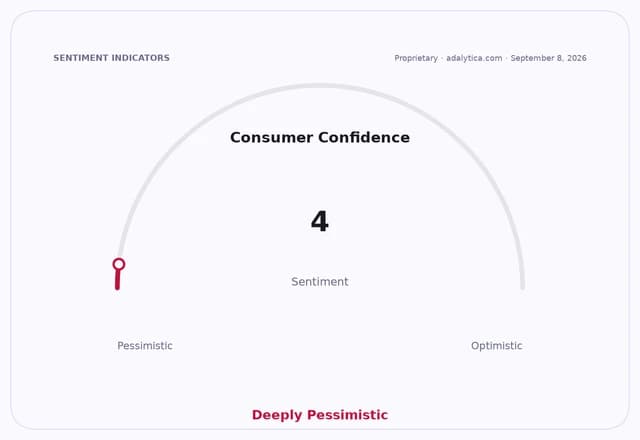
For investors, the main implications are for rate-sensitive sectors, banks, retailers and domestically exposed stocks, which tend to underperform when business confidence and conditions weaken. The Australian dollar and local equities can also come under pressure if the survey is a sign the Reserve Bank may have less room to keep policy restrictive for long.
The next catalyst is the flow of official labor, inflation and spending data, which will show whether the NAB survey is an isolated weak patch or the start of a broader slowdown in Australia’s economy.
| Entity | Gains | Losses |
|---|---|---|
| Borrowers and rate-sensitive stocks | ▲More pressure for policy easing | ▼Less confidence and weaker earnings |
| Consumers | ▲Potentially slower price growth | ▼Softer job and wage momentum |
| Small businesses | ▲Possible future tax or policy relief | ▼Weaker demand and tighter margins |
| Reserve Bank of Australia | ▲More room to avoid overtightening | ▼More evidence growth is slowing |