Australia housing demand weakens as buyers retreat
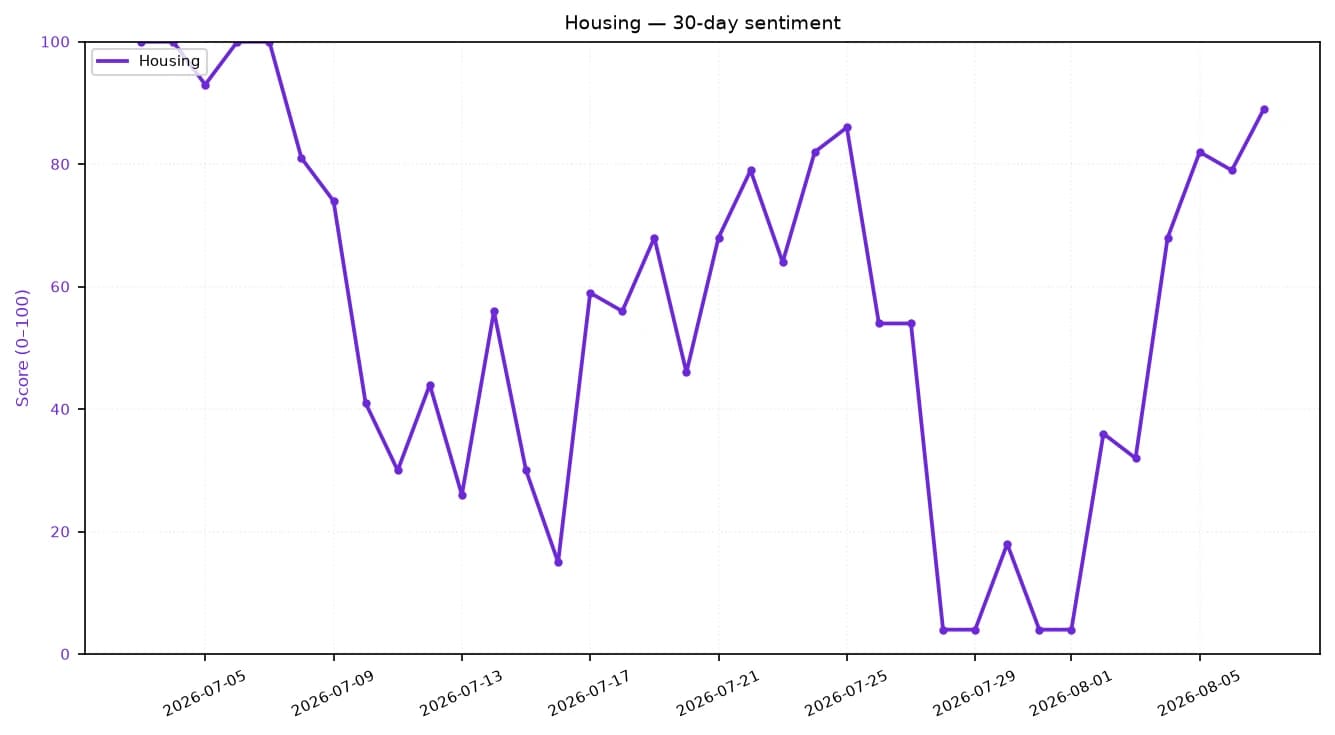
Australia’s housing market is losing the two buyer groups that normally keep prices and lending volumes moving — first-home buyers and property investors — and that sudden retreat is the sharpest break in mortgage demand since the Covid shock.
That matters because housing is one of the most interest-rate-sensitive corners of the Australian economy. When new borrowing dries up, it does not just slow property turnover; it hits banks’ mortgage growth, construction pipelines, housing-related retail spending and the wealth effect that tends to support household consumption. For investors, it also means the market is no longer pricing housing as a simple recovery trade. The next phase is likely to be defined by tighter credit, slower price appreciation and a more selective set of winners.
The backdrop is a mortgage market that is still digesting years of higher borrowing costs. Australia’s 10-year government bond yield has been hovering around 4.6%, underscoring that funding conditions remain restrictive even as the Reserve Bank is expected to ease only gradually. Unemployment is still low at about 4.1%, but that has not been enough to restore animal spirits in housing. The problem is affordability, not just confidence: prices, mortgage repayments and living costs have all risen faster than incomes, leaving many would-be entrants sidelined.
The collapse in demand is especially important because it is happening at both ends of the property market. First-home buyers usually provide the marginal bid in lower-priced housing, while investors support liquidity across the broader market and help absorb supply in growth corridors and high-yield suburbs. When both step back at once, transactions can seize up quickly. That is a warning sign for developers, mortgage brokers, real estate platforms and lenders exposed to new loan origination.
The pressure is visible in housing-focused exchange-traded funds as well. US-listed homebuilder ETF ITB has been trading around 101, while broader housing ETF XHB sits near 111, both well below earlier highs and still sensitive to every move in rates and mortgage demand. Technical readings on both funds show they remain in a recovery pattern rather than a clean breakout, with prices only marginally above key moving averages. In other words, the market is not yet betting on a durable housing re-acceleration.
The macro tension is that policymakers are trying to increase supply even as private demand weakens. Australia is pushing new housing initiatives, including projects tied to transport corridors and government-backed affordable housing, but those measures will take time to hit the market. In the near term, the slump in mortgage demand could actually make price growth more uneven: supply constraints may keep some markets tight, but the loss of speculative and first-time buying power can still flatten volumes and squeeze activity.
For investors, that creates an asymmetric setup. The obvious losers are lenders and housing-cycle beneficiaries exposed to new loan growth and turnover. The potential winners are builders, infrastructure names and affordable-housing operators that can benefit from policy-driven supply rather than frothy private demand. If mortgage demand remains weak into the next round of rate cuts, the market may eventually rotate away from pure housing exposure and toward the cheaper, less cyclical parts of the shelter trade.
| Entity | Gains | Losses |
|---|---|---|
| Affordable housing providers | ▲Policy-backed demand | ▼Private-market weakness |
| Infrastructure planners | ▲Corridor-led development push | ▼Slow approvals risk |
| Banks and mortgage lenders | ▲Refinancing volume | ▼New loan growth |
| First-home buyers and investors | ▲Lower competition later | ▼Higher rates and prices |