Australian Dollar Steadies as U.S. Yields Rise
The Australian dollar steadied after losing momentum from a four-month high as a recovery in U.S. Treasury yields pulled support back toward the dollar and capped the aussie’s advance.
The move matters because the Australian dollar has been trading less on domestic data and more as a proxy for global risk appetite, U.S. rate expectations and commodity prices. When U.S. yields rise, the greenback tends to regain footing through a wider carry advantage, making it harder for higher-beta currencies such as the aussie to extend rallies even when risk sentiment is broadly constructive.
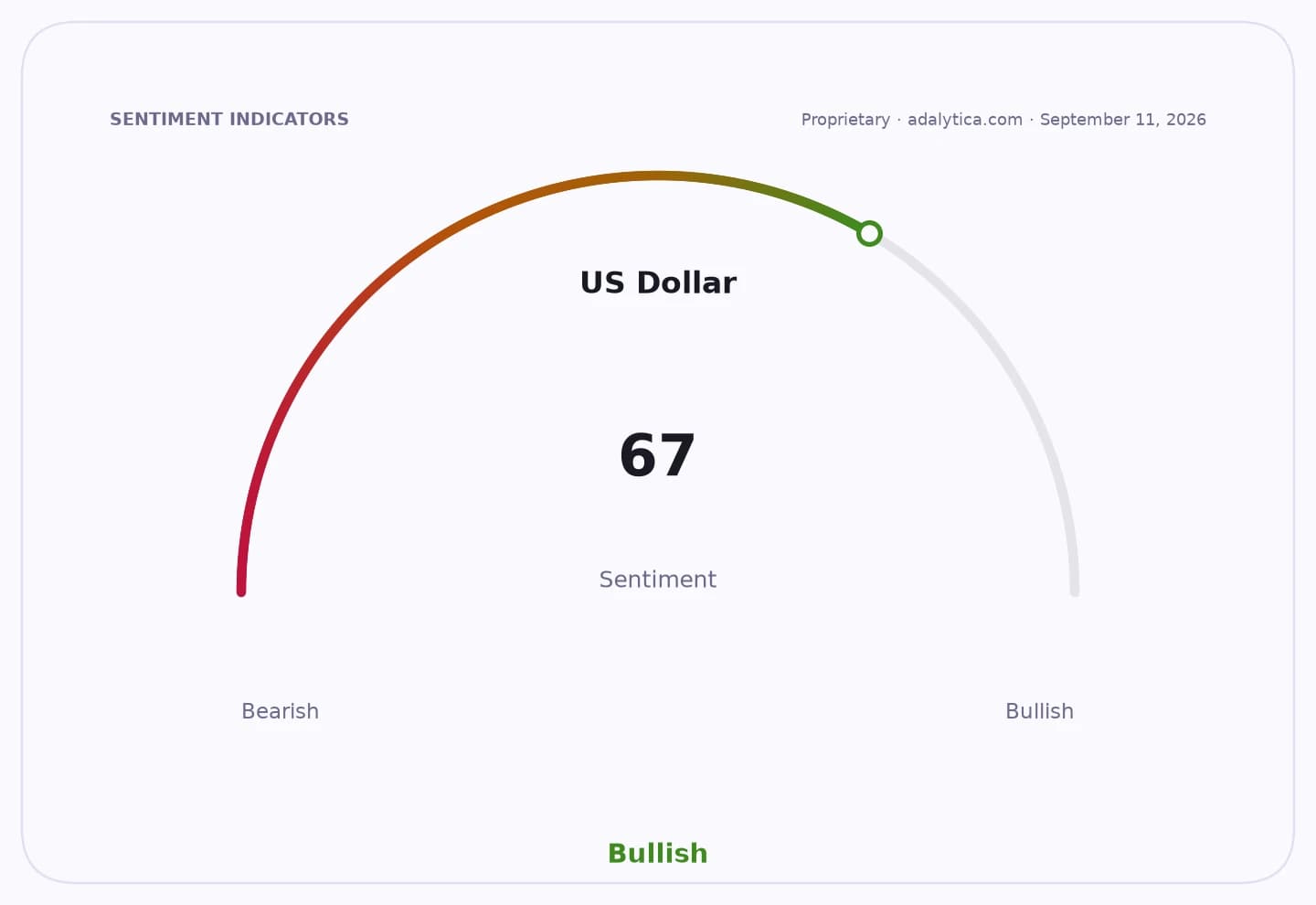
Benchmark U.S. 10-year yields rose to 4.83% on Sept. 9, while the two-year note climbed to 4.43%, narrowing the gap between the short and long end to 39 basis points. That recovery in yields helped the dollar stabilize after earlier weakness, with the dollar trade signal from Adalytica improving over the past month even as its latest one-day reading slipped. The U.S. dollar ETF UUP edged up to 28.03, while the Australian dollar ETF FXA eased to 70.85 from 71.47 two days earlier.
In spot trading, AUD/USD held around 0.72 after touching 0.7237 on Wednesday, its highest level in four months, before momentum faded. Technical indicators also suggest the pair is no longer in a clean breakout: FXA’s 14-day relative strength index has retreated to 57.7 from 72.6, while AUD/USD’s own RSI has eased to 47.2 after sitting near 70 the previous sessions. That points to consolidation rather than a fresh leg higher.
Geopolitical tensions in the Middle East and firmer oil prices are also limiting the aussie’s upside. For Australia, that is a mixed backdrop: higher commodity prices can support export terms of trade, but they also risk rekindling inflation globally and sustaining higher U.S. yields, which ultimately strengthens the dollar-side of the equation more than the Australian currency.
For investors, the key question is whether the latest move in yields marks a temporary repricing or the start of a more durable shift in rates. If Treasury yields keep recovering, the Aussie’s break above recent highs may prove difficult to sustain. If yields ease again, AUD/USD would have room to revisit the 0.7237 peak and potentially extend toward the upper end of its recent range. Either way, the pair remains tightly tied to the next move in U.S. rates.
| Entity | Gains | Losses |
|---|---|---|
| U.S. dollar | ▲Higher yield support | ▼Rate-sensitive short positions |
| Australian dollar | ▲Stable risk tone | ▼Breakout momentum |
| U.S. Treasury yields | ▲Carry advantage | ▼Bond bulls |
| Commodity-linked exporters | ▲Higher oil support | ▼Importers facing stronger USD |