Bangladesh Balances China and US, India Faces Risk
Bangladesh’s effort to balance ties with China and the United States is emerging as a strategic problem for India, with Dhaka signalling it wants more leverage over trade, aid and security relationships just as regional competition sharpens.
That matters economically because Bangladesh sits at the center of South Asia’s manufacturing and logistics map. Any shift in its external alignment can affect infrastructure financing, export flows, port access and the policy environment for foreign investors across textiles, power, transport and telecoms. For India, which treats Bangladesh as a critical neighbor and transit partner, even a modest drift toward Beijing or a more transactional relationship with Washington can complicate border trade, energy cooperation and supply-chain integration.
The timing is sensitive. Bangladesh is juggling domestic pressure from its refugee burden and disaster relief needs while seeking external support that can help stabilize growth and public finances. A government that wants to diversify diplomatic dependence is likely to press harder for concessional financing, market access and project investment from multiple partners. China can offer speed and scale in infrastructure. The US can offer access to the world’s biggest consumer market and political backing. India, meanwhile, remains tied to geography and security but may find its influence less automatic if Dhaka sees more value in strategic hedging.
Investors should care because Bangladesh’s foreign-policy balancing act can shape the risk premium on any asset linked to the country’s trade and investment outlook. Better relations with China could accelerate infrastructure buildout, but they can also deepen India’s unease and raise the odds of policy friction in areas such as transit, customs and regional connectivity. Stronger US engagement could support labor and export access, yet it may come with greater scrutiny on governance and alignment issues. For companies and funds with exposure to South Asian supply chains, the key question is not whether Bangladesh chooses one patron over another, but how much bargaining room it gains — and how that alters the terms of doing business.
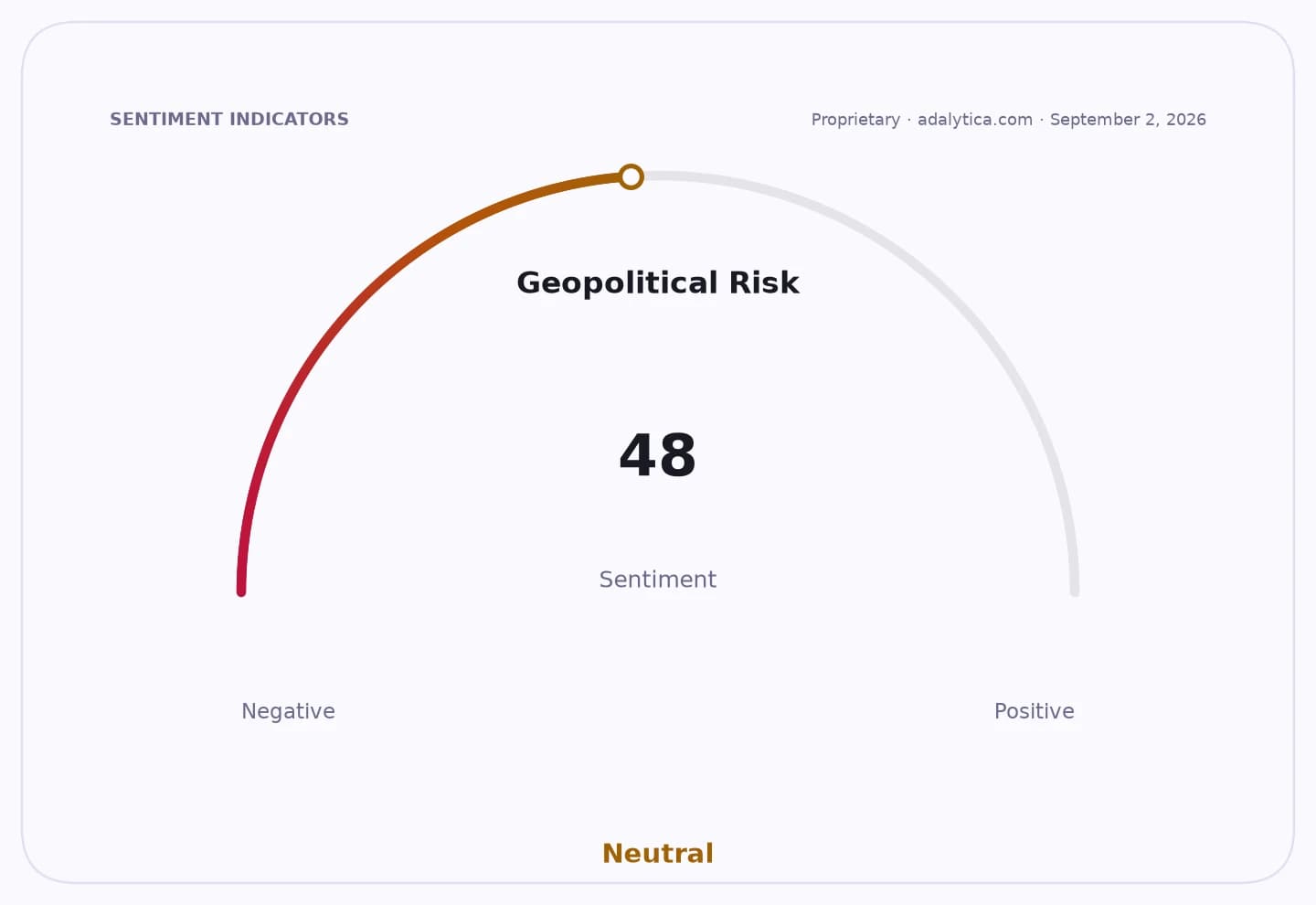
Market signals point to a broader environment in which geopolitical risk remains elevated but not yet disorderly. Adalytica’s Global Stability Sentiment stands at 48, a neutral reading, while awareness is at an extreme fear level of 4, indicating investors remain alert to sudden shifts even if stress has not fully spilled into prices. That backdrop reinforces the appeal of assets tied to resilience, diversification and policy optionality rather than single-country dependence.
For India, the narrative is less about losing Bangladesh outright than about facing a neighbor that is increasingly willing to shop for advantages among competing powers. For investors, that means watching for changes in port projects, cross-border trade rules, defense coordination and financing terms — all of which could determine whether Bangladesh becomes a smoother growth story or a more contested strategic asset.
| Entity | Gains | Losses |
|---|---|---|
| Bangladesh | ▲More leverage with major powers | ▼Higher diplomatic pressure |
| China | ▲Greater regional influence | ▼More Indian pushback |
| United States | ▲Chance to expand foothold | ▼Less exclusive access |
| India | ▲No clear gain | ▼Relative influence risk |