Banks Favor Real Estate With Clear Title
Banks are increasingly favoring real estate projects with clean legal ownership and formal titles, as lenders look to cut default risk and avoid financing disputes that can leave collateral hard to enforce.
The shift matters because property rights are becoming as important as cash flow in determining where credit goes. In markets from Nigeria to Southeast Asia and parts of Latin America, buyers and developers still operate in systems where informal land transfers, unresolved grants and weak title registries can turn a mortgage or development loan into a legal fight.
That is pushing banks toward projects with clear legalities and away from assets where ownership is ambiguous, even when the underlying demand for housing is strong. The preference can tighten financing for developers working in informal or under-documented markets, but it also lowers expected losses for lenders and improves the odds that collateral can actually be recovered if a borrower stumbles.
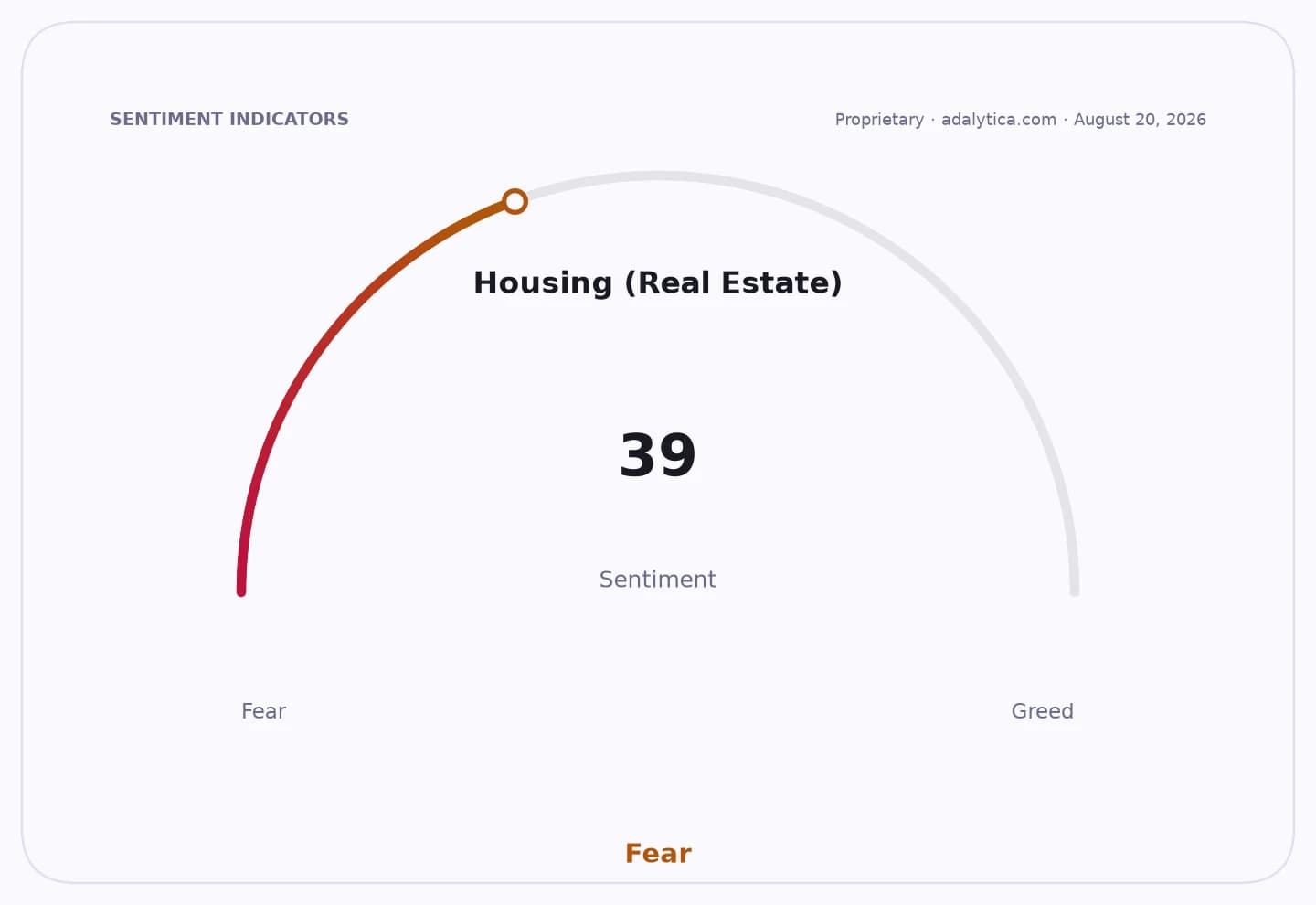
The backdrop is a housing market still searching for stable footing. Adalytica’s Housing Fear & Greed Index for XHB sits at 39, in neutral territory, after a 46-point drop over the past week and a 61-point slide over the past month, showing how quickly confidence can swing even as demand for homes remains intact.
For the big U.S. banks, the broader real estate loan book remains material. JPMorgan’s latest filing showed $130.1 billion of multifamily exposure and $27.5 billion tied to other income-producing properties, while Wells Fargo reported $133.0 billion in commercial real estate loans and U.S. Bancorp continued to flag collateral quality and occupancy rates as key risks in its lending portfolio.
That makes legal certainty a credit issue as much as a property-market issue. Banks that can underwrite against formally documented land and title records are better positioned to hold capital, price risk and preserve recovery value; borrowers without clean paperwork may face tighter terms, slower approvals or no financing at all.
Investors will be watching whether banks keep steering capital toward transparent projects as rates, property values and delinquency trends evolve. Any improvement in land registration, title enforcement or housing policy could expand the pool of bankable deals, while unresolved ownership disputes are likely to keep some real estate markets reliant on pricier private capital or informal funding.
| Entity | Gains | Losses |
|---|---|---|
| Banks | ▲Lower credit losses | ▼Fewer loanable projects |
| Developers with clear title | ▲Easier financing | ▼Less pricing power |
| Informal landholders | ▲Little immediate gain | ▼Tighter credit access |
| Investors in bank lenders | ▲Better collateral quality | ▼Slower loan growth |