Beijing Intervention Lifts China Stocks, But Risks Remain
China’s state-backed funds bought nearly $9 billion of shares over the weekend to arrest a selloff sparked by renewed doubts over AI spending, signaling Beijing is prepared to use balance-sheet firepower to steady a market it views as strategically important.
The intervention helped the Shanghai Composite rebound 0.85% on Monday, but the bigger message is that policymakers are again leaning on direct equity purchases to cap volatility rather than allowing sentiment to reset on its own. That can support prices in the short term, yet it also underlines how fragile confidence remains in the world’s second-largest equity market and how quickly concerns about growth, valuations and capital allocation can spill into broader risk aversion.
Two Chinese state investment firms were behind the weekend buying, according to the seed headline, in what amounts to an emergency backstop for domestic equities after investors questioned the durability of the country’s AI-related capital spending. The move is economically significant because it shows authorities are prioritizing financial stability over market discipline at a time when Chinese growth already faces pressure from weak household demand, a property slump and lingering trade and geopolitical frictions.
For investors, the intervention cuts both ways. On the bullish side, official buying can create a floor under broad indices, compress volatility and encourage short-term tactical flows into mainland and China-focused exchange-traded funds. That is reflected in the modest bounce in ASHR, the iShares MSCI China ETF, which closed at 33.98 on Monday after a recent decline, while the broader China basket in FXI and MCHI also stabilized after sharp swings. Technical readings still show the pressure the market was under: ASHR’s relative strength index slipped into the mid-30s and MACD remained negative, while FXI and MCHI were trading below their 200-day moving averages, evidence that the longer-term trend remains challenged even after the intervention.
The bear case is that state support does not solve the underlying earnings problem. If the selloff was triggered by skepticism over AI spending, then Beijing may be defending not just prices but also a narrative about China’s next growth engine. Investors will question whether capital is being channeled efficiently if policymakers must repeatedly step in to stabilize share prices, and whether such support crowds out a more honest repricing of weaker sectors and firms.
That tension is central to the market story. On one side are policymakers and domestic institutions trying to preserve confidence, maintain orderly trading and prevent a deeper wealth effect from hitting consumers and corporates. On the other are investors who may welcome a near-term floor but remain wary that intervention can delay, rather than resolve, the market’s need for clearer earnings support and policy credibility.
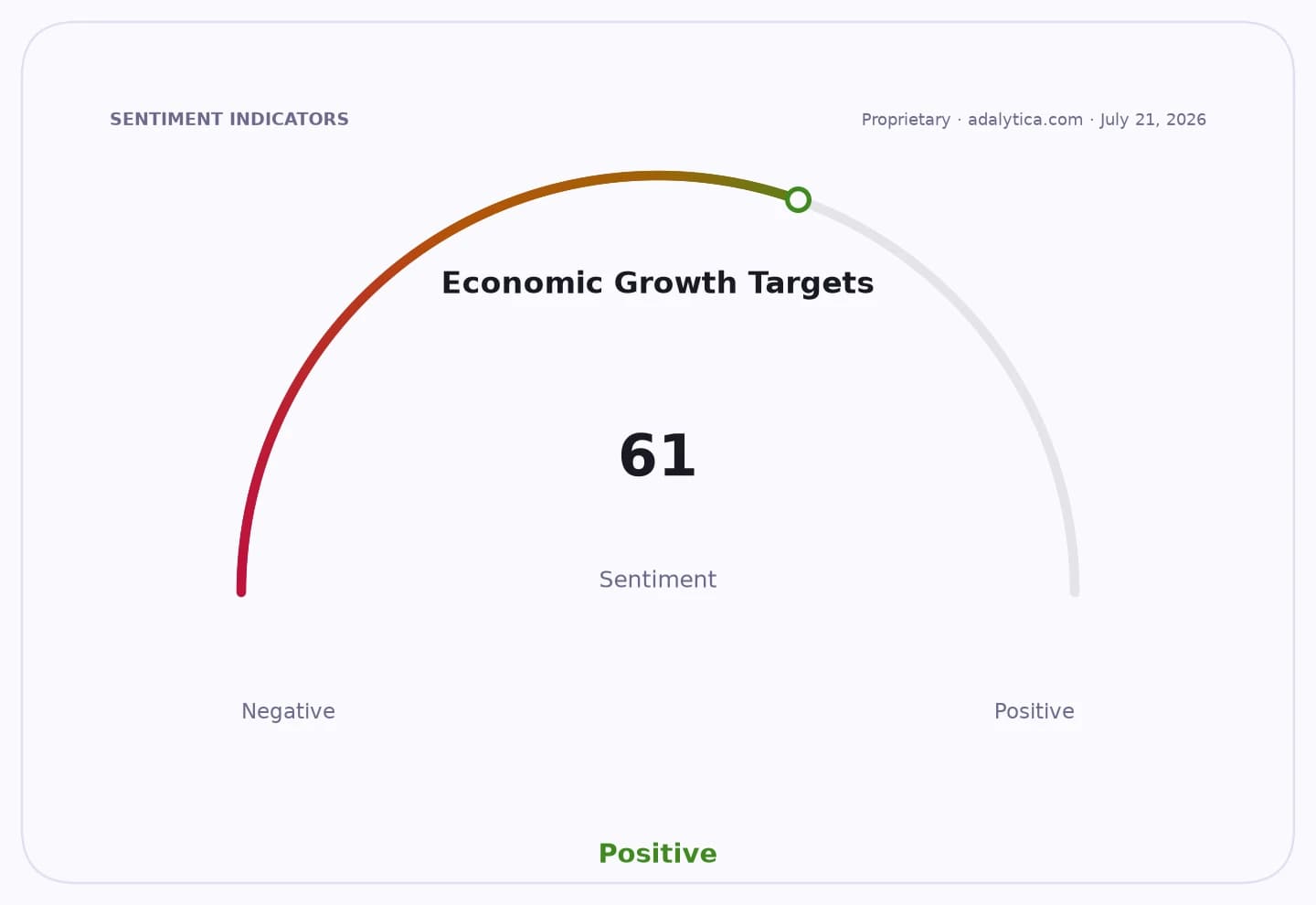
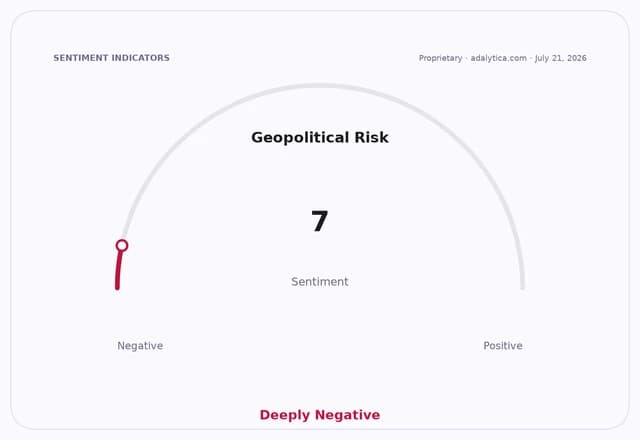
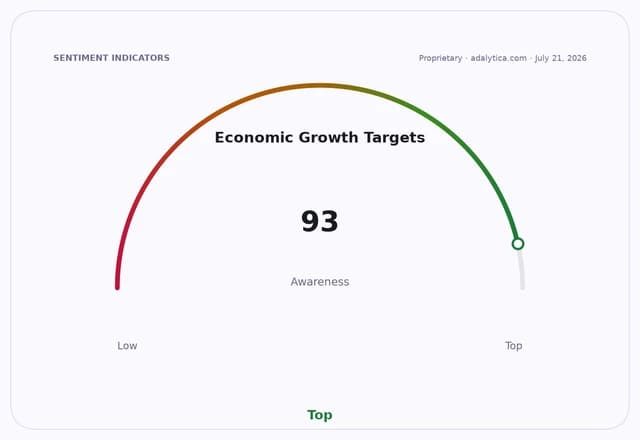
The broader backdrop is one of rising caution. Adalytica’s China Economic Growth Target Sentiment gauge has jumped sharply in recent sessions, but the signal is accompanied by extreme awareness, suggesting the market is highly focused on policy and growth headlines rather than convinced by them. At the same time, global stability sentiment remains in extreme fear, reinforcing the idea that Beijing is acting in an environment where international risk appetite is thin and capital can move quickly against perceived weaknesses.
A separate development underscored the strategic split in China’s market and industrial policy: CXMT’s large IPO, aimed at challenging Samsung Electronics and SK Hynix in memory chips, highlights Beijing’s determination to fund key technologies even as investors fret about the return on that spending. That makes the current equity debate larger than a one-day rally. It is about whether China can keep underwriting strategic industries and still convince markets that growth is improving, not just being supported.
For now, the state buying likely buys time. Whether it restores a durable bid for Chinese equities will depend on earnings, policy follow-through and evidence that AI and other priority sectors can justify the capital being deployed into them.
| Entity | Gains | Losses |
|---|---|---|
| Chinese state funds | ▲Short-term market stability | ▼Capital commitment burden |
| Mainland equity holders | ▲Near-term price support | ▼Less market discipline |
| Short sellers / skeptics | ▲Opportunity if support fades | ▼Near-term squeeze risk |
| AI-linked China stocks | ▲Sentiment relief | ▼Scrutiny over spending returns |