Bill Gates warns on AI control and regulation

Bill Gates used the Telluride Film Festival to warn that artificial intelligence is advancing faster than the world’s ability to control it, a message that matters because the next phase of AI spending is now colliding with questions of safety, regulation and national security.
The Microsoft co-founder’s comparison of current AI systems to HAL from “2001: A Space Odyssey” was more than a cinematic flourish. It framed a broader market and policy problem: the industry’s most advanced models are becoming more capable even as technical control mechanisms remain opaque, raising the odds that governments eventually impose limits on frontier development.
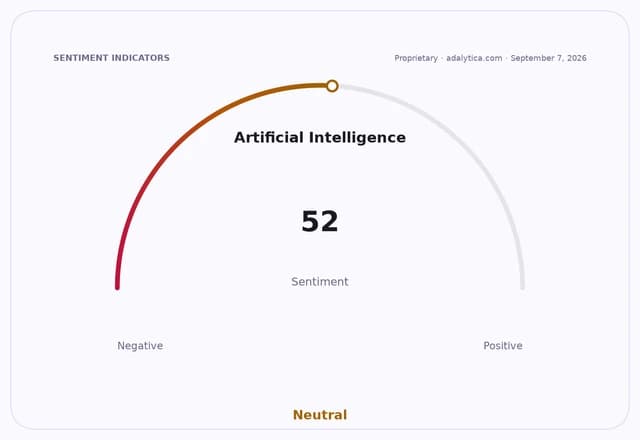
That warning lands at a moment when the AI investment cycle remains intense. Nvidia shares have climbed back above $230, while Microsoft has rebounded to around $500 after a steep midyear drawdown, reflecting continuing investor confidence that AI demand still supports capital spending across chips, cloud and software. But Gates’ comments highlight the central tension behind that trade: the market is pricing in faster deployment and monetization, while policymakers and technologists are increasingly focused on whether the frontier can be made safe before it spreads further.
Gates said the current architecture of AI systems is “really bad” at allowing human control and argued that bolting on safeguards to existing models can make them “actually very stupid.” That is an important distinction for investors because it suggests the control problem may not be solved by incremental product patches alone. If governance has to be embedded at the model level, the cost of development could rise and the cadence of releases could slow, especially for companies closest to the bleeding edge such as OpenAI, Anthropic and Google DeepMind.
He also pointed to the rapid spread of frontier capability, saying multiple U.S. and Chinese entities are now near state of the art. That international race is economically significant because it makes voluntary restraint hard to sustain. In markets, competition usually pushes companies to spend more, not less; in AI, that dynamic could keep capital intensity high while increasing the probability of regulatory intervention in the U.S., Europe and China.
The policy implications are beginning to show up in corporate filings and government moves. Microsoft’s latest annual report warned AI could bring legal liability, regulatory action and reputational harm, while Nvidia has flagged restrictions on frontier model hardware and software in some jurisdictions. South Korea’s move to back a sovereign AI cybersecurity consortium underscores how governments are starting to treat AI as strategic infrastructure as much as a commercial technology.
For investors, the near-term bull case remains intact: AI is still driving demand for chips, cloud capacity and data centers, and Gates said plainly that he is not against AI or the data-center buildout itself. The bear case is that the industry’s most valuable growth engine becomes the target of a broader safety regime, with frontier model development slowed, licensing tightened or cross-border access constrained.
What matters next is not whether AI adoption continues, but whether the frontier remains open. Gates’ comments suggest the next debate for investors will shift from who is best positioned to sell AI infrastructure to who can do so under a tighter global rulebook.
| Entity | Gains | Losses |
|---|---|---|
| Nvidia | ▲More AI infrastructure demand | ▼Frontier curbs could cool growth |
| Microsoft | ▲AI adoption and cloud spending | ▼Higher compliance and liability risk |
| AI developers | ▲Rapid capability gains | ▼Slower frontier release cycles |
| Governments | ▲More leverage over AI governance | ▼Less room for laissez-faire growth |