Bitcoin Nears $63,000 as Nasdaq Rebounds on July 31
Bitcoin is trying to re-establish the same trade that powered its earlier run toward $83,000: move with the Nasdaq when risk appetite returns, then outpace it if equity momentum broadens. That linkage matters because Bitcoin is still being priced less like a standalone store of value and more like a high-beta macro asset tied to technology shares, liquidity expectations and the broader appetite for speculative risk.
The latest setup came after the Nasdaq Composite and Nasdaq-100 steadied from a sharp late-July pullback, with the tech-heavy QQQ ETF closing at 687.99 on July 31 after sliding as low as 661.73 two days earlier. Futures on the Nasdaq 100 also recovered to 28,287 from 27,342 on July 29. Bitcoin, meanwhile, held near $63,000, recovering modestly from a dip to $62,987.65 on July 31 after a brief rebound the prior day.
That makes the current tape important for investors because it suggests the market is still trading Bitcoin through the same cross-asset lens that helped drive the previous $83,000 advance. When Nasdaq leadership improves, Bitcoin often benefits from the same mix of lower real-rate pressure, easier financial conditions and a renewed willingness to own assets with long-duration cash-flow or no-cash-flow characteristics. The reverse is just as true: when tech momentum breaks, Bitcoin is often among the first risk assets to feel the strain.
The technical picture is mixed rather than decisively bullish. Bitcoin’s 50-day moving average sits at $63,389, barely above the latest close, while the 200-day average remains much higher at $71,456, underscoring how far the market has fallen from its earlier highs. RSI readings near 45.8 point to a neutral-to-weaker trend, not an oversold collapse, while the MACD remains below its signal line, a conventional sign that momentum is still fragile. QQQ shows a similar pattern, with its latest close below the 50-day average and RSI at 40.1, suggesting the Nasdaq bounce has not yet fully repaired the damage from the selloff.
Macro conditions are not offering much immediate relief. The 10-year Treasury yield is forecast around 4.66% on July 31, versus 4.68% a day earlier, while the federal funds rate is expected to hold near 3.627% in July after 3.63% in June. That combination points to policy that remains restrictive enough to keep pressure on speculative assets, even if it is no longer tightening aggressively. For Bitcoin bulls, the argument is that any renewed decline in yields or improvement in Nasdaq breadth could quickly restore the sort of liquidity-sensitive rally that previously carried the token sharply higher. Bears would counter that with Bitcoin still well below its 200-day average, the market is in a corrective phase and remains vulnerable if equity investors rotate out of high-duration trades again.
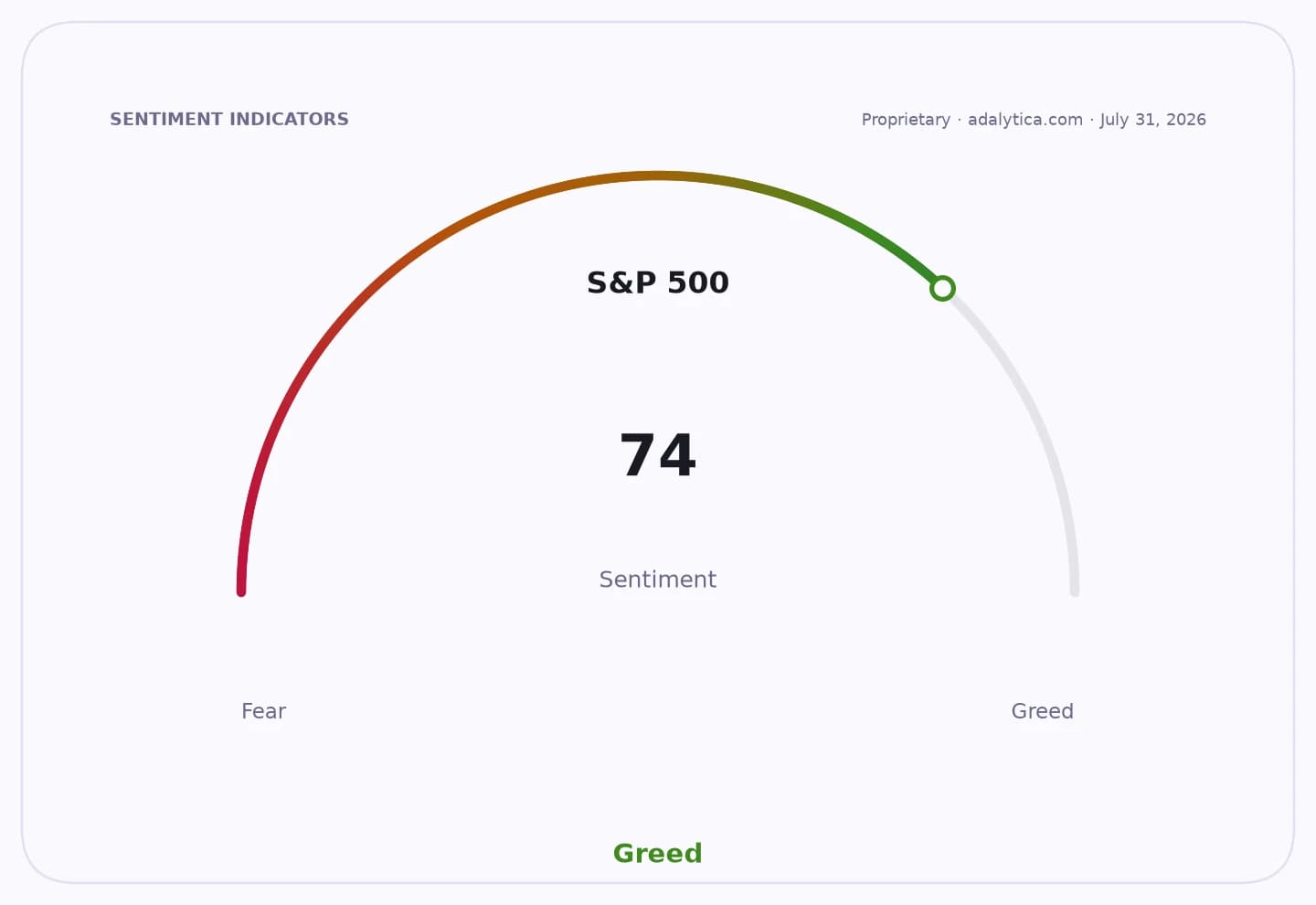
Institutional positioning also matters. Adalytica’s Bitcoin fear-and-greed gauge is neutral at 46, but sentiment has jumped 23 points in a day after a weak seven-day stretch, suggesting the market is trying to stabilize rather than break down. On the equity side, Adalytica’s S&P 500 trade signals show greed at 74 and extreme awareness at 99, a setup that can support risk assets in the near term but also leaves crowded longs exposed if the Nasdaq falters again.
For investors, the key question is whether Bitcoin is resuming a correlation trade or merely catching up after a selloff. If the Nasdaq rebound extends and yields stay contained, Bitcoin could retest higher resistance zones quickly. If tech rolls over again, the recent bounce would look more like a trading correction inside a broader downtrend. The next catalyst set is straightforward: follow Nasdaq breadth, Treasury yields and whether Bitcoin can reclaim its short-term moving average with conviction.
| Entity | Gains | Losses |
|---|---|---|
| Bitcoin bulls | ▲Nasdaq rebound; risk-on flows | ▼Higher yields; weak momentum |
| Nasdaq/QQQ longs | ▲Tech stabilization | ▼Crowded positioning risk |
| Treasury bears | ▲Softer yields support risk assets | ▼None directly |
| Bitcoin shorts | ▲Weak 200-day trend | ▼Equity-led squeeze |