Bitcoin ETF inflows pause as Ethereum strengthens

Bitcoin’s exchange-traded fund demand has paused just as Ethereum has pushed back toward a seven-month high, underscoring a rotation within crypto markets ahead of a key U.S. labor report that could shape the next move in risk assets.
The end of the nine-day streak of Bitcoin ETF inflows matters because those products have become the cleanest barometer of institutional appetite for the sector. After recent net additions of $216.7 million and the strongest weekly haul since October 2025 at $1.9 billion, a stall suggests buyers are becoming more selective rather than abandoning crypto outright. That nuance is important: capital appears to be moving within the asset class, not fleeing it.

Ethereum’s relative strength is the clearest sign of that shift. Ether is trading around $2,445, not far from its recent surge to the highest level in months, while Bitcoin is around $77,892, still elevated but less dynamic on the day. The divergence points to a market that is rewarding the second-largest token as traders look for higher-beta exposure after Bitcoin’s powerful run. For funds and market makers, that often translates into different flows across ETF products, spot venues and derivatives, with Ethereum potentially capturing incremental demand if Bitcoin consolidates.
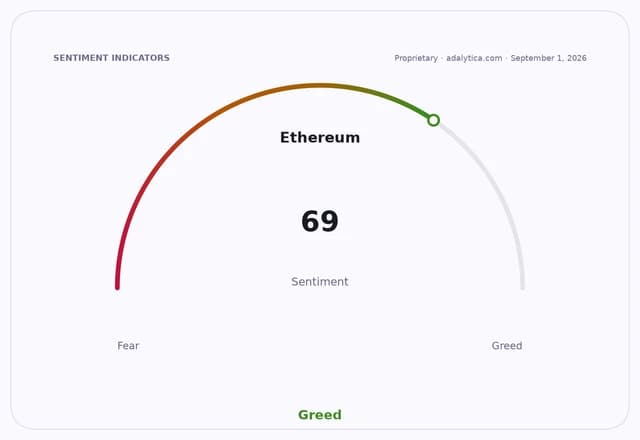
The broader market backdrop is still supportive, but not unambiguously so. Adalytica’s Bitcoin Fear & Greed Index shows sentiment at 62, neutral, after a sharp seven-day decline, even as the 30-day change remains positive. Ethereum’s gauge is firmer on sentiment at 69, but its awareness reading sits at an extreme fear level of 14, highlighting how quickly momentum can cool even in a rising market. That mix usually leaves room for volatility if macro data or ETF flows disappoint.
Investors are also looking past crypto-specific headlines to the U.S. labor market. A softer ADP print tomorrow would strengthen the case for Federal Reserve easing later this year, which tends to support duration-sensitive and speculative assets. But a hot report could push Treasury yields higher and pressure crypto, especially if the market interprets it as a reason for the Fed to stay restrictive longer. In that sense, the ETF flow stall is less a warning sign than a reminder that crypto’s recent strength still depends heavily on the macro rate backdrop.
For now, Bitcoin looks like a market in digestion mode after a strong run, while Ethereum is trying to turn relative strength into a more durable leadership trade. If the jobs data softens, the next leg higher could broaden across both tokens and revive Bitcoin ETF demand. If not, the recent rotation may prove to be a short-lived pause rather than the start of a new phase.
| Entity | Gains | Losses |
|---|---|---|
| Ethereum buyers | ▲Relative momentum | ▼Bitcoin-led inflows |
| Bitcoin ETF holders | ▲Recent large inflows | ▼Near-term flow streak |
| Risk assets | ▲Softer jobs data | ▼Hot labor print |
| Active crypto traders | ▲Token rotation | ▼Narrow market leadership |