Crypto markets are wobbling again after Washington’s failure to advance a key digital-asset bill, reinforcing the view that regulation remains the biggest overhang on the sector just as a major exchange hack has revived fears about security and counterparty risk.
Bitcoin, Ethereum, XRP Trade Near Key Levels

That matters because the market is not just dealing with another headline-driven selloff. It is confronting the same two forces that have repeatedly capped crypto’s upside: policy uncertainty and operational fragility. When lawmakers stall and exchanges get hit, capital retreats to the sidelines, liquidity thins and even the strongest names become trading vehicles rather than conviction longs.
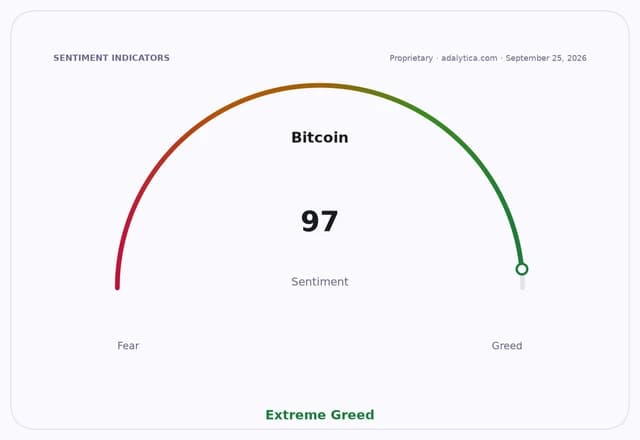
Sentiment IndicatorsⓘProprietary · adalytica.com · September 25, 2026
This is a snapshot — live sentiment, awareness and momentum for 130+ markets update continuously in the dashboard.Open AlphaPulse

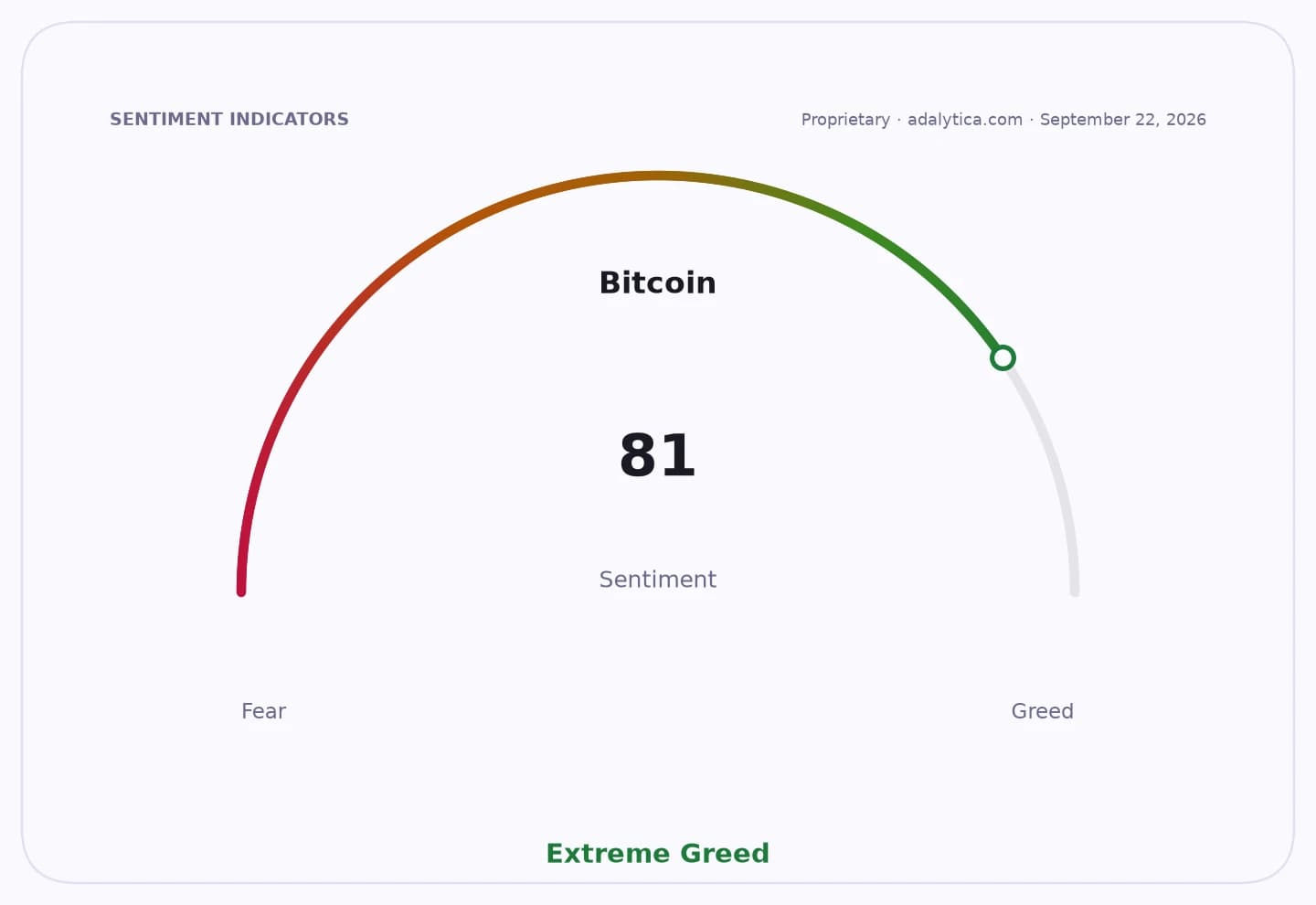
Bitcoin was last around $85,158, up on the day but still far below the levels that would signal a clean breakout, while Ethereum traded near $2,735 and Ripple at $1.58. Those prices leave all three assets vulnerable to another air pocket if risk appetite weakens further. Bitcoin’s 50-day moving average sits near $75,345 and its 200-day average near $70,935, showing the broader trend is still intact, but the tape is stretched: the relative strength index is 71.5, which points to overbought conditions, even as Adalytica’s Bitcoin sentiment gauge sits at 97, or extreme greed.
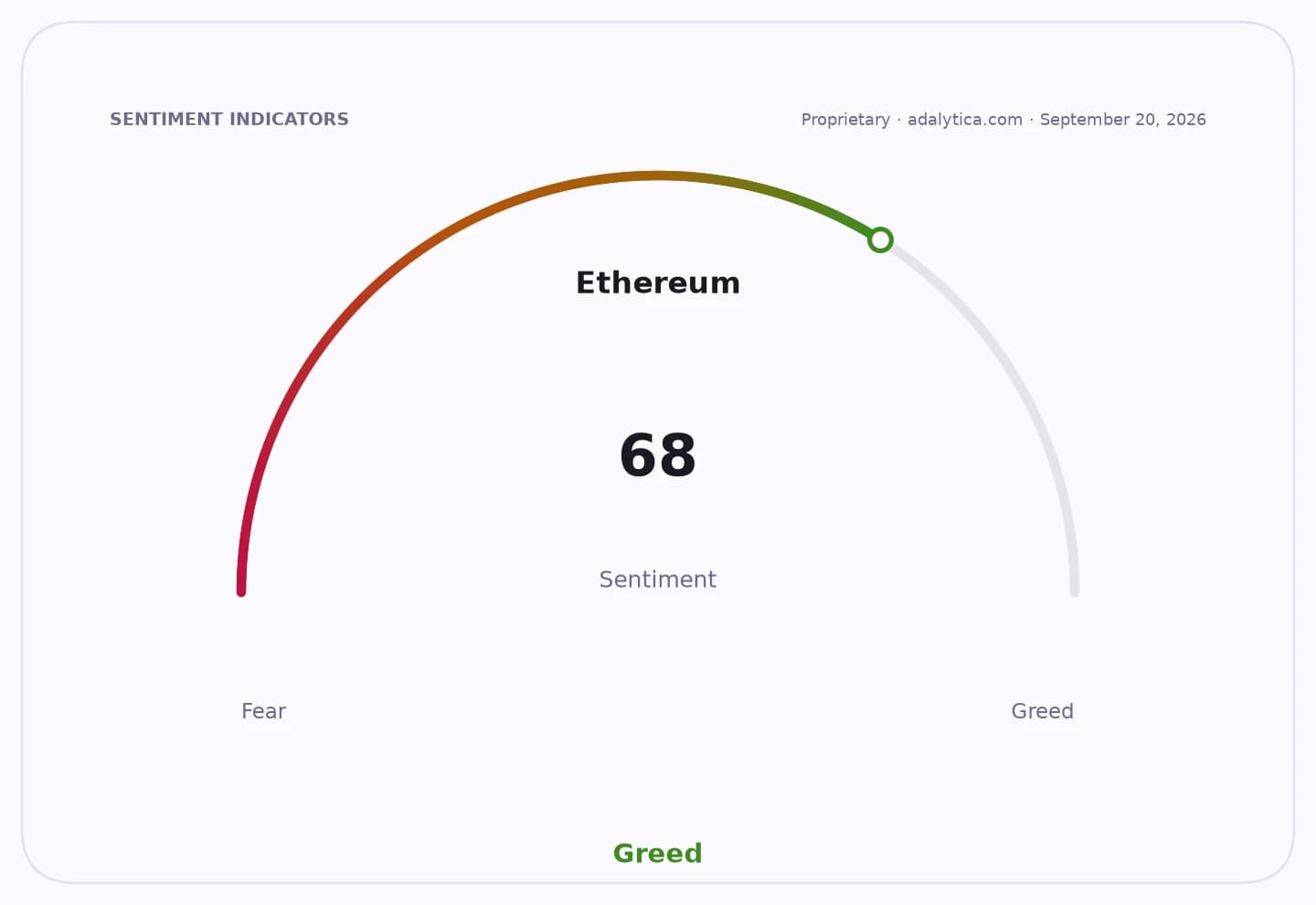
Ethereum tells a similar story. The token has recovered to a little over $2,735, above both its 50-day and 200-day moving averages, but it remains well below the peak levels that would force investors to reprice the whole smart-contract complex. Ripple’s move to $1.58 keeps it above its own moving averages, yet the coin still depends heavily on a broad risk-on backdrop and a friendlier regulatory regime. In other words, the rally has not been built on a durable policy foundation.
That is why the failed US legislative push matters economically. Clear rules would reduce the discount investors apply to exchanges, stablecoin issuers and token platforms by lowering the odds of sudden enforcement shocks. Without that clarity, institutional money stays selective, and every security breach — like the reported Bitget theft of more than $350 million — becomes a reminder that crypto still carries balance-sheet, custody and compliance risk that traditional assets largely do not.
For investors, this is less a story about chasing a quick bounce in Bitcoin than about positioning for the second-order winners if regulation eventually improves. The market underestimates how much value can migrate to the infrastructure layer: regulated exchanges, custodians, payment rails and compliance software are the real toll roads of the next crypto cycle. If Congress eventually revives the Clarity Act or a similar framework, those names should re-rate before the tokens do.
Until then, traders should treat the current strength in Bitcoin, Ether and XRP as a fragile bid, not a confirmed trend reversal. Crypto remains in bargain mode only for those willing to buy policy uncertainty and operational risk before the market has earned trust back. The cleaner trade is to wait for a regulatory green light — or own the picks-and-shovels that profit from one.
| Entity | Gains | Losses |
|---|---|---|
| Regulated exchanges | ▲Clarity premium | ▼Policy uncertainty |
| Custodians/compliance firms | ▲Higher demand | ▼Trust erosion |
| Bitcoin/Ethereum/Ripple traders | ▲Volatility trading | ▼Conviction capital |
| Security breaches | ▲Heightened scrutiny | ▼User confidence |