Bitcoin slipped more than 2% to about $62,509 as investors pared risk ahead of U.S. inflation data that could reshape expectations for Federal Reserve policy and, by extension, appetite for speculative assets.
Bitcoin Slips Ahead of Inflation Data
The move matters because bitcoin’s recent trading has been tightly linked to the rates outlook. Higher inflation would likely keep Treasury yields elevated and delay any prospect of easier policy, a mix that tends to pressure non-yielding assets such as bitcoin. The 10-year Treasury yield was around 4.58%, underscoring that markets are still paying up for duration risk rather than pricing a rapid disinflationary turn.
Sentiment IndicatorsⓘProprietary · adalytica.com · July 14, 2026
This is a snapshot — live sentiment, awareness and momentum for 130+ markets update continuously in the dashboard.Open AlphaPulse

That backdrop has left crypto vulnerable to even modest shifts in macro sentiment. Bitcoin’s latest price is well below its 50-day moving average near $64,587 and far under its 200-day average around $73,742, a sign the broader trend remains weak even after a rebound from February’s sharp selloff. The token is still recovering from a plunge to near $62,702 in early February, when it briefly became deeply oversold by standard technical measures, including an RSI reading near 12.3.
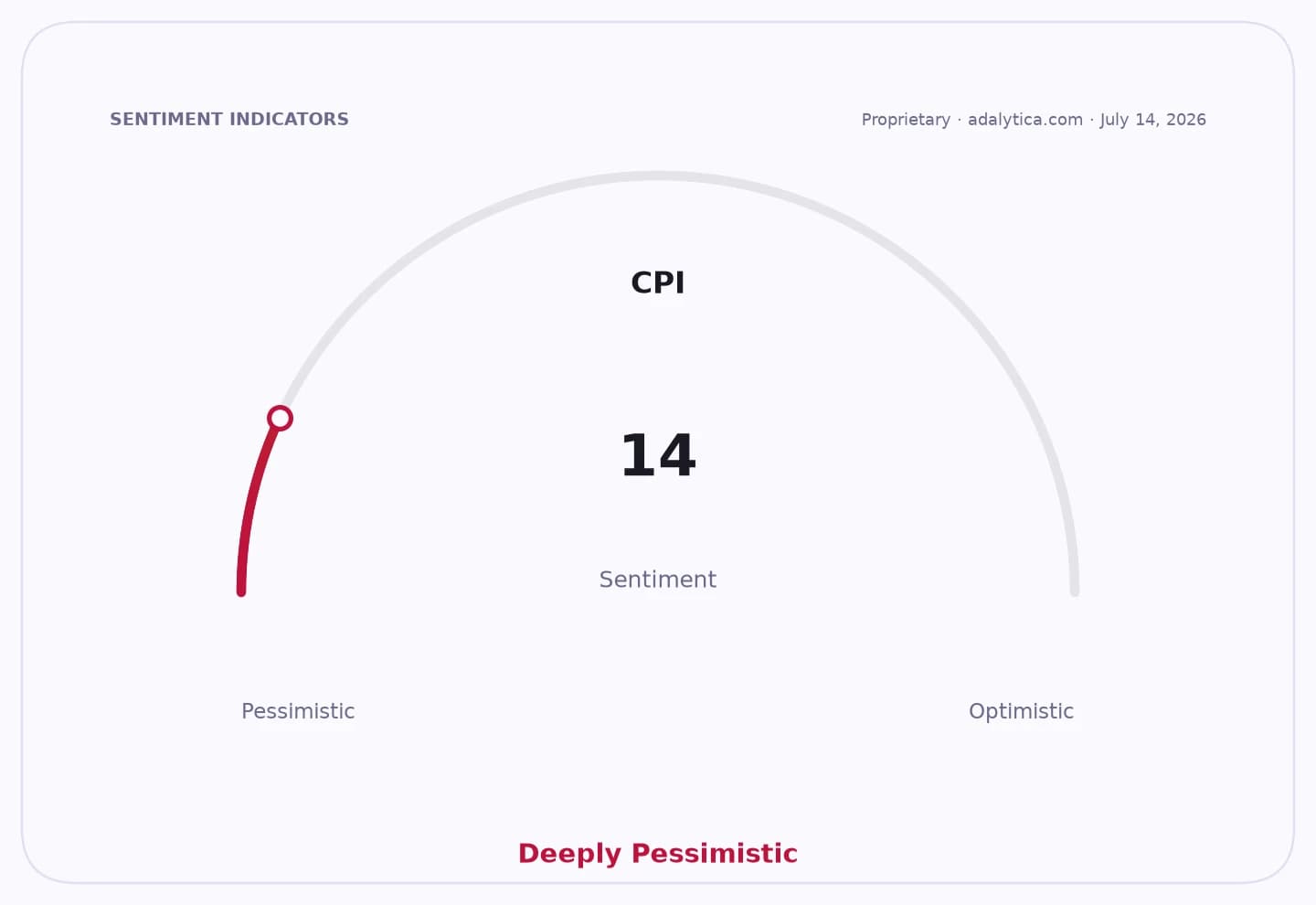
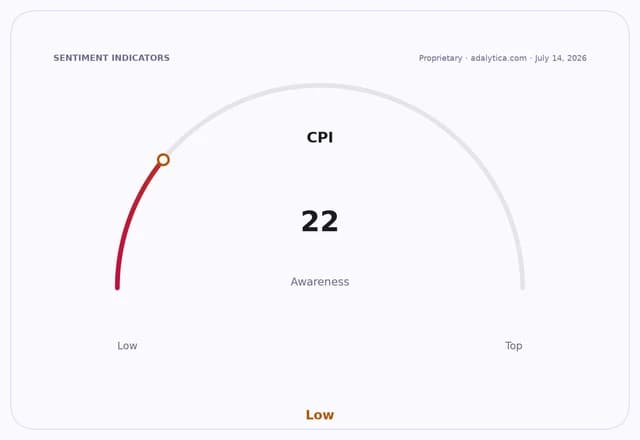
Investor caution is also visible in the broader risk complex. Adalytica’s proprietary CPI sentiment gauge shows “Extreme Fear” at 14, with awareness at 22, suggesting traders are positioning defensively into the inflation release. The same tone is showing up across crypto and equities, even as the S&P 500’s trade signals remain neutral overall.
For bitcoin bulls, the case rests on the possibility that inflation surprises lower, allowing yields and the dollar to ease and reviving demand for risk assets. Bitcoin has historically responded quickly when markets start to price a softer policy path. Bears argue the opposite: that inflation remains sticky enough to keep real rates restrictive, which would limit fresh inflows into crypto and keep leveraged buyers on the sidelines.
The next catalyst is the inflation print itself and the market’s read-through for the Fed. A cooler number could restore some of bitcoin’s lost momentum; a hotter one would likely extend the pullback and reinforce the message that crypto is still trading as a macro-sensitive asset, not a pure idiosyncratic story.
| Entity | Gains | Losses |
|---|---|---|
| U.S. Treasury bears | ▲Higher yield cushion | ▼Bond prices |
| Bitcoin bulls | ▲Easier-policy hopes | ▼Immediate upside |
| Bitcoin bears | ▲Risk-off macro trade | ▼Potential short squeeze |
| Fed hawks | ▲Inflation persistence narrative | ▼Pressure for early cuts |