Bitcoin Leads as Altcoins Lag

Bitcoin is once again pulling away from the rest of the crypto market, and that gap matters because it says a lot about where real money is willing to go in this cycle.
At about $65,700, Bitcoin is holding near the top of its recent range while Ethereum sits just under $1,930, far below its own 2025 highs. In plain English: investors are still buying crypto, but they are concentrating that demand in the asset with the clearest brand, the deepest liquidity and the strongest institutional backing. That is a long-term positive for Bitcoin holders and a warning shot for altcoin investors betting that every token will rise together.

The economic significance is hard to miss. Bitcoin’s rally is being reinforced by institutional flows, with BlackRock’s Bitcoin ETF cited as a leading force in the market. That matters because ETF demand is sticky capital, not the kind of speculative churn that tends to chase smaller coins in bursts and then vanish. When institutions allocate to crypto, they usually start with Bitcoin first. That creates a powerful flywheel: more liquidity, more credibility and more adoption.
The contrast with altcoins is exactly what investors should be paying attention to. Ethereum has recovered from its lows, but it has not matched Bitcoin’s relative strength. In the data, Bitcoin has reclaimed a position above its 50-day moving average and is trading well above its 200-day moving average, while Ethereum is also above those benchmarks but still looks far less dominant. That kind of leadership tends to attract more capital to the leader, not the laggards.
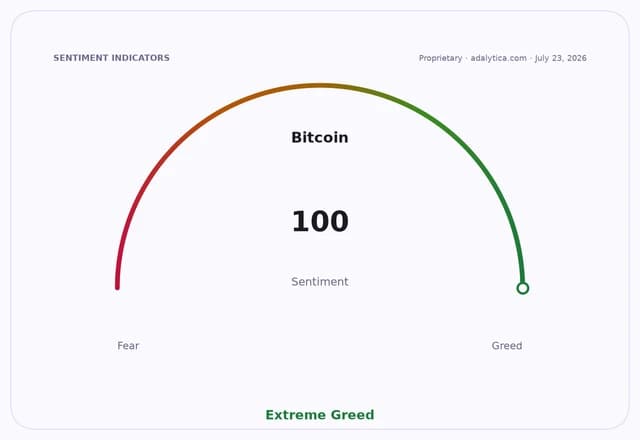
Adalytica’s Bitcoin Fear & Greed snapshot points to the same story from a behavioral angle. Sentiment is at 100, or “Extreme Greed,” while awareness remains in “Extreme Fear.” That unusual split suggests the market is enthusiastic but still underpenetrated in terms of broader participation. For long-term investors, that can be a useful setup: strong momentum with room for adoption to keep expanding, even if short-term volatility stays brutal.
Still, there are real risks. Bitcoin mining is getting more expensive, which favors larger operators and reinforces centralization concerns. And while Bitcoin is the clear winner for now, network concentration across a few major mining pools is a reminder that the ecosystem is not without structural vulnerabilities. The crypto market also remains vulnerable to regulatory surprises, especially as policymakers weigh reserve policy and other forms of oversight.
For investors, the lesson is simple: Bitcoin looks like the crypto asset with the strongest moat, not just the biggest price. That doesn’t mean it can’t correct sharply — it absolutely can — but it does mean Bitcoin has the best chance of compounding value over years rather than weeks. Altcoins may still deliver explosive rallies, but they are increasingly behaving like speculative side bets rather than core holdings.
If you want crypto exposure, Bitcoin remains the clearest way to participate in the sector’s long-term adoption story. For everyone else, this is probably a good time to remember that in investing, leadership matters. The strongest asset often keeps winning long after the crowd starts arguing about the rest. Add Bitcoin to the watchlist, and treat most altcoins with caution.
| Entity | Gains | Losses |
|---|---|---|
| Bitcoin | ▲Institutional demand | ▼None among majors |
| Bitcoin ETF holders | ▲Liquidity and legitimacy | ▼Missed upside if sidelined |
| Ethereum | ▲Spillover crypto interest | ▼Relative-performance gap |
| Altcoins | ▲Short-lived speculative bursts | ▼Capital flows to Bitcoin |