Bitcoin’s latest push above $84,000 has revived a long-running debate over who first identified the asset’s “power law” framework, with fresh evidence cited by Bitwise researcher André Dragosch pointing to J.R. Willett as the original discoverer in 2013.
Bitcoin above $84,000 revives power-law debate
The claim matters because power-law models sit at the center of a broader attempt to explain Bitcoin’s boom-bust cycles as a function of network growth rather than pure speculation. For investors, that framing is not academic: it shapes long-term valuation narratives, informs allocation decisions and feeds the bullish case that Bitcoin can keep compounding even after repeated drawdowns.
BTC was last around $84,802. The token is trading above its 50-day moving average of $78,559 and its 200-day average of $71,426, a sign the broader uptrend remains intact even after sharp volatility earlier this year.
Momentum looks constructive but extended. Bitcoin’s RSI reading of 65.3 suggests strength without the extreme conditions seen in early October, while price remains below the upper Bollinger band at $89,173 and well above the lower band at $75,715. The MACD line remains positive, though it is narrowing against its signal line, hinting the rally may need a fresh catalyst to extend.
The rally is already spilling into crypto-linked equities. Coinbase shares were last at $183, below their 50-day average of $172.84 but still above the 200-day average of $185.41 after a volatile stretch, while MicroStrategy stock traded at $160.01, also above both its 50-day and 200-day moving averages. Those names remain tightly tethered to Bitcoin direction, making the power-law debate relevant beyond spot BTC holders.
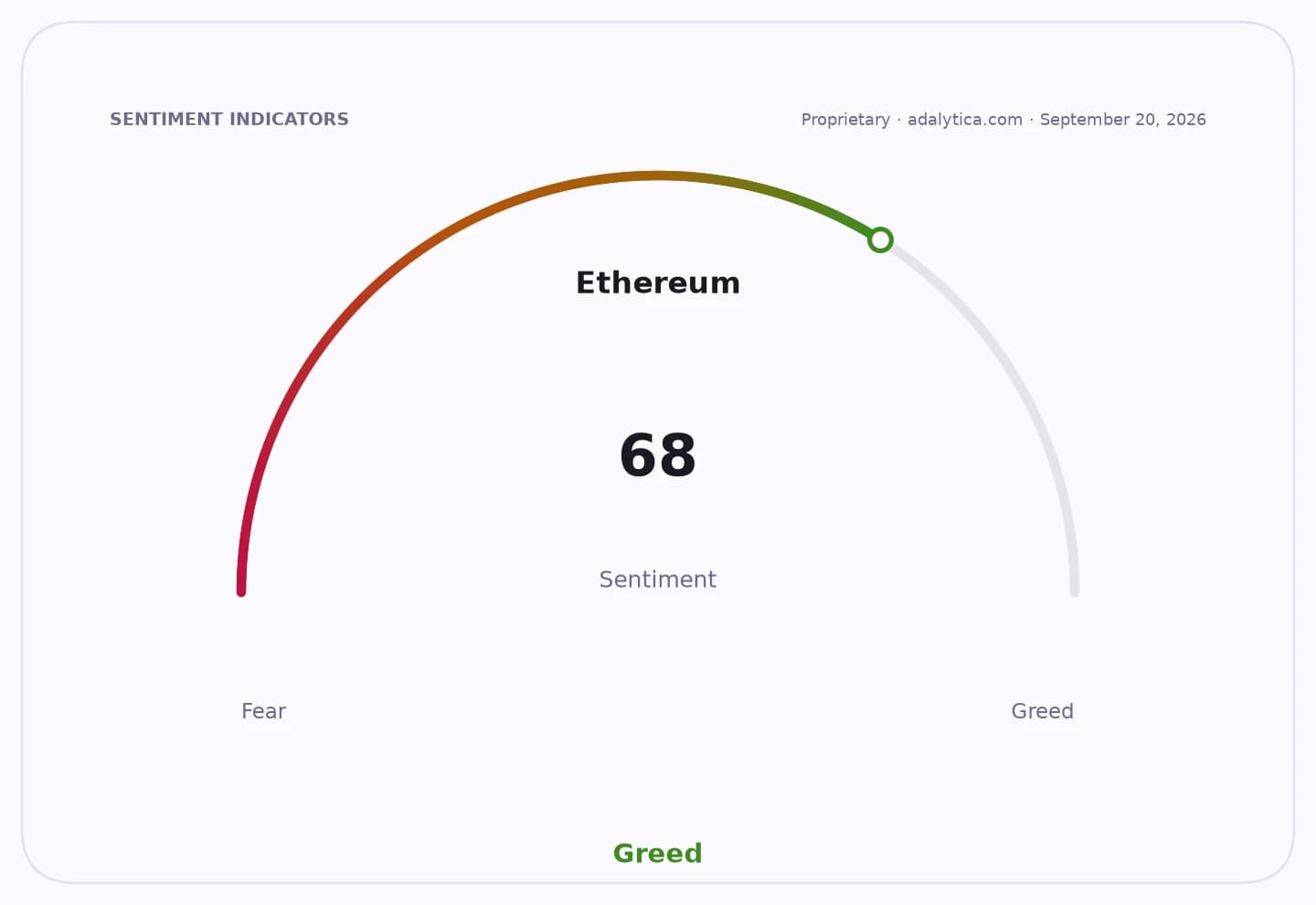
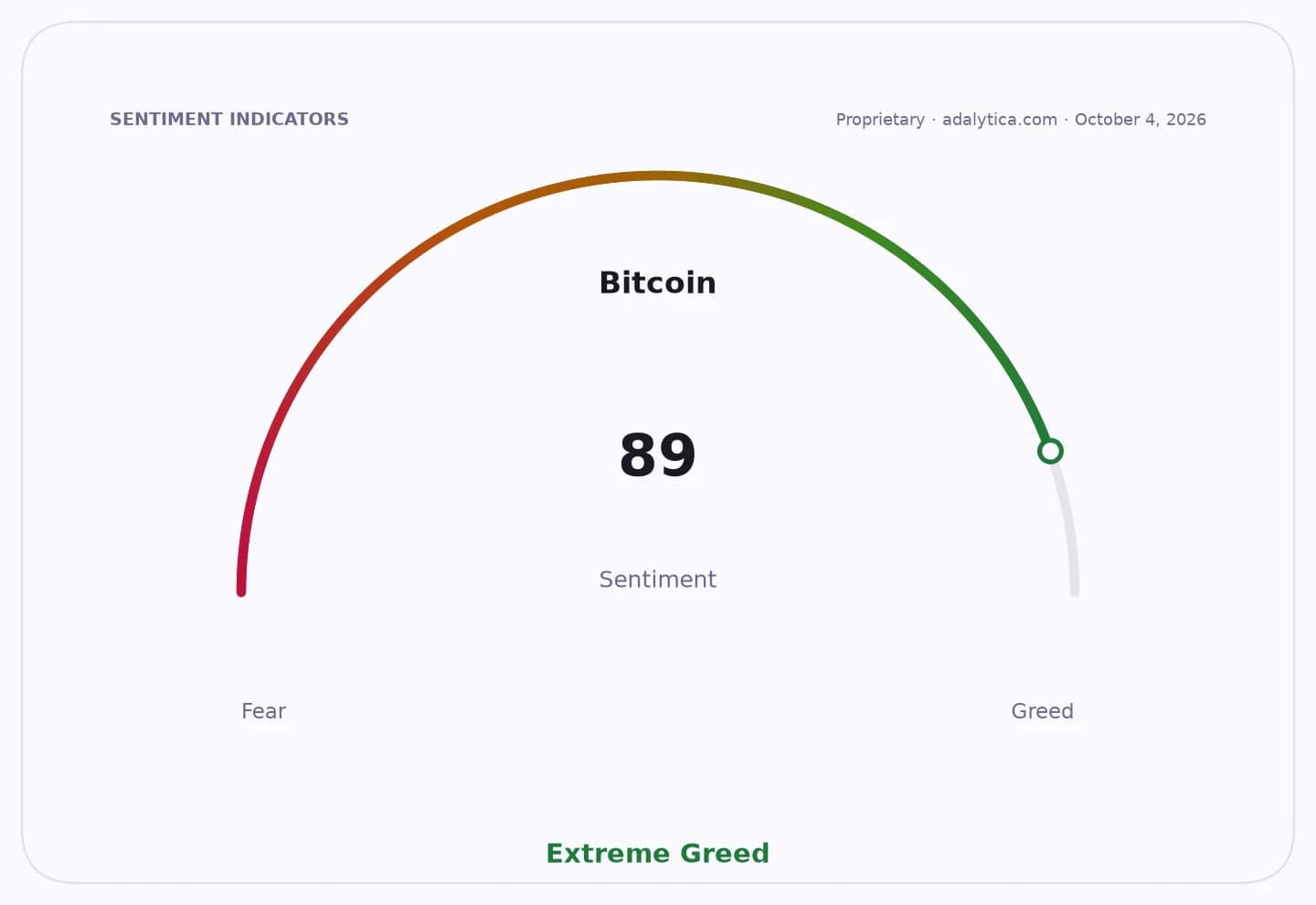
Sentiment is also running hot. Adalytica’s Bitcoin Fear & Greed Index showed “Extreme Greed” at 89, up 9 points on the day and 88 points over the past 30 days, even as awareness remained in “Fear” territory at 25. That kind of split often precedes sharp swings, which is why traders are still focused on whether BTC can hold support near the mid-$80,000s.
The broader backdrop remains supportive for the long-term thesis, with institutional demand, ETF flows and balance-sheet exposure from crypto-linked companies keeping Bitcoin at the center of digital-asset markets. The next test is whether BTC can clear resistance near $86,000 and press toward the upper Bollinger band, or whether the recent move runs into the same volatility that has repeatedly challenged previous Bitcoin cycle narratives.
| Entity | Gains | Losses |
|---|---|---|
| Bitcoin bulls | ▲Longer-term valuation case | ▼Short-term traders fading rallies |
| J.R. Willett thesis | ▲Originality and credibility | ▼Later-attribution narratives |
| Coinbase, MicroStrategy | ▲Uptrend-linked equity support | ▼Bitcoin pullback exposure |
| BTC shorts | ▲If power-law narrative attracts buyers | ▼If breakout extends above resistance |