Bitcoin Rallies, but Trend Remains Fragile
Bitcoin’s rebound is running into the same hard truth that always matters in markets: paper gains are not realized gains, and when the tape turns, leverage and momentum can evaporate quickly.
That matters because Bitcoin is once again sitting in a fragile spot technically and psychologically. The token finished July 12 at $63,978, well below its 50-day moving average of $65,138 and far under its 200-day moving average of $73,986. The relative strength index was 67.1, which still points to momentum, but the MACD remained negative. In plain English, Bitcoin has bounced, but it has not yet rebuilt a durable uptrend. For investors, that is the difference between a healthy consolidation and a rally that could unwind fast.

The broader market backdrop is not helping. Treasury yields eased after buyers stepped in to buy bonds following a recent selloff, but that bid for safety came alongside renewed risk aversion in equities. A global semiconductor rout hit Samsung and SK Hynix and spilled into U.S. and European markets, pressuring the S&P 500 and Nasdaq. When stocks, especially the speculative corners, are under stress, crypto rarely escapes unscathed. Bitcoin may trade like “digital gold” in the long run, but in the short run it still behaves like a risk asset.
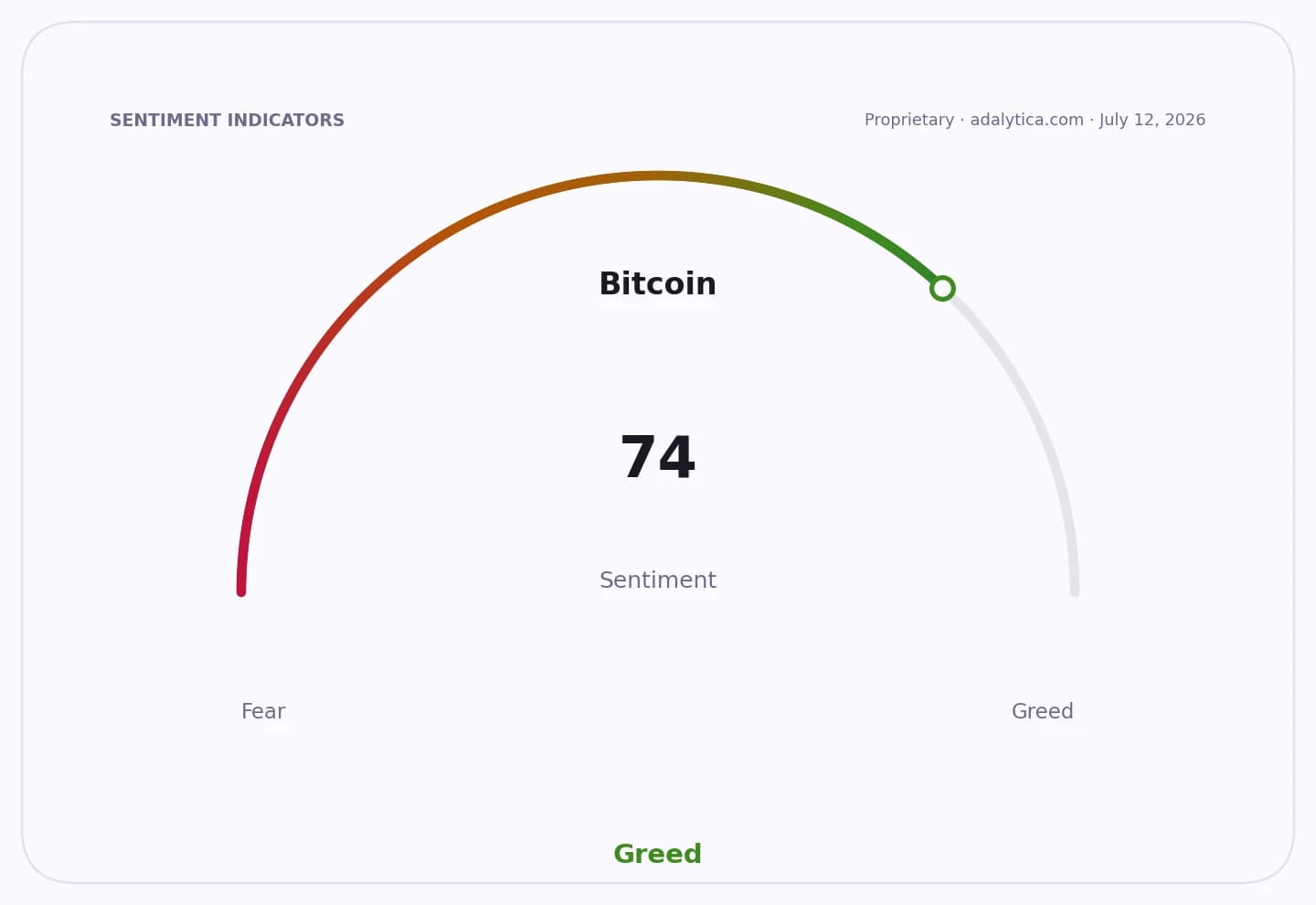
That is why the seed headline lands so cleanly: unrealized profits can disappear in a hurry. Bitcoin is up from its February lows near $62,700 and far above the panic low around $62,702 on Feb. 5, but the path since then has been choppy enough to expose anyone who confused a bounce with a trend. The Adalytica Bitcoin Fear & Greed Index sits at 74, labeled Greed, while awareness remains in Fear territory at 19. That split suggests traders are getting more enthusiastic even as underlying conviction remains thin. In crypto, that is often when volatility gets the final word.
The same pressure is showing up in crypto-linked equities. Coinbase closed July 10 at $159.07, still above its lows but far below its 50-day average of $175.13 and 200-day average of $226.68. MicroStrategy, the market’s most direct corporate proxy for Bitcoin, fell to $94.64, versus a 50-day average of $137.47 and a 200-day average of $175.19. That is a stark reminder that leveraged exposure cuts both ways. When Bitcoin wobbles, the stocks built around it can fall harder, faster, and with far less mercy.
For long-term investors, none of this means Bitcoin’s story is broken. The secular thesis around scarcity, institutional adoption, and portfolio diversification still matters, especially for patient allocators who can live through brutal drawdowns. But it does mean the next leg higher will need real confirmation, not just social-media confidence or mark-to-market gains on a screen. Until Bitcoin can reclaim its moving averages and hold them, investors should treat every rally with caution and every gain as conditional.
If you own Bitcoin or crypto stocks for the long run, the takeaway is simple: respect the volatility, size positions carefully, and do not mistake unrealized gains for money you have actually made. For most investors, Bitcoin remains a worth-watching asset, not a reason to abandon discipline.
| Entity | Gains | Losses |
|---|---|---|
| Bitcoin bulls | ▲Bounce off lows | ▼Weak trend confirmation |
| Coinbase shareholders | ▲Crypto activity and volatility | ▼Bitcoin weakness |
| MicroStrategy shareholders | ▲Upside if BTC rallies | ▼Amplified drawdowns |
| Risk-averse investors | ▲Safer assets and Treasuries | ▼Speculative crypto exposure |