Bitcoin Rally Still Tracks Liquidity, Not Regime Change
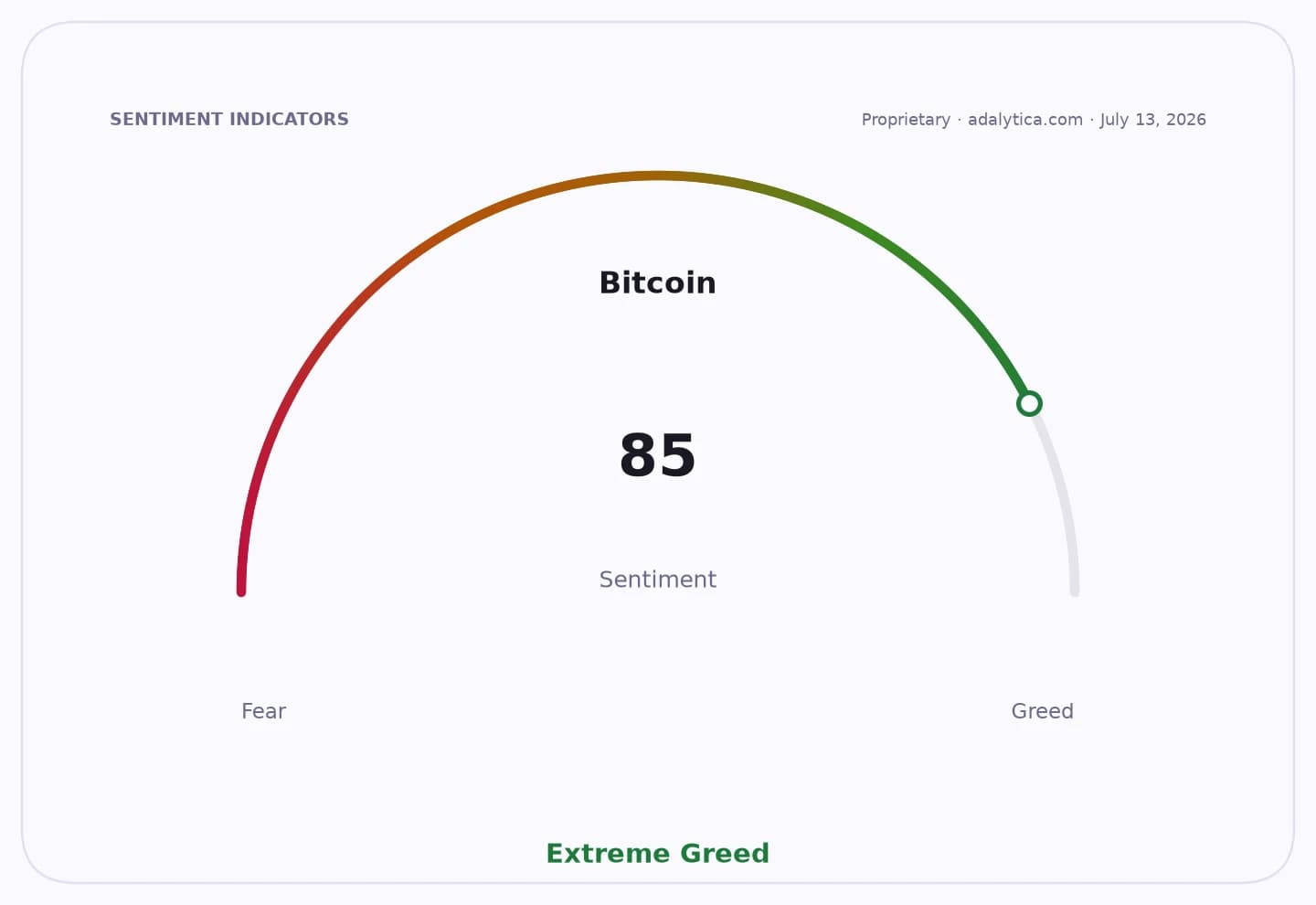
Bitcoin’s latest surge in greed looks less like a clean break from fiat and more like a reminder that crypto is still trading as a high-beta liquidity asset, not a new currency regime. That matters because when speculative appetite turns, the first thing investors usually discover is that the “post-fiat” thesis is still hostage to the same macro forces that drive equities, risk capital and the broader AI-fueled asset boom.
Bitcoin has rallied to 28.27 from 26.69 in early June, but the more important signal is what happened underneath that move. The token remains well below its 50-day moving average of 30.81 and 200-day average of 36.79, even after a three-day bounce. Its RSI has recovered to 52.7 from deeply oversold territory, while MACD has narrowed the gap but is still negative. In plain English: the tape has stabilized, but it is not yet a confirmed trend reversal.
That is why the latest reading from Adalytica’s Bitcoin Fear & Greed Index matters. Sentiment has jumped to 85, labeled greed, while awareness sits at 6, or extreme fear. That combination is a classic late-cycle setup: enthusiasm returns quickly, but conviction remains fragile. Investors should read that as a market still searching for a narrative, not one that has already validated it.
The bigger implication is for capital allocation. If Bitcoin is once again acting like a leveraged expression of risk appetite, then the beneficiaries are not only crypto holders but also the ecosystem built around volatility, liquidity and speculative flows. That includes crypto exchanges, custodians, miners, and the broader basket of assets that tend to catch a bid when investors are reaching for asymmetric upside. On the other side, any renewed tightening in financial conditions would hit the trade hard, because Bitcoin still behaves like a duration asset with no cash flows and a valuation that depends heavily on the market’s willingness to pay up for optionality.
The S&P 500’s own setup reinforces the point. SPY is hovering near record territory at 754.95, with its 50-day average at 739.91 and 200-day at 691.09, suggesting the risk environment remains supportive even as the market’s own signal set stays mixed. Adalytica’s S&P 500 trade signals show neutral sentiment and fear-level awareness, a reminder that this is not yet a broad euphoric melt-up. Bitcoin’s rally, in that sense, may be less a declaration of a post-fiat era than a bet that liquidity will keep flowing into every scarce digital asset proxy the market can find.
That is where the real investable thesis lies. The market may still be underestimating how many second-order winners are tied to this shift: the infrastructure providers supplying compute, storage and secure settlement rails; the public companies that hold or mine digital assets; and the payment and brokerage platforms that benefit if speculative participation broadens. If the AI bubble does crack, as the seed headline imagines, liquidity won’t disappear — it will rotate. Investors who want exposure to that rotation should focus on the toll roads, not the slogans.
For now, Bitcoin is telling us that the post-fiat story is not about replacing the dollar tomorrow. It is about a market that keeps treating scarcity, liquidity and reflexive demand as the real currencies of this cycle. The opportunity is to position early for that flow, but with discipline: own the infrastructure and the picks-and-shovels, not the hype alone.
| Entity | Gains | Losses |
|---|---|---|
| Bitcoin bulls | ▲Higher risk appetite | ▼Weak trend confirmation |
| Crypto infrastructure firms | ▲More trading activity | ▼Margin pressure if volatility fades |
| Broad equity market | ▲Speculative liquidity support | ▼Shock from tighter conditions |
| Dollar-based fiat skeptics | ▲Narrative momentum | ▼Credibility if BTC rolls over |