Bitcoin Slides to $62,453 After $8.2 Billion Selloff
Bitcoin’s path to $250,000 is still in play even after a brutal selloff wiped out roughly $8.2 billion from the market, because the long-term investment case has not been built on smooth price action — it rests on scarcity, institutional adoption and Bitcoin’s growing role as a macro asset.
That matters because investors often mistake volatility for deterioration. In Bitcoin’s case, the recent slide to about $62,453 has pushed the token back below its 50-day and 200-day moving averages, while the Relative Strength Index has dropped into the high-30s and the MACD has turned negative. Those are signs of weak momentum, but they are also exactly the kind of conditions that have historically accompanied panic rather than permanent damage.
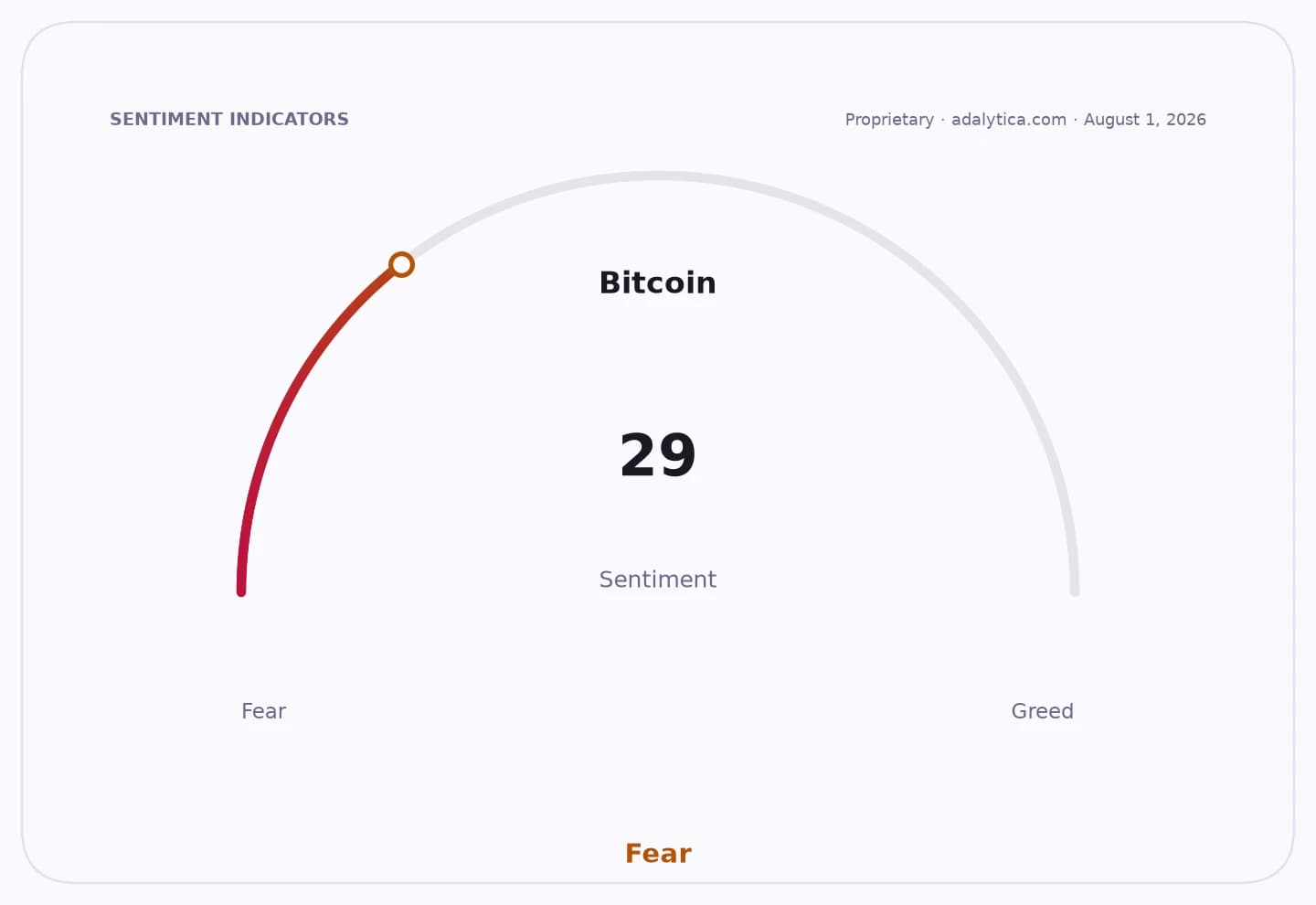
The bigger picture is that Bitcoin is still behaving like a high-beta asset in a risk-off market. Adalytica’s Bitcoin Fear & Greed Index sits at 29, firmly in fear territory, after falling 17 points in a day and 70 points over a week. That tells you sentiment has been washed out, not that the thesis has disappeared.
For investors, that distinction is critical. The $250,000 target comes from the same forces that have driven every major Bitcoin cycle: fixed supply, halving-driven scarcity and increasing acceptance from large pools of capital. Short-term drawdowns can be violent — and they can be amplified by liquidation cascades, ETF outflows and geopolitical shocks — but those swings do not change the underlying mathematics of a hard asset with a capped supply.
The recent damage also hit the stocks tied closest to Bitcoin’s price. MicroStrategy, long used as a leveraged proxy for Bitcoin, has fallen sharply and now trades well below its 200-day moving average. Coinbase, the most direct public-market crypto venue, has also weakened as trading enthusiasm cooled. When Bitcoin drops, the companies that ride its coattails usually feel it first.
Still, that is precisely why long-term investors should separate the asset from the headlines. Bitcoin’s institutional base is broader than it was in prior cycles, and the market’s recurring stress tests often leave the strongest believers better positioned for the next advance. If adoption keeps widening and supply remains fixed, a much higher price over a multi-year horizon remains a reasonable bull case.
Could Bitcoin still be on the way to $250,000? Yes — but not in a straight line, and not without more episodes like this one. For investors with a 3- to 10-year horizon, the right response is usually patience, diversification and discipline rather than trying to trade every plunge. Bitcoin remains a volatile asset, but for long-term believers, this kind of selloff looks more like a test of conviction than a thesis breaker.
| Entity | Gains | Losses |
|---|---|---|
| Long-term Bitcoin holders | ▲Lower entry prices | ▼Paper losses in the drawdown |
| Short-term traders | ▲Volatility opportunities | ▼Forced liquidations |
| MicroStrategy (MSTR) bulls | ▲Potential future leverage if BTC rebounds | ▼Sharp mark-to-market pressure now |
| Coinbase (COIN) | ▲Renewed trading activity if sentiment recovers | ▼Softer volumes in risk-off conditions |