Bitcoin’s next catalyst may come less from its own price action than from the fast-expanding market for tokenized U.S. equities, as record participation in those products adds a new source of crypto liquidity just as September brings two macro and regulatory tests for risk assets.
Bitcoin, tokenized equities lift crypto liquidity
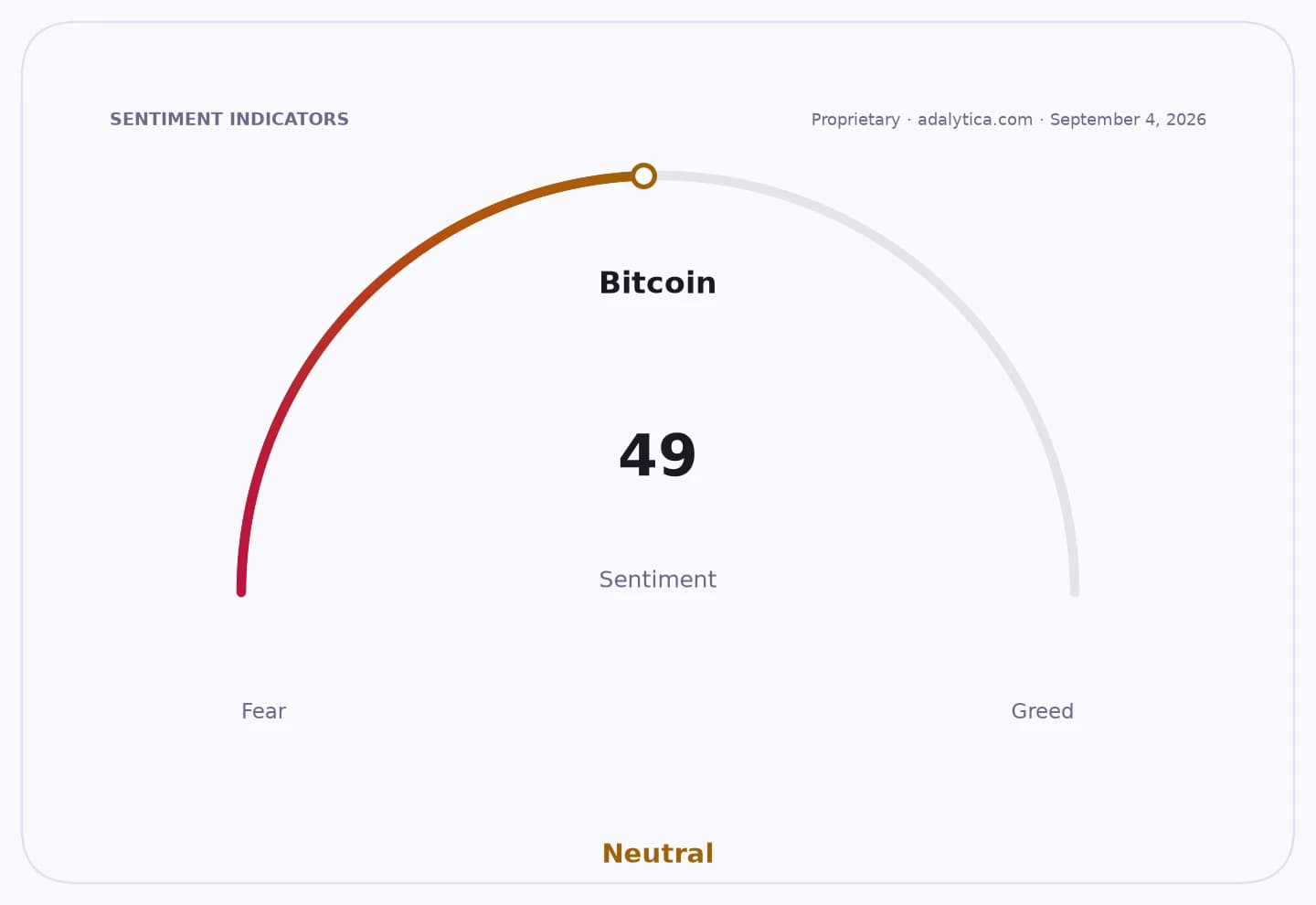
That matters because Bitcoin has already shown it can outperform traditional markets when capital rotates toward higher-beta trades. After a strong August, when the S&P 500 advanced about 2% while Bitcoin gained almost 25%, the question for investors is whether that risk-on appetite can survive into September. The setup is less benign now: markets are pricing in roughly a 60% chance of a Fed rate hike at the next FOMC meeting, up sharply from about 37% a week earlier, while the pending CLARITY Act vote adds another policy inflection point for digital assets.
The clearest sign that crypto is still attracting incremental capital is on-chain demand for tokenized equities. According to Kobeissi Letter data cited in the source material, tokenized equity addresses have surged to a record 1.9 million, up 134% month on month and from fewer than 100,000 just 10 months ago. On Solana, Jupiter accounts for 61% of tokenized equity volume, while active tokenized equity traders on the platform rose 46% month on month. For a market built on liquidity, that is not a niche data point: it suggests retail and speculative flows are broadening beyond Bitcoin itself and into adjacent crypto-native wrappers of traditional assets.
The economic significance is straightforward. Tokenization can act as a bridge between equity-market demand and crypto-market infrastructure, pulling trading activity, collateral demand and fee generation deeper into blockchain ecosystems. In periods when equity investors become more cautious, the presence of tokenized stocks inside crypto rails can keep capital circulating within the digital-asset complex rather than leaving it. That supports not only Bitcoin, but also chains and venues that benefit from higher transaction volume and speculative turnover.
Still, the near-term case is not one-way bullish. CryptoQuant data shows Bitcoin’s Coinbase Premium Index remains under pressure, a sign that U.S. spot buying is relatively weak. That leaves Bitcoin more exposed if equities roll over or if the Fed repricing continues to tighten financial conditions. Standard technical readings also show the market is extended: Bitcoin’s relative strength index is around 70.4, which points to an overbought setup even as the price holds above both its 50-day and 200-day moving averages. In other words, momentum is positive, but positioning looks vulnerable to any macro disappointment.
For investors, the key issue is whether tokenized equity demand becomes a durable source of crypto inflows or just a short-lived speculation burst. The bull case is that rising tokenized activity, combined with weaker appetite for traditional stocks, channels more capital into Bitcoin and related assets, allowing BTC to outperform again as it did in August. The bear case is that higher rate-hike odds, thin U.S. spot demand and a crowded technical backdrop trigger a reset in both equities and crypto, with Bitcoin losing the relative strength it has recently enjoyed.
What happens next will likely hinge on the Fed meeting, the CLARITY Act vote and whether tokenized equity activity keeps accelerating. If those flows stay hot while traditional risk assets wobble, Bitcoin could remain the cleaner expression of risk appetite in September.
| Entity | Gains | Losses |
|---|---|---|
| Bitcoin and crypto markets | ▲More liquidity and inflows | ▼Higher volatility if risk sentiment fades |
| Tokenized equity platforms | ▲Rising trading volume | ▼Regulatory scrutiny and execution risk |
| U.S. equities | ▲Potential secondary demand via tokenization | ▼Capital rotation into crypto |
| Long BTC traders | ▲Momentum and relative outperformance | ▼Overbought pullback risk |