Bitcoin Treasury Buyers Return as BTC Holds $77,000
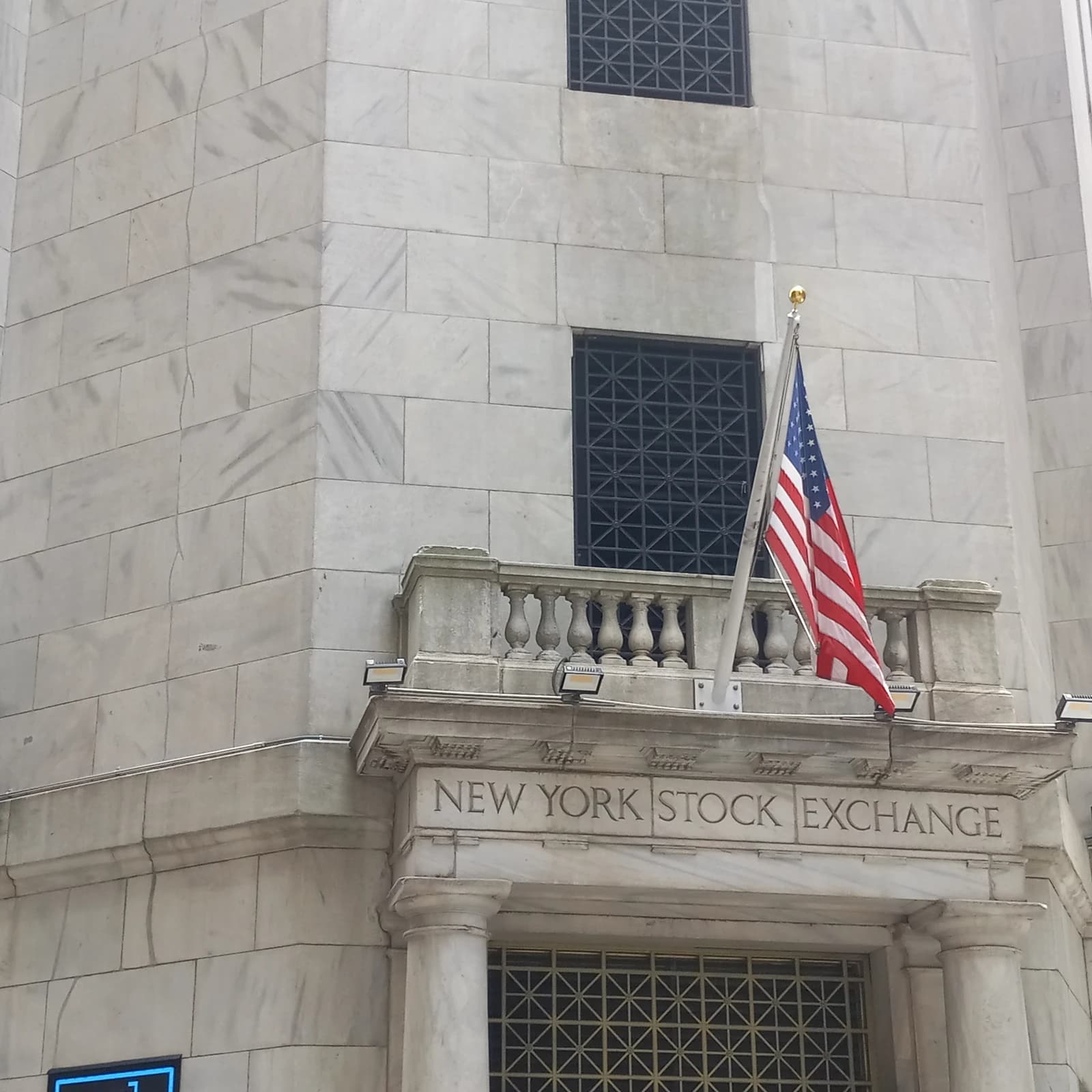
Bitcoin’s steadiness near $77,000 is pulling corporate treasury buyers back into the market, giving a fresh bid to a group of listed companies that increasingly use balance-sheet exposure to the token as a strategic asset.
The move matters because these firms — led by the likes of MicroStrategy, Marathon Digital and Riot Platforms — are not just trading bitcoin, but shaping a growing corporate demand base that can amplify price swings when the market turns. When bitcoin stabilizes after a sharp drawdown, the treasury trade often re-accelerates: companies that had de-risked or paused purchases can resume accumulation, lifting both the coin and the stocks that track it.
That rotation is visible in the equity tape. MicroStrategy, the largest corporate bitcoin holder, has been volatile but remains tightly tied to bitcoin’s direction; its shares closed at $124.88 on Sept. 1 after trading above $300 earlier in the period, underscoring how much leverage the stock still has to moves in the underlying. Riot and Marathon have also swung sharply with bitcoin, with their recent trading ranges showing the same pattern: a rising BTC price tends to draw speculative and treasury-linked flows back into the sector, while weakness quickly forces investors to pare exposure.
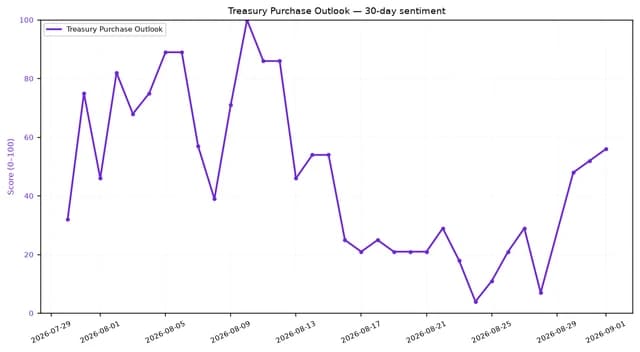
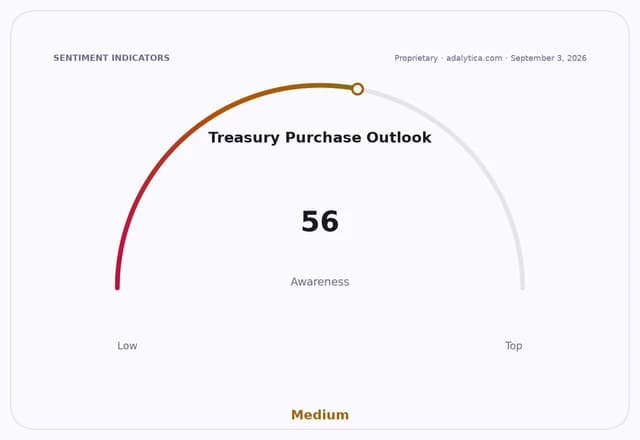
For investors, the significance is twofold. First, renewed treasury buying can provide an additional source of demand at a time when broader risk appetite remains fragile. Adalytica’s proprietary Treasury Purchase Sentiment Outlook gauge has improved to 56, back in neutral territory after a weak patch, suggesting attention to corporate accumulation is rising again. Second, the trade remains highly convex: if bitcoin holds near record territory, the treasury model can still support equity upside through balance-sheet gains and financing optionality. But if bitcoin rolls over, these same companies face the downside of concentrated exposure, with thinner margins and funding structures that can magnify losses.
The backdrop also helps explain the renewed interest. A softer tone in some parts of the risk market, along with continued debate over rates and liquidity, has kept investors searching for assets seen as independent of traditional equities and bonds. Bitcoin treasury firms have become one of the cleanest listed proxies for that view. They offer leveraged exposure to the token, but also carry corporate-specific risks — dilution, financing costs, mining economics and regulatory scrutiny — that make them far more volatile than bitcoin itself.
The bull case is that persistent institutional demand and a firm bitcoin price keep treasury buyers active, while miner and treasury stocks benefit from momentum and narrative as much as fundamentals. The bear case is that the strategy becomes self-reinforcing only until liquidity tightens or bitcoin retreats, at which point the same companies can see rapid equity de-rating. For now, bitcoin’s ability to stay near $77,000 is enough to bring the treasury bid back. The next test is whether that bid remains a stabilizer or turns into another source of volatility.
| Entity | Gains | Losses |
|---|---|---|
| Bitcoin treasury firms | ▲Balance-sheet gains; renewed demand | ▼Higher concentration risk |
| BTC longs | ▲Fresh corporate buying support | ▼Risk of sharper pullbacks |
| BTC shorts | ▲Limited if accumulation persists | ▼Squeezed by renewed bid |
| Traditional cash holders | ▲None | ▼Relative underperformance vs BTC proxies |