Bitcoin Above $63,000 as USDT Tracing Gains
Bitcoin steadied above $63,000 on Sunday as traders leaned back into a recovery trade built around the growing ability to trace stolen or scammed cryptocurrency through the USDT ecosystem, a development that could improve market confidence in digital assets even as the broader crypto complex remains fragile.
The move matters because recoverability is becoming a key part of crypto’s investment case. For years, one of the biggest structural objections to the asset class was that once funds were stolen or laundered, they were effectively gone. The expanding use of blockchain forensics and exchange cooperation is changing that calculus, especially for Tether’s USDT, the most widely used settlement token in crypto markets. If stolen proceeds can be tracked, frozen or tied to identifiable off-ramps, the cost-benefit equation for criminals worsens and the operational risk premium embedded in the market can ease.
Bitcoin closed at $63,034.56 on the latest reading, up slightly on the day after trading between $62,751.01 and $63,521.16. That is still far below its recent peaks, but the more important signal is that the market is trying to stabilize after a brutal drawdown that pushed Bitcoin as low as $62,702.10 in the data set and, earlier, much deeper into stress territory. Technicals remain mixed: Bitcoin is still below its 50-day moving average of $63,342.26 and well under its 200-day average of $71,122.94, while RSI at 42 suggests neither panic nor conviction. The MACD remains negative, indicating momentum has not fully turned.
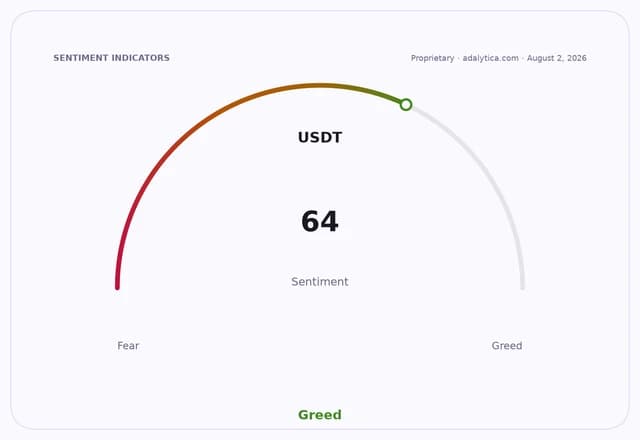
USDT itself was unchanged at $1, underscoring why it remains the plumbing of crypto markets even when confidence wobbles. With a market value effectively anchored to the dollar, it is the token’s utility — not price action — that drives the story. Trading signals around USDT have become notably elevated, with Adalytica’s trade signal showing 100 awareness and a 61-point seven-day rise, reflecting how intensely the market is watching stablecoin flows as recovery efforts gather pace.
The significance for investors goes beyond headline theft cases. If tracing tools and exchange blacklists become more effective, they can support trust in the settlement layer that powers much of crypto trading, lending and arbitrage. That may encourage sidelined capital to re-enter, particularly in Bitcoin, which is still treated as the sector’s reserve asset. It also helps explain why Coinbase Global, a key venue for crypto liquidity and compliance, remains central to the recovery narrative even as its shares have fallen sharply from earlier highs. The stock closed at $146.26 on the latest reading, down from more than $375 in October, reflecting how quickly sentiment can reverse when market activity weakens.
But the bear case remains clear. Stronger tracing may reduce criminal usage, yet it does not eliminate the reputational drag from hacks, scams and enforcement headlines. Bitcoin’s own sentiment gauge from Adalytica is still only 34, in neutral territory, with 30-day change showing a marked deterioration. That suggests investors are willing to trade a bounce, but not yet to re-rate the asset as if the cycle has decisively turned.
For now, the market is treating stolen-crypto tracing as a modest but important step toward making digital assets more investable. The next catalyst will be whether enforcement successes translate into fewer large-scale outflows, tighter exchange controls and, eventually, a sustained improvement in Bitcoin’s trend.
| Entity | Gains | Losses |
|---|---|---|
| Bitcoin holders | ▲Better recovery narrative | ▼Remaining technical weakness |
| USDT ecosystem | ▲Greater legitimacy | ▼Scrutiny over illicit flows |
| Exchanges and forensics firms | ▲Higher demand for tracing tools | ▼More compliance costs |
| Scammers and thieves | ▲Less anonymity | ▼Higher risk of freezes |