Bitcoin fell to about $62,026 in Monday trading, extending a volatile stretch for the world’s largest cryptocurrency as investors reassessed risk appetite and waited for clearer policy direction in Washington.
Bitcoin Weakness Pressures Crypto Proxies
The move matters because Bitcoin is still the bellwether for broader digital-asset risk. A drop of this size, coming after a series of sharp swings, signals that traders remain unwilling to price in a durable breakout despite the market’s long-running case for institutional adoption and easier policy conditions. In this environment, Bitcoin’s direction is less about momentum alone and more about whether macro liquidity, regulation and political rhetoric are supportive enough to keep leveraged buyers in the market.
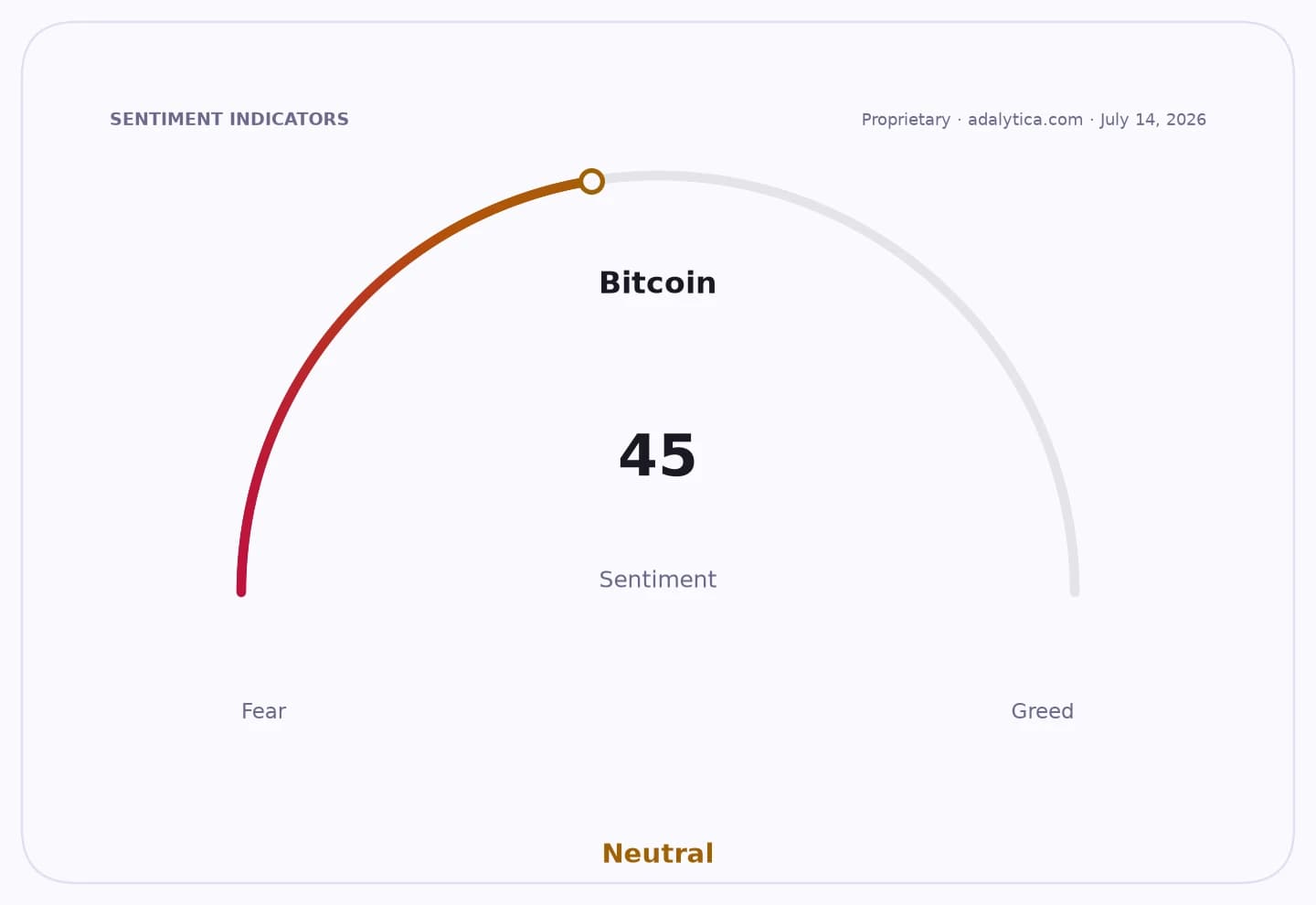
Sentiment IndicatorsⓘProprietary · adalytica.com · July 14, 2026
This is a snapshot — live sentiment, awareness and momentum for 130+ markets update continuously in the dashboard.Open AlphaPulse
The latest weakness also fits a broader pattern of crypto underperformance during periods of regulatory uncertainty. The news backdrop has been dominated by political tensions in the US, delays in crypto policy decisions and renewed scrutiny of digital-asset rules. That has left Ether relatively stronger in some recent sessions as investors look ahead to possible clarity from the Clarity Act, while Bitcoin has taken more of the brunt of risk reduction.
From a market standpoint, the technical picture remains fragile. Bitcoin is trading below its 200-day moving average, a sign that the longer-term trend has yet to fully recover, even if the 50-day average is closer to current levels. Recent readings on standard technical gauges show momentum has improved from deeply oversold levels earlier in the year, but not enough to break the broader downtrend. Volatility has also remained elevated, suggesting the market is still being driven more by positioning than conviction.
Bitcoin — 30-day sentimentadalytica.com
Explore this data interactively — full history, time series and cross-market comparisons.Open AlphaPulse
That weakness is rippling through the listed crypto complex. Strategy, the Bitcoin-heavy balance-sheet play formerly known as MicroStrategy, and Coinbase have both seen their shares under pressure in recent months as Bitcoin’s slide dents the investment case for crypto proxies. For Strategy, the stock’s premium to its Bitcoin holdings becomes harder to defend when the token itself is losing traction. For Coinbase, softer trading volumes and a more cautious retail backdrop can weigh on revenue even if longer-term adoption trends remain intact.
The macro signal is equally important. Adalytica’s Bitcoin Fear & Greed Index sits at neutral, but awareness is in extreme fear, underscoring how thin conviction has become even after recent rebounds. The move comes alongside broader caution in risk assets and continued sensitivity to the US dollar, which remains an important cross-asset force for Bitcoin because tighter dollar liquidity often saps demand for speculative assets.
The bull case is that Bitcoin remains structurally supported by institutional ownership, limited supply and its role as the dominant crypto asset. If policy clarity improves and macro conditions loosen, the market could still reset higher quickly. The bear case is that repeated failures to hold gains are encouraging investors to treat rallies as opportunities to sell, particularly as corporate buyers and leveraged traders have already shown they can be forced into unwinds.
For investors, the key test is whether Bitcoin can reclaim and hold higher technical levels while regulatory uncertainty eases. Until then, the cryptocurrency is likely to remain a high-beta barometer of risk appetite rather than a clean refuge from it.
| Entity | Gains | Losses |
|---|---|---|
| Bitcoin holders | ▲Potential rebound if policy clears | ▼Price weakness and volatility |
| Crypto exchanges | ▲Trading volume from volatility | ▼Softer asset prices |
| Strategy/MicroStrategy shareholders | ▲Leverage to upside in a rally | ▼Greater downside from BTC declines |
| Regulators/doves | ▲Scope for clearer rules | ▼Pressure to resolve uncertainty |