BitMine Nears 5% of Ethereum Holdings

BitMine Immersion Technologies is closing in on control of 5% of all Ethereum in circulation, but the market is increasingly asking whether that scale of accumulation creates value for shareholders or simply turns the stock into a highly levered ETH proxy.
The company now holds 4.88% of Ethereum after aggressive purchases over the past month and says it aims to cross the 5% threshold by year-end. That makes BitMine the largest Ethereum treasury company by a wide margin and one of the most concentrated corporate holders of a major crypto asset. For investors, the significance is less about the optics of that ownership share than the economics underneath it: BitMine’s market value of about $14.5 billion is only fractionally above the roughly $14.4 billion value of its ETH holdings.
That tight premium is the crux of the debate. If a listed company trades almost one-for-one with the asset it holds, shareholders are paying for corporate structure, execution risk and capital-markets optionality without receiving much upside from the wrapper itself. In BitMine’s case, the stock has fallen 54% over the past 12 months, mirroring Ethereum’s own deep drawdown from its peak, which leaves little evidence that treasury accumulation alone has created a durable equity premium.
The argument for the bulls is straightforward. BitMine offers an easily traded vehicle for investors who want exposure to Ethereum without directly buying tokens or navigating crypto custody. A listed treasury company can also deploy capital faster than many retail holders, and large-scale purchases may support the asset it is accumulating by tightening supply. If Ethereum rebounds meaningfully, BitMine should remain a highly sensitive way to participate in that move.
The bear case is more compelling in the current market. Ethereum is still well below its highs, and the broader crypto market remains in recovery rather than expansion mode. Spot Ethereum exchange-traded funds already give investors near-direct exposure with low fees and less operating complexity, while direct ownership on crypto exchanges offers staking and full asset control. Against that backdrop, the burden on BitMine is to justify why investors should pay for the company at all when the underlying token is readily accessible elsewhere.
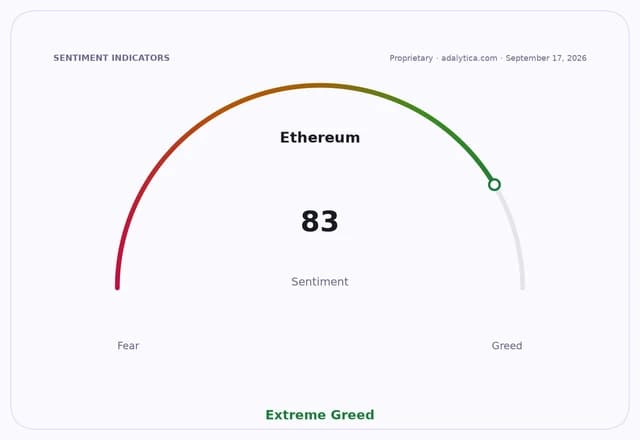
Technically, Ethereum has recovered from its earlier slump, with the token recently trading near $2,467 and the 50-day moving average around $2,229, while the 200-day moving average sits near $2,067. The relative strength index has cooled to a more neutral 46.2 after touching deeply oversold levels earlier this year, and Adalytica’s Ethereum gauge shows sentiment at 83, or greed, with awareness at 99, extreme greed. That suggests speculative appetite has returned, but it does not by itself solve the valuation problem for treasury stocks that simply mirror the coin.
The broader question is whether BitMine’s model can survive beyond a momentum trade. Treasury accumulation works best when the underlying asset is in a sustained bull market and when the listed vehicle can trade at a meaningful premium to net asset value. If Ethereum stays range-bound, the company risks becoming an expensive pass-through for an asset investors can buy more efficiently elsewhere.
For investors, the stock now looks less like a conviction buy on Ethereum itself and more like a test of whether markets will continue to reward corporate wrappers around crypto assets. The next catalyst is simple: if BitMine crosses 5% ownership and Ethereum keeps rising, the case for a premium may strengthen; if ETH stalls, the stock’s appeal may erode back toward the value of the tokens it holds.
| Entity | Gains | Losses |
|---|---|---|
| BitMine Immersion Technologies | ▲More ETH exposure | ▼Premium compression risk |
| Ethereum holders | ▲Corporate buying support | ▼Concentration concerns |
| ETH bulls | ▲Levered listed proxy | ▼Higher volatility |
| Spot ETH ETF investors | ▲Lower-fee exposure | ▼Less upside leverage |